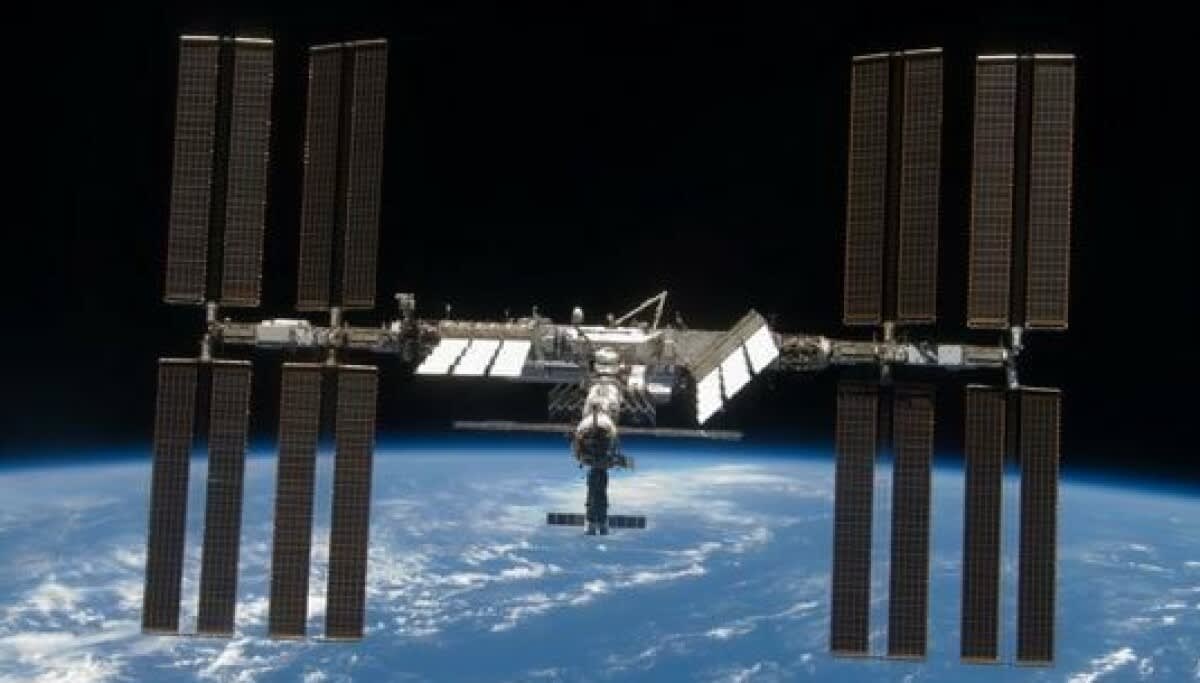
NASA and Russia Prevent ISS Crisis Through Quick Teamwork
When a risky repair plan threatened the International Space Station, NASA and Russian space agency Roscosmos worked together to find a safer solution. Their quick collaboration protected the crew and shows international cooperation can solve even orbital challenges.
International teamwork just prevented a potential crisis 250 miles above Earth, proving that even in orbit, cooperation beats taking dangerous shortcuts.
Russia's space agency Roscosmos wanted to cut into the aging Zvezda module of the International Space Station to investigate persistent air leaks. The plan involved using hand tools to access cracks in a tunnel section that's been slowly losing air for years.
NASA quickly raised concerns about the approach. Cutting into the structure could have created unpredictable stress on other cracks in the aging module, potentially making the problem worse instead of better.
The crew briefly sheltered in a docked SpaceX Dragon capsule as a precaution while both agencies worked out the disagreement. Within hours, Roscosmos agreed to cancel the cutting plan in favor of gathering more data through safer methods.
The leaky section is part of hardware that dates back to the 1980s, originally built as a backup for the Mir space station before launching to the ISS in 2000. After decades in the harsh environment of space, some wear and tear isn't surprising.
The Bright Side
This moment highlights something remarkable about the International Space Station. Despite geopolitical tensions on Earth, American and Russian engineers continue working together to solve complex problems in real time.
The crew routinely keeps the hatch to the affected tunnel closed when not in use, and both agencies are now exploring a permanent solution. The leading option is to seal off just that small section while keeping the rest of the station fully operational.
ESA astronaut Andreas Mogensen explained the silver lining: the cracks are confined to one chamber at the very end of the module. Sealing it off would mean losing one docking port, but wouldn't significantly impact station operations overall.
The station has hosted humans continuously for 25 years, an achievement that required constant collaboration between multiple countries. This latest challenge shows that partnership is still strong, with safety as the shared priority.
Engineers from both space agencies are now working together on long-term solutions that protect both the crew and the aging but still vital orbital laboratory.
Based on reporting by Google News - Science
This story was written by BrightWire based on verified news reports.
Spread the positivity!
Share this good news with someone who needs it