NASA Awards $600M for Moon Base Missions Starting 2028
Three companies will launch four robotic missions to the moon in 2028, laying crucial groundwork for NASA's plan to build a permanent lunar base by 2036. The missions mark a major acceleration in returning humans to the moon for the first time in over 50 years.
Humans are going back to the moon, and the road to a permanent lunar home just got a major boost.
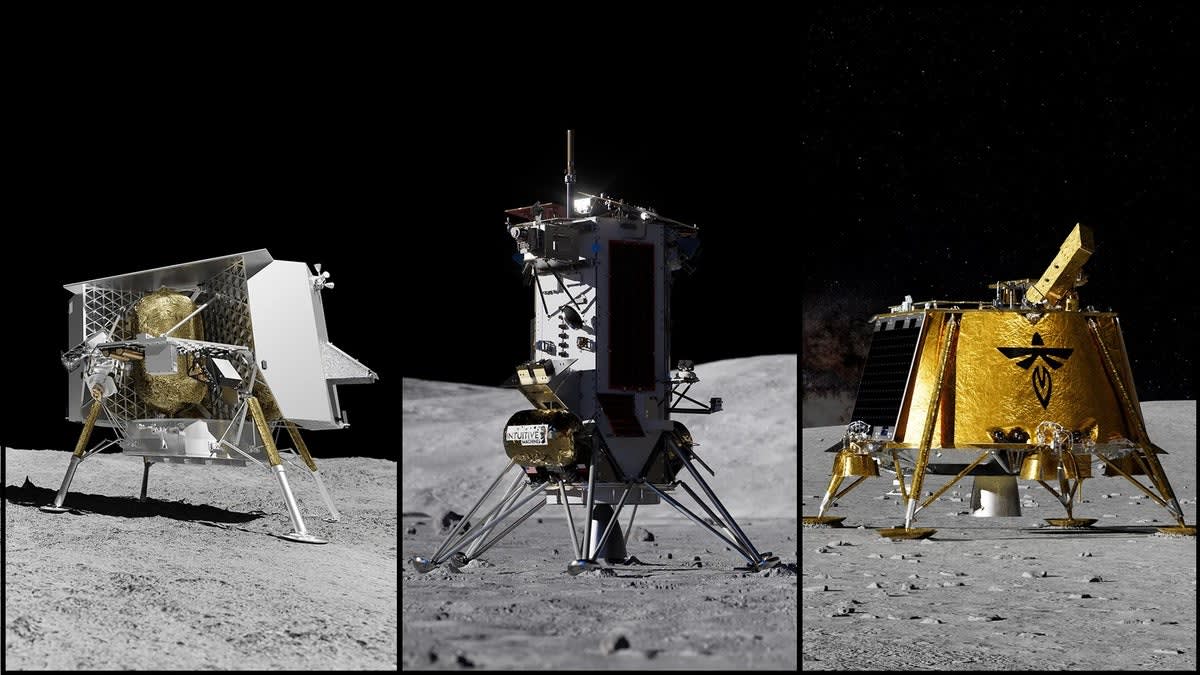
NASA announced Tuesday that three companies will receive $600 million to land four robotic missions on the moon's surface in late 2028. Astrobotic, Firefly Aerospace, and Intuitive Machines will deliver critical science equipment that will help NASA build its first permanent base on another world.
The missions are part of NASA's ambitious new timeline to establish a continuous human presence on the moon. The agency plans to land astronauts on the lunar surface by 2028 through its Artemis IV mission, marking humanity's first return since Apollo 17 touched down in 1972.
"We're building a proving ground for Moon Base operations," said Ryan Stephan, NASA's Moon Base acting director of cargo landers. The accelerated timeline will help the agency learn quickly and improve its approach as it moves toward bigger goals.
Each of the four missions will carry identical scientific instruments designed to make future landings safer. A high-tech 3D camera will map landing sites in detail, while other tools will study radiation levels and test new navigation systems.
By flying the same equipment on multiple landers, NASA will create something like a weather station network for the moon. The data will help scientists understand conditions across different lunar locations, making it safer for astronauts to land and work there.
NASA Administrator Jared Isaacman also revealed the agency might repurpose a Mars rover for the moon instead. The PROMISE rover was originally built for the Red Planet but could become NASA's first robotic rover on the moon, joining successful rovers from Japan and India in recent years.
The Ripple Effect
This $600 million investment is just one piece of a much larger vision. NASA's complete roadmap includes 79 launches, 73 lunar landers, 10 moon buggies, and multiple habitat modules between now and 2036.
The agency plans to establish a semi-permanent base at the lunar south pole by 2032, then build a fully operational outpost powered by a nuclear reactor by 2036. It represents the most ambitious space exploration program since the original moon landings.
The shift prioritizes lunar exploration over Mars missions, redirecting resources toward building humanity's first off-world home. While that means some Mars plans are being delayed, it also means we're closer than ever to becoming a multi-world species.
The three companies bring proven experience to the table, each using updated versions of landers they've already flown. Their missions will create a foundation of knowledge that makes every future landing safer and more successful.
A permanent moon base could unlock new scientific discoveries, serve as a launching point for deeper space exploration, and prove that humans can thrive beyond Earth.
More Images



Based on reporting by Scientific American
This story was written by BrightWire based on verified news reports.
Spread the positivity!
Share this good news with someone who needs it