NASA Balloons Over Antarctica Hunt Dark Matter for 25 Days
Four stadium-sized balloons just spent weeks floating over Antarctica, searching for antimatter and ghostly neutrinos that could unlock the universe's biggest mysteries. NASA's record-breaking mission brings scientists closer to understanding dark matter without the cost of launching rockets.
Scientists just pulled off an incredible feat at the bottom of the world, floating massive research balloons over Antarctica for weeks to hunt for some of the universe's most elusive secrets.
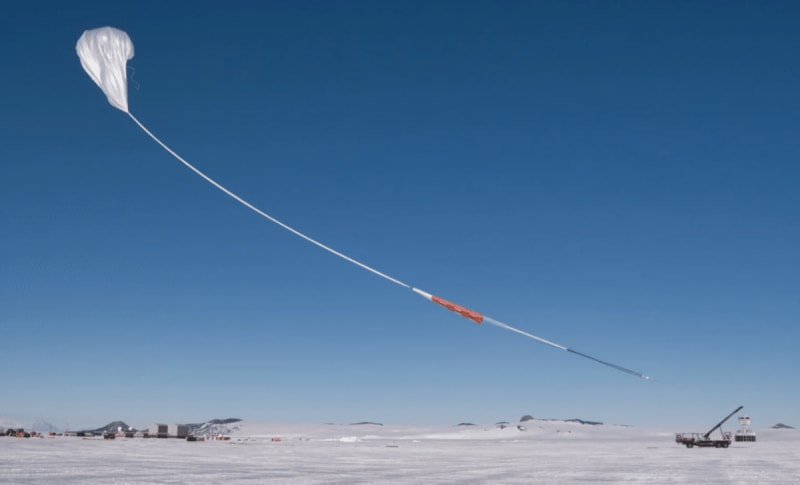
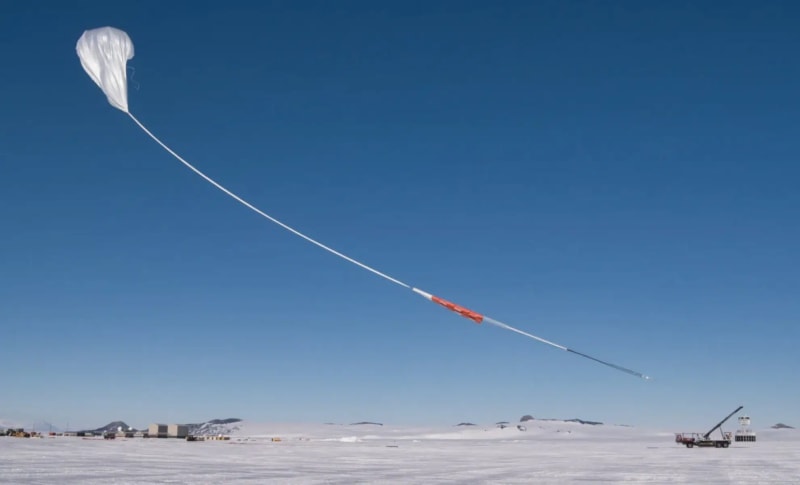
NASA launched four scientific balloons from Antarctica's Ross Ice Shelf between December and January, with one staying airborne for over 25 days. These aren't ordinary balloons: some stretch as wide as football stadiums and carry thousands of pounds of advanced instruments to the edge of space, more than 100,000 feet above Earth.
The star of the mission, called GAPS, spent its 25-day journey scanning for antimatter particles entering our atmosphere. Finding antimatter could finally reveal what dark matter is made of, solving one of science's biggest puzzles about the mysterious substance that makes up over 80% of all matter in the cosmos.
Another balloon, PUEO, hunted for neutrinos, ghostly particles that travel billions of light years without being absorbed or deflected. Because nothing stops them, neutrinos carry direct information about massive cosmic events like supernovae, black hole collisions, and even the Big Bang itself.
Antarctica's endless summer daylight and stable polar winds make it perfect for these missions. The balloons can circle the continent for weeks at a time, giving researchers extended observation periods that would cost millions more to achieve with satellites.
For four days in late December, all four balloons flew simultaneously over the frozen continent, an impressive coordination feat that required years of planning between NASA, private contractors, and international partners.
The Ripple Effect
These floating laboratories represent a smarter way to do space science. By operating in the stratosphere instead of orbit, NASA can test cutting-edge instruments and collect groundbreaking data at a fraction of satellite launch costs.
The data collected will help design the next generation of cosmic radiation detectors and antimatter sensors. Every flight strengthens our understanding of fundamental physics while proving that world-class science doesn't always need rockets.
This mission shows how creative problem-solving can make the impossible possible. Using stable Antarctic winds and massive balloons, scientists are literally reaching for answers about our universe's origin story without leaving Earth's atmosphere.
After traveling thousands of miles on polar winds, the GAPS payload landed safely on Antarctic ice in January, ready to share its cosmic discoveries with researchers worldwide.
More Images

Based on reporting by Google News - Science
This story was written by BrightWire based on verified news reports.
Spread the positivity!
Share this good news with someone who needs it