NASA Crash Nudged Entire Asteroid System Off Course
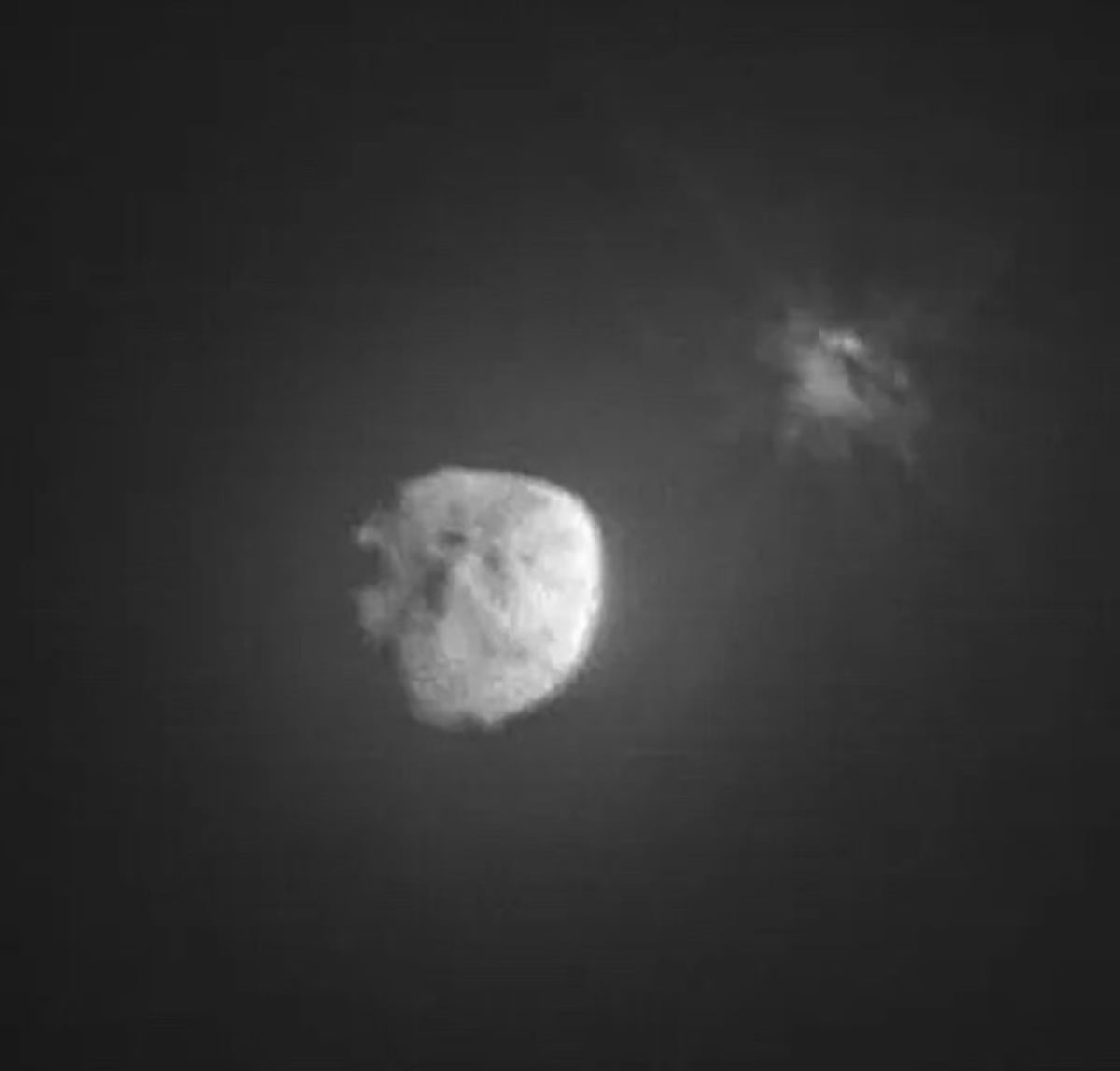
When NASA deliberately smashed a spacecraft into an asteroid in 2022, scientists hoped to prove we could defend Earth from space rocks. New data reveals the impact did something even better: it shifted the entire asteroid system's path around the Sun.
Humanity just proved we can protect our planet from dangerous asteroids, and the results are more impressive than anyone expected.
In September 2022, NASA crashed a vending machine-sized spacecraft called DART into Dimorphos, a 160-meter-wide space rock orbiting a larger asteroid named Didymos. The goal was simple: test whether smashing something into an asteroid could change its path. The immediate result showed promise. Dimorphos' orbit around its partner asteroid shortened by 33 minutes.
But scientists kept watching, and now they've discovered something remarkable. The impact didn't just nudge the small moonlet. It actually changed the trajectory of the entire two-asteroid system as it travels around the Sun.
Measuring this shift required extraordinary precision. A global team of astronomers tracked the asteroids for nearly three years, watching them pass in front of distant stars 22 times. When combined with 29 years of other observations, the data revealed the truth: the DART impact slowed the entire asteroid system by about 11.7 micrometers per second.
That sounds tiny, but it's enough. Given years or decades of advance warning, even a small push delivered early could mean the difference between a catastrophic collision and a harmless miss.
The secret wasn't just the spacecraft's impact. When DART hit Dimorphos at over 22,000 kilometers per hour, it blasted tons of rock and dust into space. This debris acted like a natural rocket engine, pushing the asteroids with roughly double the force of the spacecraft alone.
The research also solved a mystery about the asteroids themselves. The larger Didymos is relatively solid, but Dimorphos turned out to be surprisingly fluffy, with a density suggesting it's basically a loose pile of rubble held together by weak gravity. This discovery helps scientists understand how binary asteroid systems form and gives them crucial information for planning future deflection missions.
The Bright Side
The implications reach far beyond this single test. Earth faces real threats from space rocks, but we're no longer helpless against them. We now have proven technology that could prevent a civilization-ending impact, given enough warning time. The DART mission cost about $330 million, a fraction of what a major asteroid strike would cost in lives and damage.
Even better, the detection systems that spot dangerous asteroids keep improving. NASA's planetary defense office tracks thousands of near-Earth objects, and new telescopes coming online will find even more. Combined with our newly proven deflection capability, we're building a real shield against cosmic threats.
For the first time in Earth's history, humans have the tools to protect our world from the kind of catastrophe that wiped out the dinosaurs 66 million years ago.
More Images



Based on reporting by Ars Technica Science
This story was written by BrightWire based on verified news reports.
Spread the positivity!
Share this good news with someone who needs it
%2Fhttps%3A%2F%2Ftf-cmsv2-smithsonianmag-media.s3.amazonaws.com%2Ffiler_public%2F58%2F0a%2F580a77b9-7590-43c5-b70d-e3a590810348%2Fsmithmag-rockwell-edit.jpg)