Webb Telescope Finds Methane on Interstellar Comet
NASA's James Webb Space Telescope detected methane on a comet from another star system for the first time, revealing chemistry unlike anything we've seen before. The discovery gives scientists their first real glimpse into how alien solar systems form planets and comets.
A visitor from beyond our solar system just revealed secrets that could reshape what we know about how planets form across the universe.
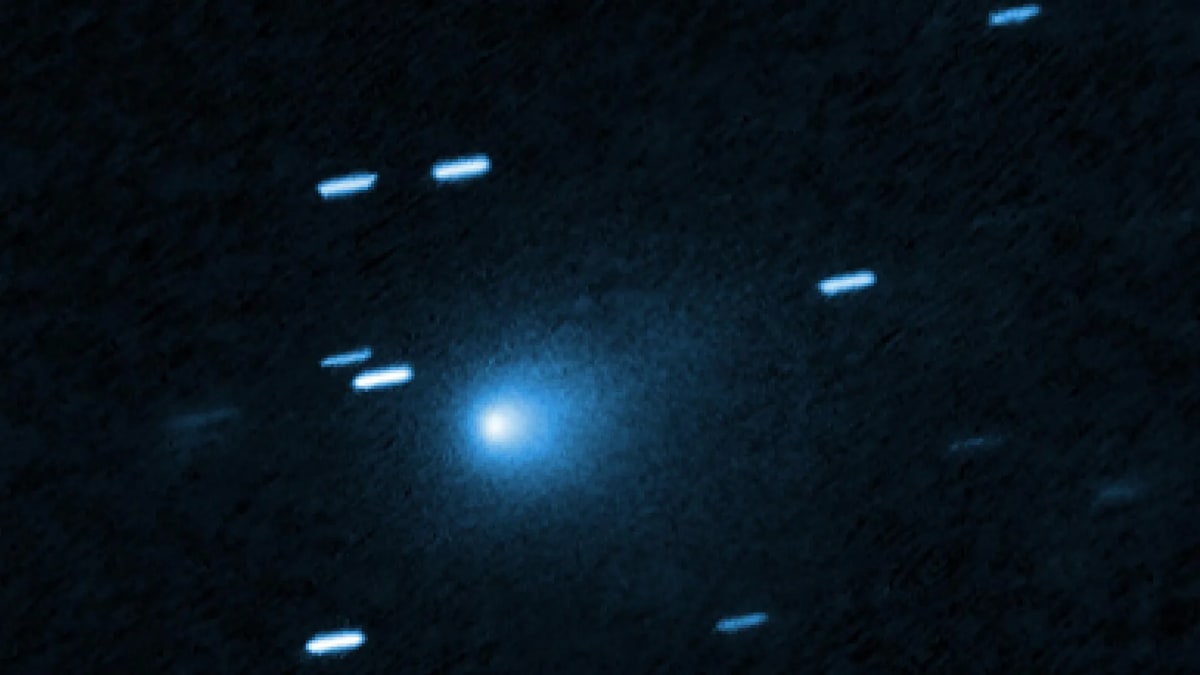
NASA's James Webb Space Telescope has detected methane gas on interstellar comet 3I/ATLAS, marking the first time scientists have directly identified this molecule on an object from another star system. The discovery happened as the comet traveled away from the Sun in December, roughly 205 to 236 million miles out in space.
What makes this finding remarkable is that the methane was hiding. Scientists believe layers of ice protected the methane beneath the surface until the Sun's heat penetrated deep enough to release it as gas.
The comet's chemistry tells a story about a place very different from our cosmic neighborhood. 3I/ATLAS contains an unusually high ratio of methane compared to water, a combination rarely seen in comets born around our Sun.
Even stranger, the comet releases exceptionally large amounts of carbon dioxide relative to water. These measurements suggest 3I/ATLAS formed in a chemical environment that operates under completely different rules than our own solar system.
Webb tracked the comet using its Mid-Infrared Instrument, which splits infrared light into individual wavelengths like a prism. By reading these wavelengths, researchers can identify specific gases surrounding the comet's nucleus and even map where those gases concentrate around the object.
As 3I/ATLAS moved farther from the Sun, scientists watched its gas production drop sharply. Water vapor decreased the fastest because it needs more heat to vaporize than methane or carbon dioxide, giving researchers clues about how the comet's surface responds to changing temperatures.
Why This Inspires
Every interstellar visitor that passes through our solar system is like receiving a postcard from an alien world we might never reach. 3I/ATLAS traveled for potentially millions of years through the cold darkness of space, preserving a frozen record of the conditions where it formed.
This comet formed somewhere with different building blocks than Earth, Jupiter, or any planet we've studied up close. By analyzing its chemistry, scientists can piece together what other star systems look like without ever leaving our cosmic doorstep.
The findings also showcase how Webb continues to reveal details invisible to previous telescopes. What looked like just another icy rock to earlier instruments now appears as a chemical time capsule, carrying information about planetary formation across the galaxy.
Each measurement brings us closer to answering one of humanity's biggest questions: how common are the conditions that created Earth?
Based on reporting by Science Daily
This story was written by BrightWire based on verified news reports.
Spread the positivity!
Share this good news with someone who needs it