NASA Extends Voyager 2's Life at 13 Billion Miles Away
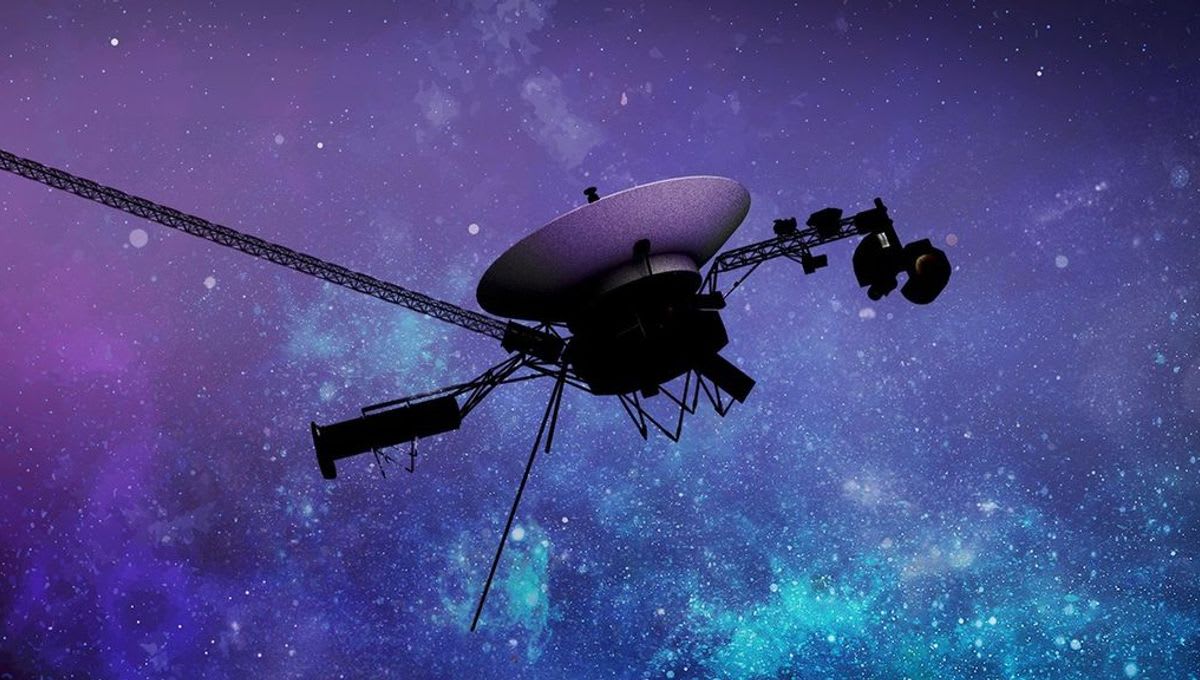
After nearly 50 years in space, NASA just pulled off a clever power swap to keep Voyager 2 exploring the cosmos. The aging spacecraft, now over 13 billion miles from home, will keep sending back data from the edge of the unknown.
📺 Watch the full story above
NASA engineers just gave a 47-year-old spacecraft a new lease on life, and it's happening billions of miles from Earth.
Voyager 2, launched back in 1977 with technology that predates the internet, is still cruising through interstellar space. But like any aging explorer, it's running low on energy. The probe loses about 4 watts of power each year as its plutonium fuel supply gradually depletes.
NASA's solution? A carefully orchestrated power swap that kept the spacecraft warm enough to survive while maintaining its most important science instruments.
On August 4, engineers successfully powered down two heating devices aboard Voyager 2 and replaced them with lower-power alternatives. The move happened 13.28 billion miles from Earth, where the background temperature of space hovers at a bone-chilling negative 454 degrees Fahrenheit.
The switchover, part of an effort called "Big Bang," ensures that Voyager 2's three remaining instruments will keep running. The magnetometer, Plasma Wave Subsystem, and Cosmic Ray Subsystem continue collecting data about the mysterious region beyond our solar system.
Voyager 1, even farther out at 15.89 billion miles, will get the same treatment in coming months.
Why This Inspires
The Voyager mission represents human ingenuity at its finest. These spacecraft were built with 1970s technology, during an era when Carl Sagan walked the halls at NASA and personally worked on the Golden Records placed aboard each probe.
Nearly five decades later, a team of dedicated engineers still problem-solves across billions of miles of space. They've systematically shut down non-essential systems over the years, prioritizing the instruments that matter most for exploring uncharted territory.
Both spacecraft could remain within range of Earth's Deep Space Network until the 2030s. After that, they'll continue their journey in silence, traveling indefinitely through the cosmos with no friction to slow them down.
Voyager 1 will reach another milestone on November 13, 2026, becoming the first human-made object to travel one light-day from Earth. It's a reminder that sometimes our greatest achievements keep achieving long after their creators expected.
The Voyagers carry messages from Earth on their Golden Records, just in case they encounter anyone out there in the vast darkness. For now, they're still talking to us, still teaching us, still proving that good engineering and creative problem-solving can defy even the harshest conditions imaginable.
More Images



Based on reporting by Google News - Science
This story was written by BrightWire based on verified news reports.
Spread the positivity!
Share this good news with someone who needs it