NASA Extends Voyager Missions 2 Years With 'Big Bang' Fix
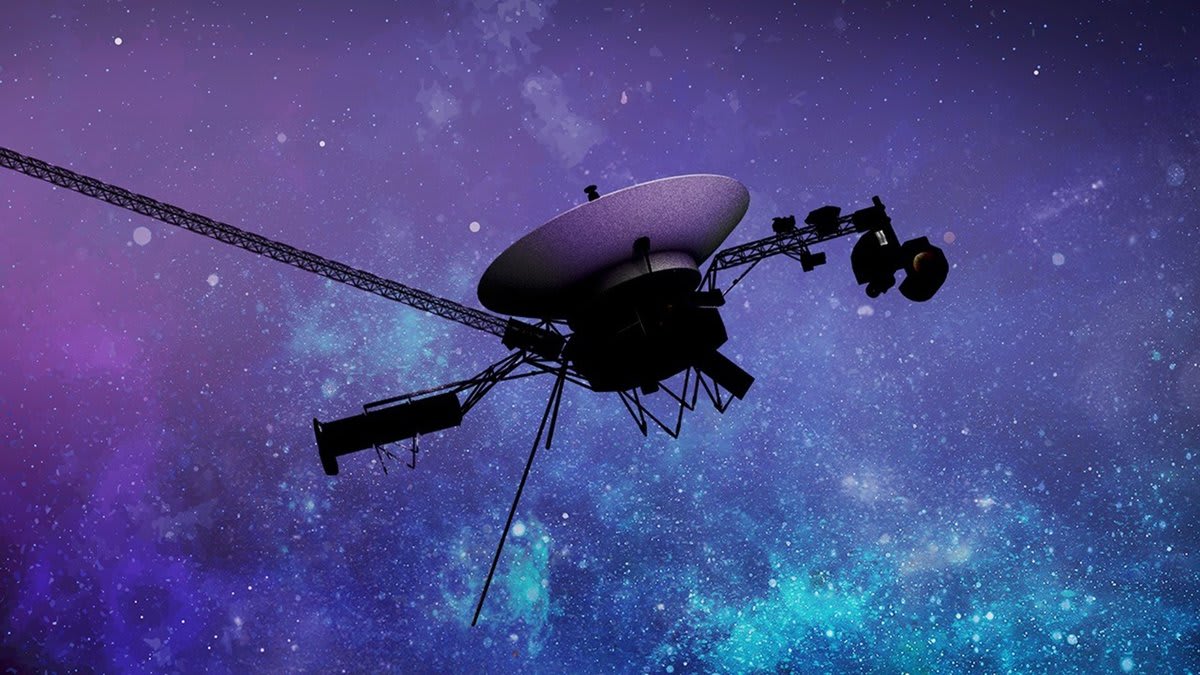
After 49 years in space, NASA's twin Voyager probes were running out of power and facing a silent end. A risky "big bang" maneuver just bought humanity's farthest messengers two more years exploring the cosmos.
NASA engineers just pulled off one of the gutsiest moves in space exploration history, and it could keep our most distant spacecraft talking to us until their 50th birthdays.
The Voyager probes, both launched in 1977, have been slowly dying. Their plutonium power sources lose about four watts annually as they decay, forcing NASA to gradually shut down science instruments over the years.
But here's the catch: that same radioactive decay produces the heat keeping the spacecraft alive. If fuel lines freeze, these legendary explorers go silent forever.
Mission manager Kareem Badaruddin calls the solution a "big bang," though it's not a phrase NASA usually likes. The team simultaneously switched off three devices while firing up three others in a carefully choreographed shuffle that saves nearly 10 watts per year without freezing critical components.
"This is the most important thing we've done on the Voyager spacecraft in decades," Badaruddin says.
The risk was enormous. These spacecraft use punch card era computers, and engineers can't directly measure temperatures in the fuel lines because freezing was never a concern during the original mission. There are no practice models to test commands on either.
After months of planning while Voyager 2's communication antenna was down for repairs, engineers ran power and thermal tests in May and June. The full "big bang" completed on Voyager 2 in July, going exactly to plan.
Voyager 1's procedure started last week and is progressing smoothly. Engineers expect to finish in the coming weeks.
Why This Inspires
These aren't just any spacecraft. Voyager 2 completed humanity's only flybys of Uranus and Neptune in the 1980s during its grand tour of the outer planets. Voyager 1 visited Jupiter and Saturn before both probes headed into interstellar space, studying regions no human made object had ever reached.
The team working on them today operates unlike any other NASA mission. "We can't do things the way they were always done," Badaruddin explains. Every command gets evaluated with fresh eyes, asking whether it truly serves the mission now.
The dedication shows. "These people love these spacecraft and will do anything to see these spacecraft succeed," he says.
In November, Voyager 1 will reach one light day from Earth, a distance that once seemed unthinkable. Both probes are now poised to celebrate their 50th anniversaries in space next year, continuing to send back data from the mysterious interstellar medium with instruments originally designed to observe planets.
The two year extension means more discoveries from the edge of our solar system and beyond, courtesy of technology older than most of the engineers now keeping it alive.
More Images



Based on reporting by Scientific American
This story was written by BrightWire based on verified news reports.
Spread the positivity!
Share this good news with someone who needs it