NASA Finds Europa's Ice Shell is 18 Miles Thick
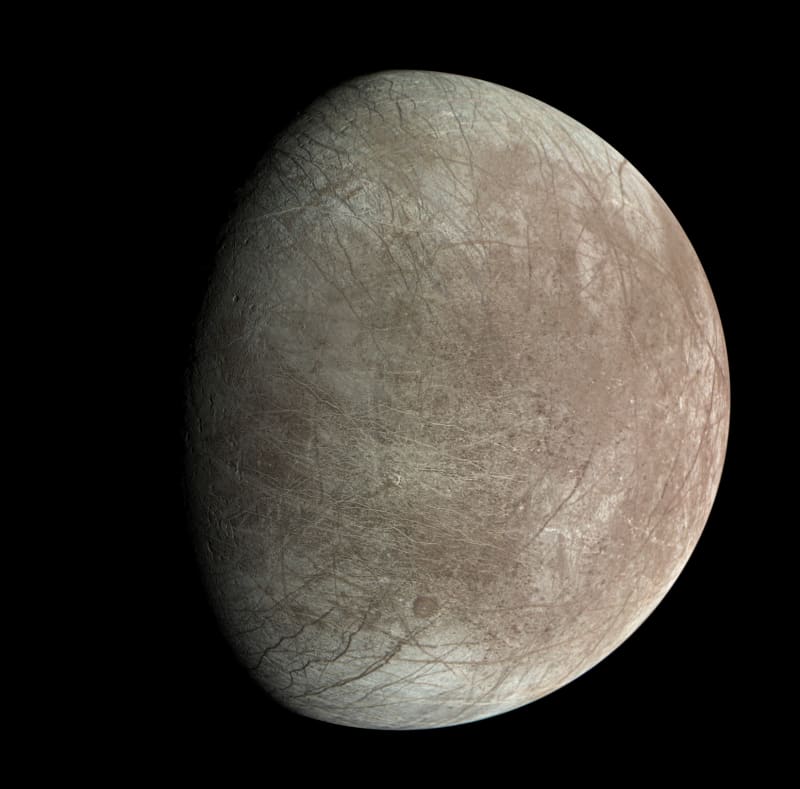
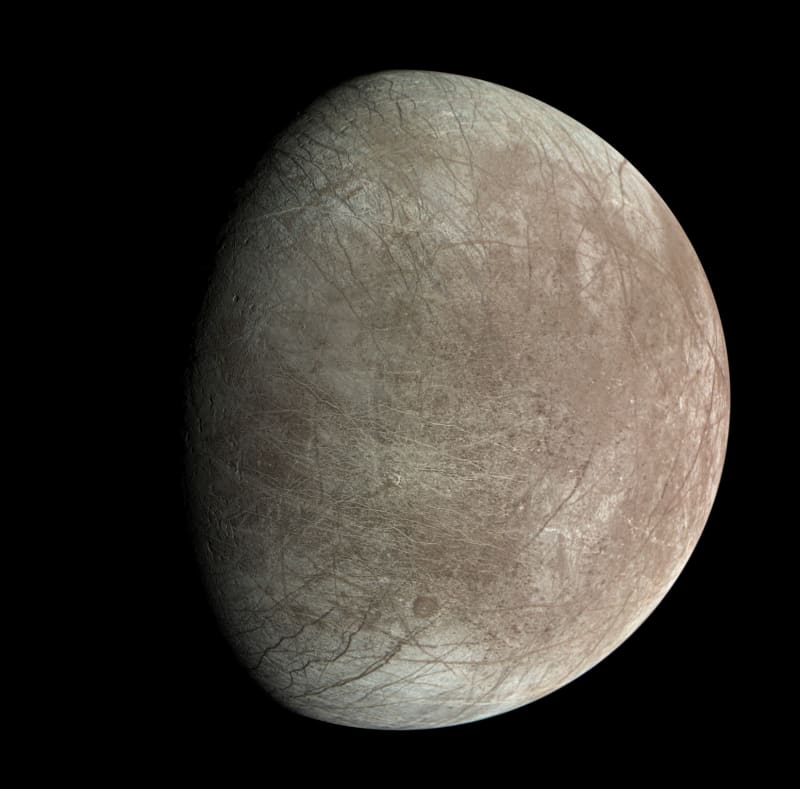
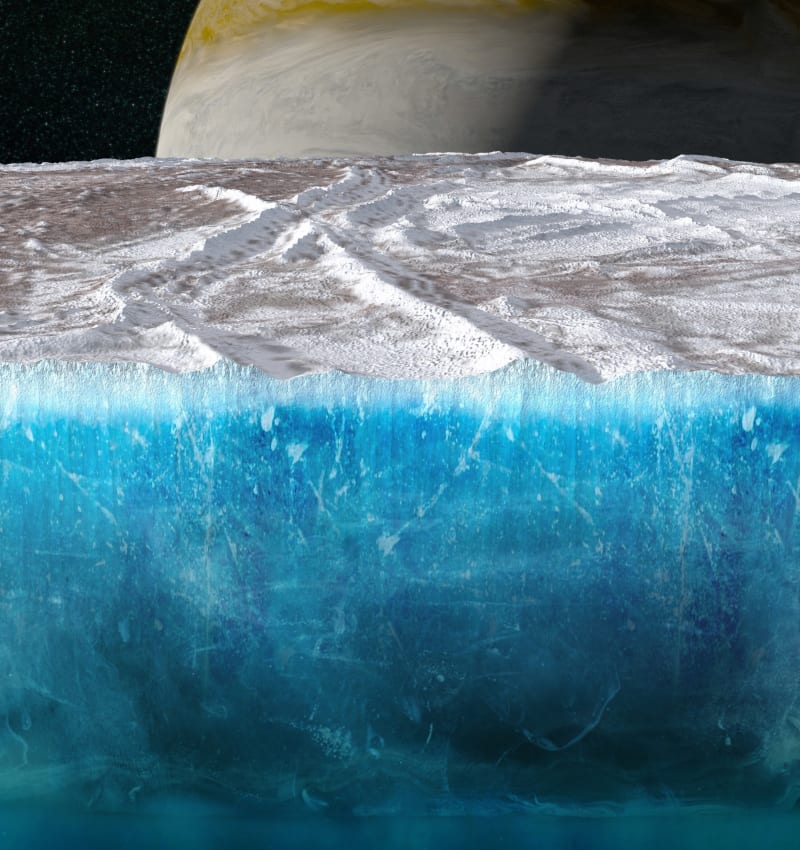
Jupiter's moon Europa just got more intriguing. NASA's Juno spacecraft measured the thickness of the icy shell covering Europa's hidden ocean, bringing scientists closer to understanding if life could exist there.
Scientists just solved a puzzle that's been stumping them for decades: how thick is the ice covering Europa's mysterious ocean?
NASA's Juno spacecraft measured Europa's ice shell at about 18 miles thick during its 2022 flyby. This is the first time researchers have been able to distinguish between competing theories that ranged from less than half a mile to tens of miles thick.
Why does this matter? Europa, slightly smaller than Earth's moon, sits at the top of scientists' list for finding life beyond Earth. A saltwater ocean lies beneath that frozen shell, potentially containing all the ingredients needed for life to exist.
The measurement came from an unexpected source. Juno's Microwave Radiometer was originally designed to study Jupiter's atmosphere, but it proved perfect for peering beneath Europa's ice during the spacecraft's close approach of just 220 miles from the surface.
The instrument detected temperatures at various depths in the ice. It also found something surprising: tiny cracks, pores, and voids scattered throughout the ice down to hundreds of feet below the surface.
Why This Inspires
This discovery represents years of human ingenuity coming together. Engineers designed instruments flexible enough to accomplish tasks beyond their original mission. Scientists found creative ways to answer questions that seemed impossible just years ago.
The thicker ice shell means oxygen and nutrients from Europa's surface would have a longer journey to reach the ocean below. Understanding this pathway helps scientists figure out whether the ocean could actually support life.
Two more spacecraft are already on their way to continue the investigation. NASA's Europa Clipper will arrive in 2030, followed by the European Space Agency's Juice mission in 2031. Each new discovery helps these future missions know exactly where to look and what to measure.
Steve Levin, Juno's project scientist, notes that if the ice contains salt as some models suggest, the shell could be about three miles thinner than measured. If there's a warmer layer beneath, it could be even thicker.
Meanwhile, Juno keeps working. The solar-powered spacecraft will complete its 81st flyby of Jupiter on February 25, continuing to reveal secrets about the giant planet and its fascinating moons.
Every measurement brings us closer to answering one of humanity's biggest questions: are we alone in the universe?
More Images

Based on reporting by NASA
This story was written by BrightWire based on verified news reports.
Spread the positivity!
Share this good news with someone who needs it