NASA Finds 'Interstellar Glaciers' That Could Seed New Worlds
NASA's newest telescope has discovered vast frozen water reservoirs in space that could deliver the building blocks of life to future planets. The same icy processes that formed these cosmic glaciers likely created Earth's oceans.
Scientists just found enormous reservoirs of frozen water floating through space, and they might hold the secret to how life begins on planets across the universe.
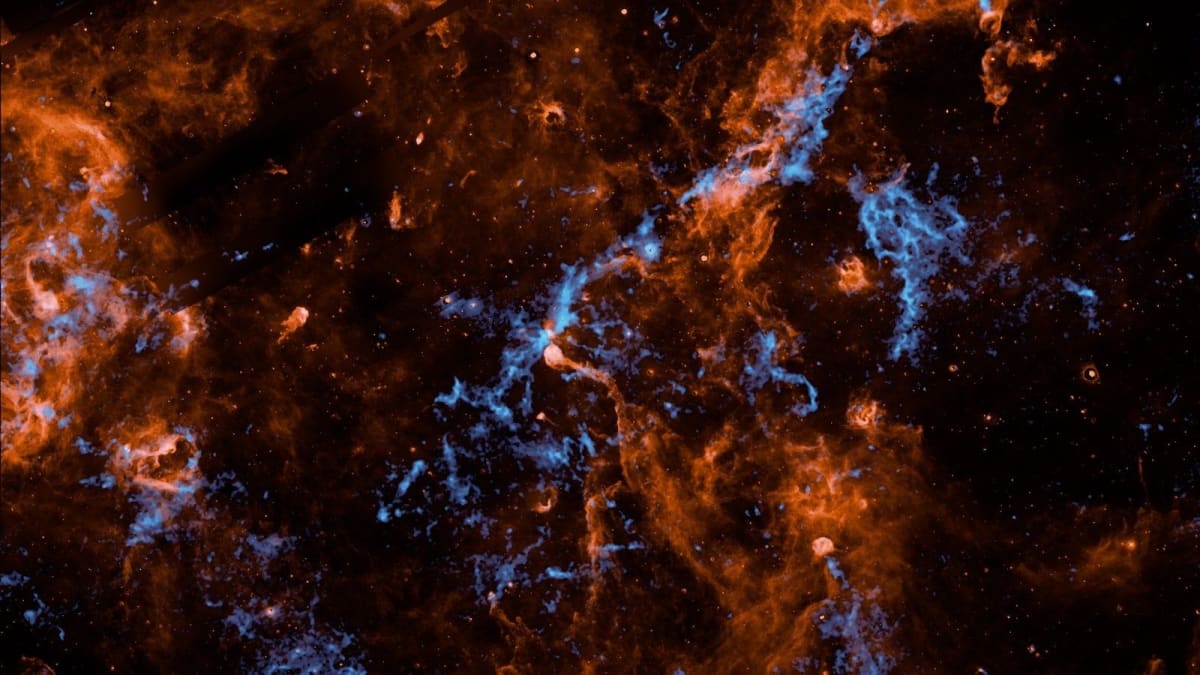
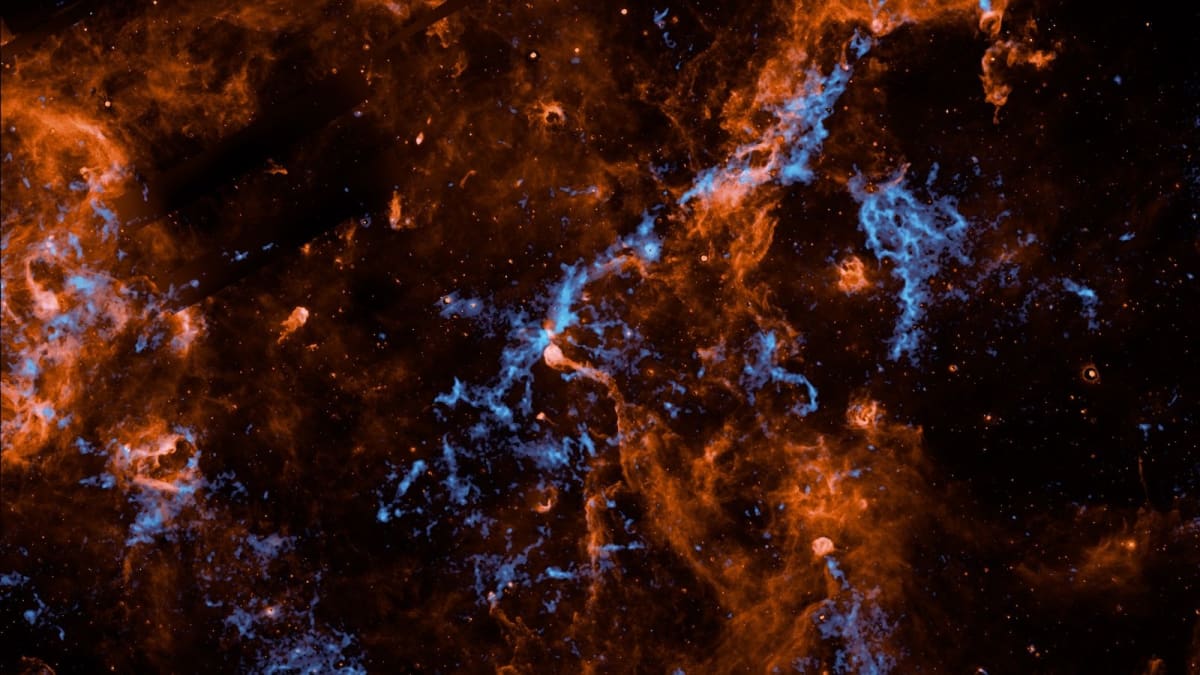
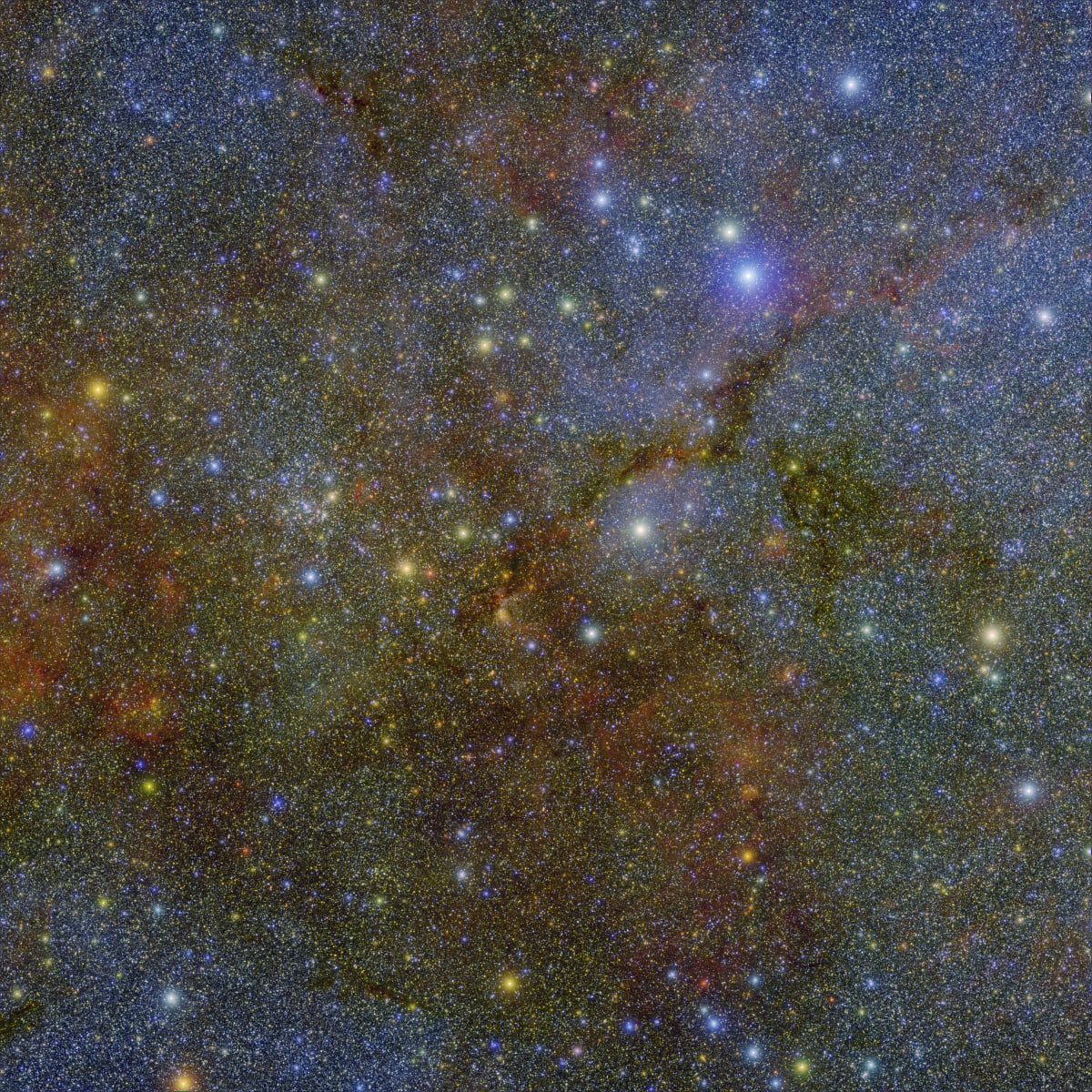
NASA's SPHEREx telescope captured stunning images of "interstellar glaciers" spreading across Cygnus X, one of the Milky Way's most active stellar nurseries. These vast fields of ice contain water, carbon dioxide, and carbon monoxide frozen onto tiny dust grains smaller than candle smoke particles.
The discovery reveals where much of the universe's water comes from, including what fills Earth's oceans today. These same icy reservoirs are thought to rain down on newly forming planets, potentially seeding them with the ingredients needed for life.
"These vast frozen complexes are like 'interstellar glaciers' that could deliver a massive water supply to new solar systems that will be born in the region," said Phil Korngut, a SPHEREx instrument scientist at Caltech. "It's a profound idea that we are looking at a map of material that could rain on nascent planets and potentially support future life."
The findings surprised researchers. They expected to find ice only around individual bright stars, where starlight acts like a spotlight revealing frozen material. Instead, SPHEREx detected diffuse ices spread throughout entire dust clouds along the galactic plane.
Lead author Joseph Hora, an astronomer at the Center for Astrophysics at Harvard & Smithsonian, explained that the telescope can see "the spatial distribution of the ices they contain in incredible detail." The images show water ice concentrated in the densest dust regions, where thick cosmic clouds shield fragile molecules from harsh ultraviolet radiation from newborn stars.
These protective dust lanes allow water molecules to survive for eons, preserving the building blocks of life until they can settle onto forming planets. The same process that created these interstellar glaciers likely delivered water to comets and icy bodies throughout our own solar system billions of years ago.
Why This Inspires
This discovery connects us to something far bigger than ourselves. Every drop of water on Earth, every wave in the ocean, every raindrop that falls may have begun its journey as ice frozen onto cosmic dust grains in regions like Cygnus X.
SPHEREx will continue mapping water and other life-giving molecules across the Milky Way during its two-year mission. Scientists are eager to understand how these materials respond to different levels of radiation and how they're distributed throughout our galaxy.
We're witnessing the earliest stages of planetary formation and potentially the birth of future life in distant star systems.
More Images

Based on reporting by Space.com
This story was written by BrightWire based on verified news reports.
Spread the positivity!
Share this good news with someone who needs it