NASA Finds Largest Modern Impact Crater on the Moon
A 222-meter crater on the Moon has become the largest known recent impact site in our Solar System. Scientists estimate impacts this massive happen only once every 132 years.
Scientists have captured something truly extraordinary: the biggest fresh impact crater discovered anywhere in our Solar System in modern times.
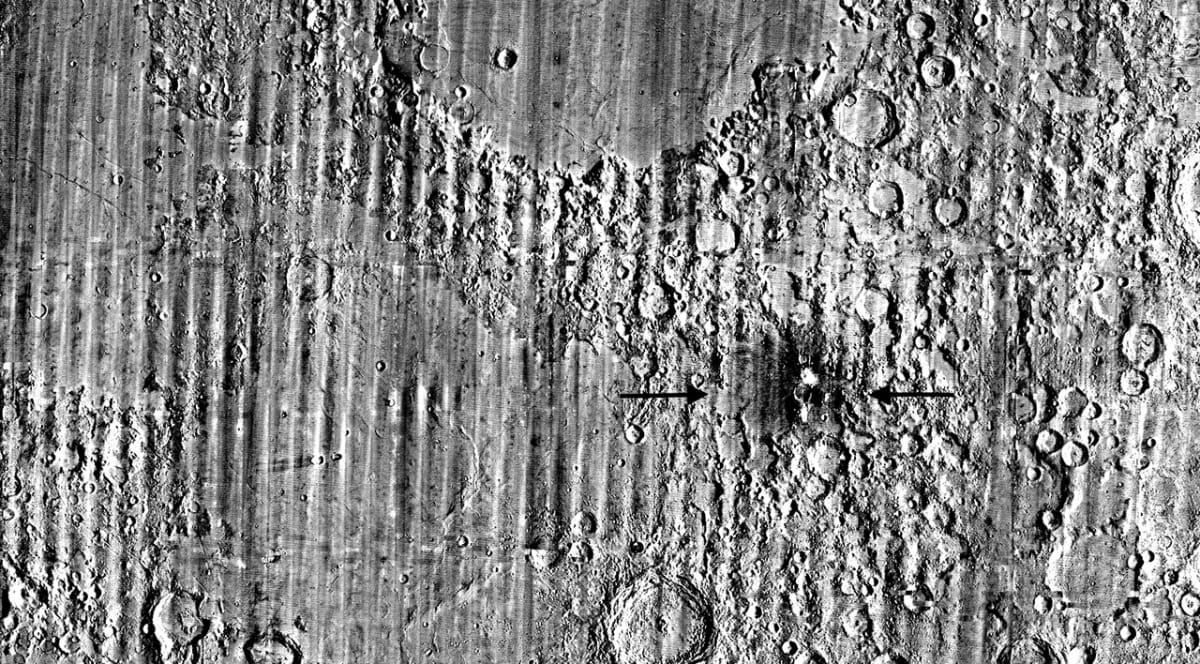
NASA's Lunar Reconnaissance Orbiter spotted the massive crater on the Moon's near side in May 2024, shortly after a fragment from an asteroid or comet slammed into the surface. The impact site measures an impressive 222 meters wide and plunges 43 meters deep.
The discovery nearly slipped through the cracks. With enormous volumes of data streaming in from the orbiter, researchers didn't notice the crater images until August 2025. Once they realized what they had, the spacecraft swooped back for detailed photographs that autumn, and by early 2026, the team confirmed their remarkable find.
The new crater dwarfs the previous record holder, discovered by the same orbiter about a decade ago. This one stretches roughly three times larger.
Why This Inspires
This discovery reminds us that our cosmic neighborhood still holds surprises, and we're getting better at catching them. The crater earned its name in honor of Thomas McGetchin, the late director of the Lunar and Planetary Institute in Houston, who dedicated his career to understanding our celestial neighbor.
The impact didn't just create a hole. It transformed the lunar landscape across an area spanning more than 100 kilometers around the impact site. Researchers also discovered a cold region about 7 kilometers wide near the crater, formed when the collision mixed up the upper layers of Moon dust.
Scientists call impacts of this scale "extraordinarily rare." Their calculations suggest the Moon gets hit this hard roughly once every 132 years. One researcher described it as "a truly unique, once-in-a-lifetime observation."
The team published their findings in the scientific journal Science Advances, adding another chapter to our understanding of how celestial bodies shape and reshape themselves over time. Every piece of data from the Lunar Reconnaissance Orbiter helps scientists better predict and understand cosmic impacts, knowledge that could prove valuable for future Moon missions and space exploration.
This discovery shows that even places we think we know well can still surprise us with something spectacular.
Based on reporting by Google: NASA discovery
This story was written by BrightWire based on verified news reports.
Spread the positivity!
Share this good news with someone who needs it