NASA Powers Up 300-Megapixel Space Camera
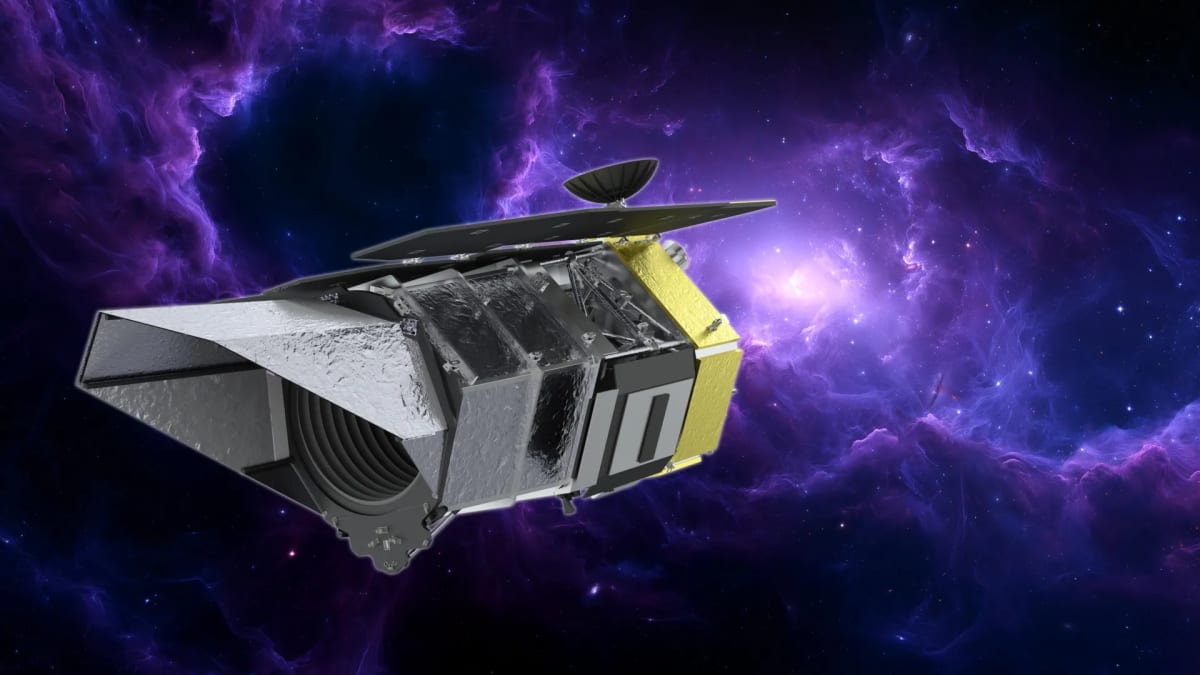
NASA's Roman Space Telescope just switched on its massive 300-megapixel camera, bringing us closer to unprecedented views of the universe. The telescope is on track to begin capturing stunning cosmic images by early 2027.
A camera more powerful than anything currently scanning the heavens just came online, and it's about to change how we see the universe.
NASA's Nancy Grace Roman Space Telescope successfully activated its Wide Field Instrument this month, marking a major milestone as the spacecraft travels toward its permanent home one million miles from Earth. The 300-megapixel infrared camera combines the sharp detail of Hubble with an incredibly wide field of view.
Think of it this way: a single image from this camera will cover more sky than a full moon appears to our eyes. That's like getting Hubble-quality photos but seeing 100 times more space in each shot.
The activation didn't happen overnight. Engineers spent 10 days carefully drying out and decontaminating the instrument before cooling its 18 infrared detectors to a frigid minus 225 degrees Fahrenheit. By September 11, the team was ready to power everything up.
Over one intensive weekend, engineers tested every critical system. They verified the element wheel that controls which wavelengths of light reach the detectors, essentially allowing the telescope to see in different cosmic colors. They checked the focusing mechanism that will keep hundreds of thousands of future images crystal clear.
The instrument eventually cooled to its final operating temperature of minus 300 degrees Fahrenheit, and everything worked perfectly. "After years of effort to build and test the instrument on the ground, we now have confirmation that it is operational in space," said Josh Schlieder, the instrument scientist at NASA's Goddard Space Flight Center.
Roman's companion technology also passed its early tests. The Coronagraph Instrument, designed to block starlight and reveal orbiting planets, successfully communicated with ground teams and warmed up to its comfortable operating temperature of 72 degrees Fahrenheit.
The Ripple Effect
This telescope will do far more than capture pretty pictures. Scientists plan to use Roman's sweeping surveys to discover and study planets beyond our solar system, investigate the mystery of dark energy that's pushing our universe apart, and map how matter arranges itself across billions of light-years.
The real beauty lies in the data itself. Roman's observations will create an enormous dataset that researchers can mine for decades, leading to discoveries we haven't even imagined yet. Astronomers around the world will have access to these unprecedented views.
The telescope remains on schedule to release its first science images by early 2027, opening a new window on our cosmic neighborhood and beyond.
Based on reporting by Science Daily
This story was written by BrightWire based on verified news reports.
Spread the positivity!
Share this good news with someone who needs it