NASA Races to Save $500M Telescope Before It Falls to Earth
A 22-year-old space telescope that's discovered countless cosmic explosions is falling back to Earth, but NASA just tested the rescue spacecraft that could save it. The mission has only months to succeed before the beloved observatory burns up in the atmosphere.
NASA's Swift Observatory has spent two decades watching the universe's most violent moments, from exploding stars to black holes tearing matter apart, but now it faces its own dramatic countdown.
The telescope is slowly falling toward Earth. Without a rescue mission, it will burn up in the atmosphere later this year, ending one of the most productive astronomy missions in history.
Swift was never designed to fix this problem. Unlike most spacecraft, it has no engines to push itself higher after years of atmospheric drag pulled it down from 600 kilometers to just 400 kilometers above Earth. Rising solar activity has made the problem worse, expanding the atmosphere and increasing drag on satellites in low orbit.
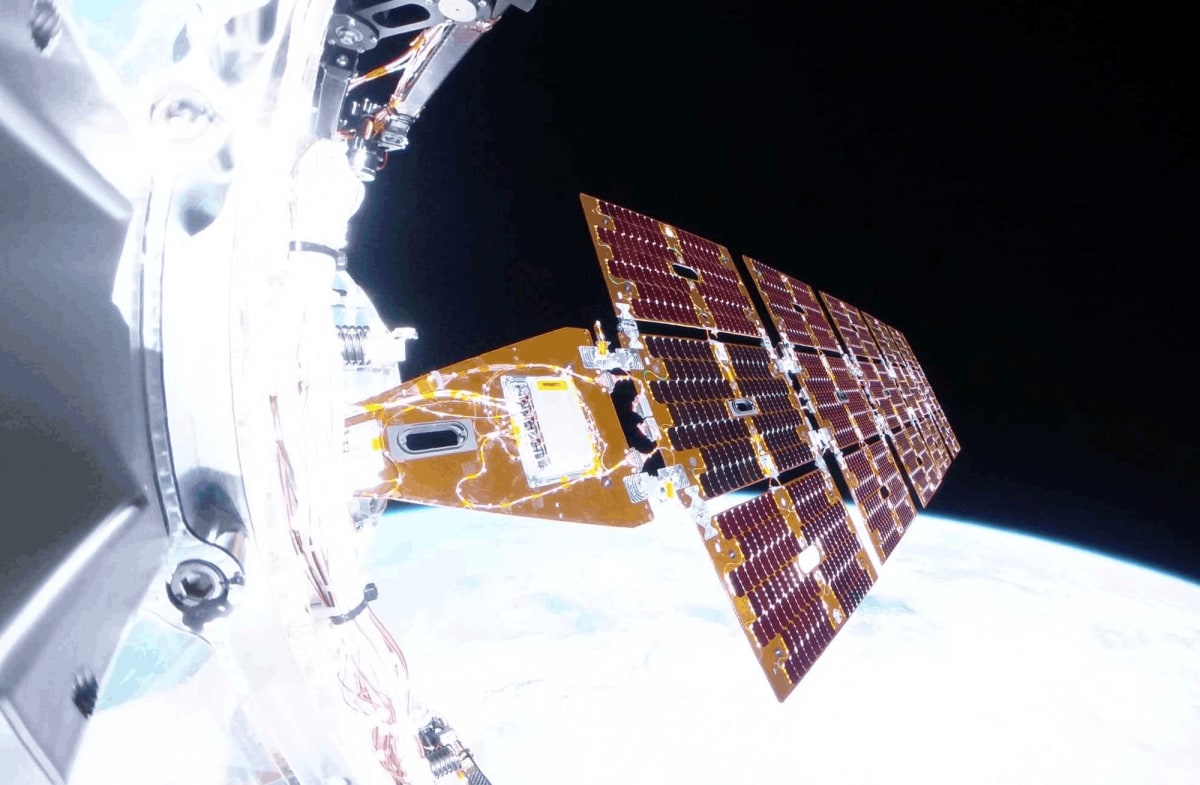
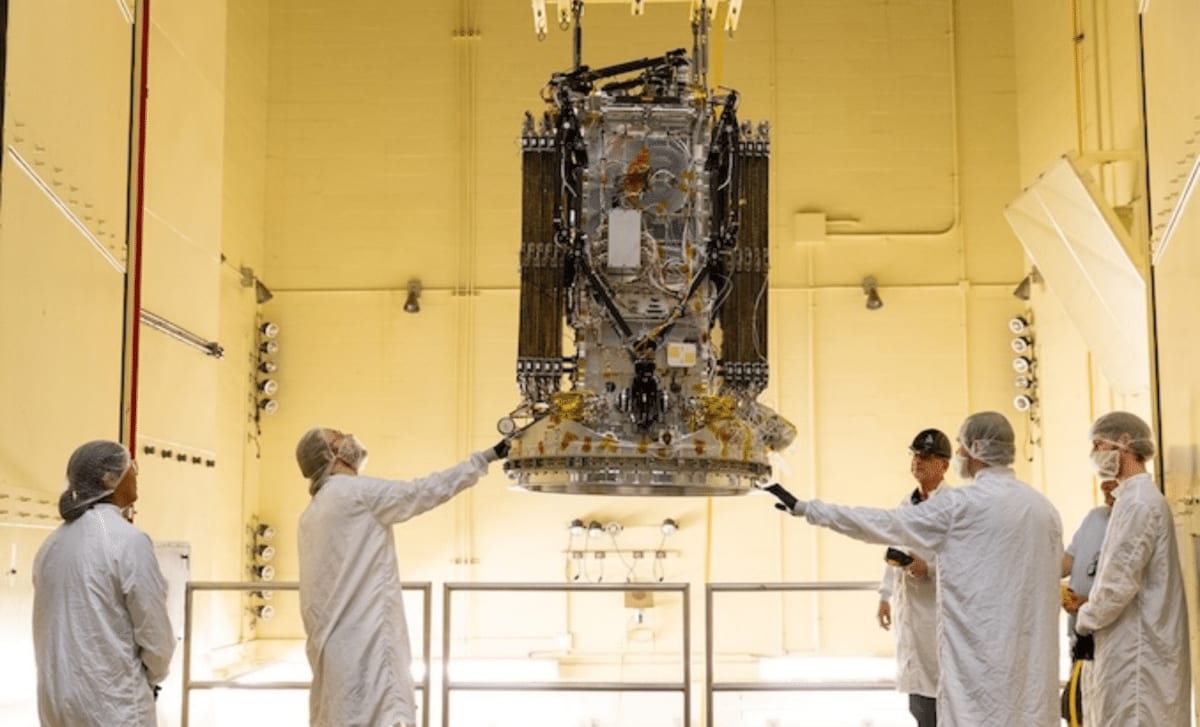
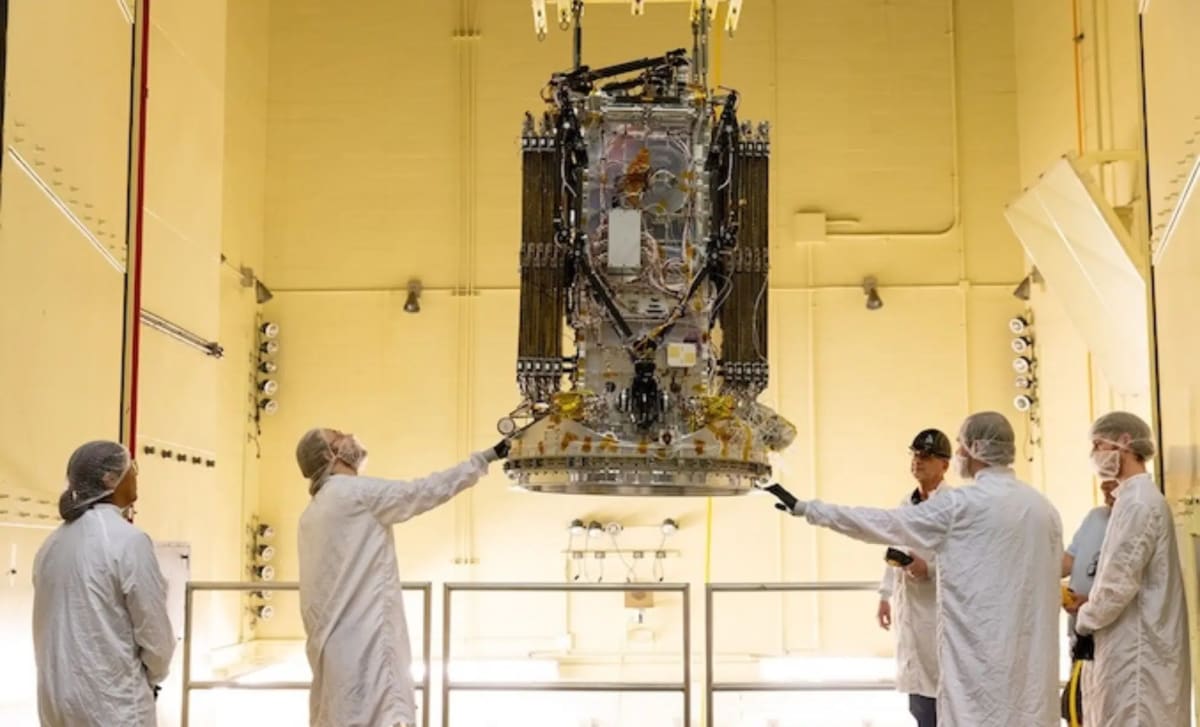
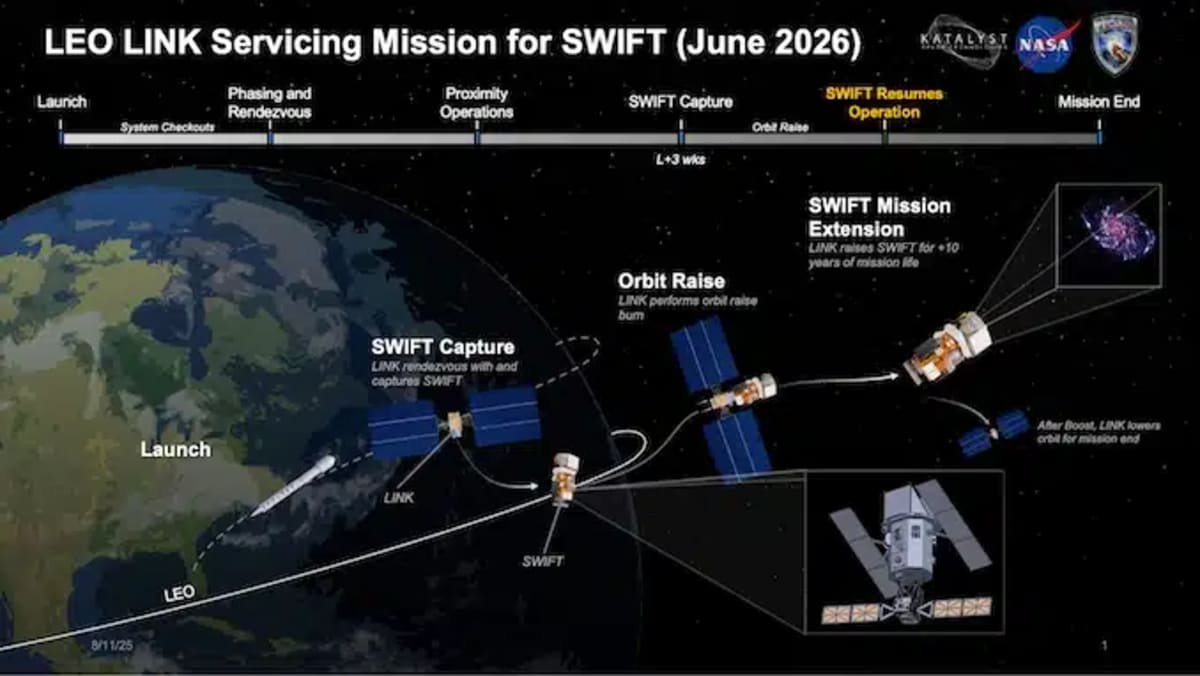
That's where Link comes in. Built by Colorado company Katalyst Space Technologies in just eight months, this rescue spacecraft will attempt something rarely done: dock with a 22-year-old satellite that was never designed to be grabbed, and push it to safety.
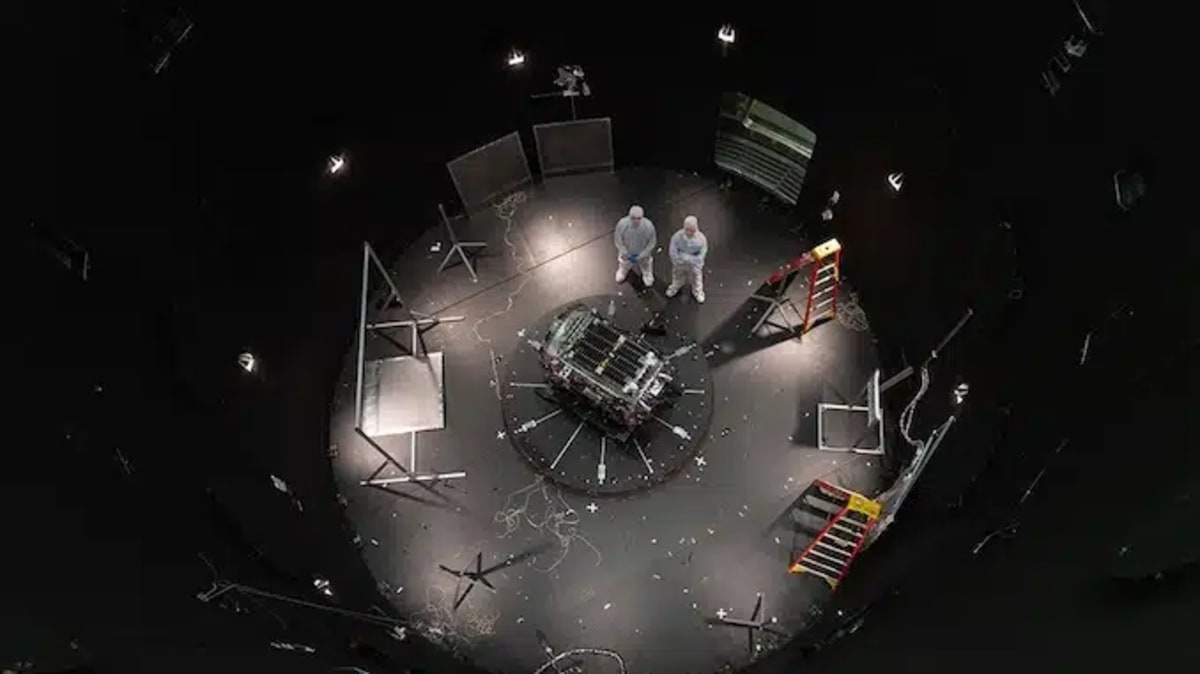
Link just passed a crucial test. Engineers at NASA's Goddard Space Flight Center exposed the spacecraft to the vacuum and extreme temperatures of space, then watched as it fired its ion thrusters and deployed its robotic arms. Everything worked.
The spacecraft returned to Colorado in early May for final preparations before launch. The timeline is tight because Swift keeps falling, losing altitude every week. There's no room for delays or second chances.
NASA awarded Katalyst a $30 million contract last September to develop the rescue mission. That's a bargain compared to the $500 million value of Swift and the years it would take to build a replacement with similar capabilities.
Why This Inspires
This mission represents a new way of thinking about space. For decades, satellites were treated as disposable. When they broke or ran out of fuel, they were abandoned. Swift's rescue shows that doesn't have to be the future.
Mission director John Van Eepoel called it a "fast, high-risk, high-reward mission," and that honesty is refreshing. NASA isn't guaranteeing success, but they're trying something bold to save a telescope that has revealed so much about our universe.
If Link succeeds, it won't just extend Swift's mission. It will prove that aging satellites worth billions of dollars don't have to die when they face fixable problems. Future telescopes could be refueled, repaired, or boosted by rescue missions like this one.
Swift has already outlived its original mission timeline by nearly two decades, discovering thousands of cosmic events that happened billions of years ago. Now engineers are racing to give it a few more years to keep watching the stars.
More Images

Based on reporting by Google News - Science
This story was written by BrightWire based on verified news reports.
Spread the positivity!
Share this good news with someone who needs it