NASA Simulations Make Moon Missions Safer for Astronauts
NASA engineers used advanced computer simulations to protect the Artemis II crew and launchpad from dangerous rocket exhaust and sound waves. The breakthrough software will soon be free for aerospace companies to use.
When NASA's most powerful rocket blasts off, the exhaust and sound can create forces strong enough to damage equipment and threaten crew safety.
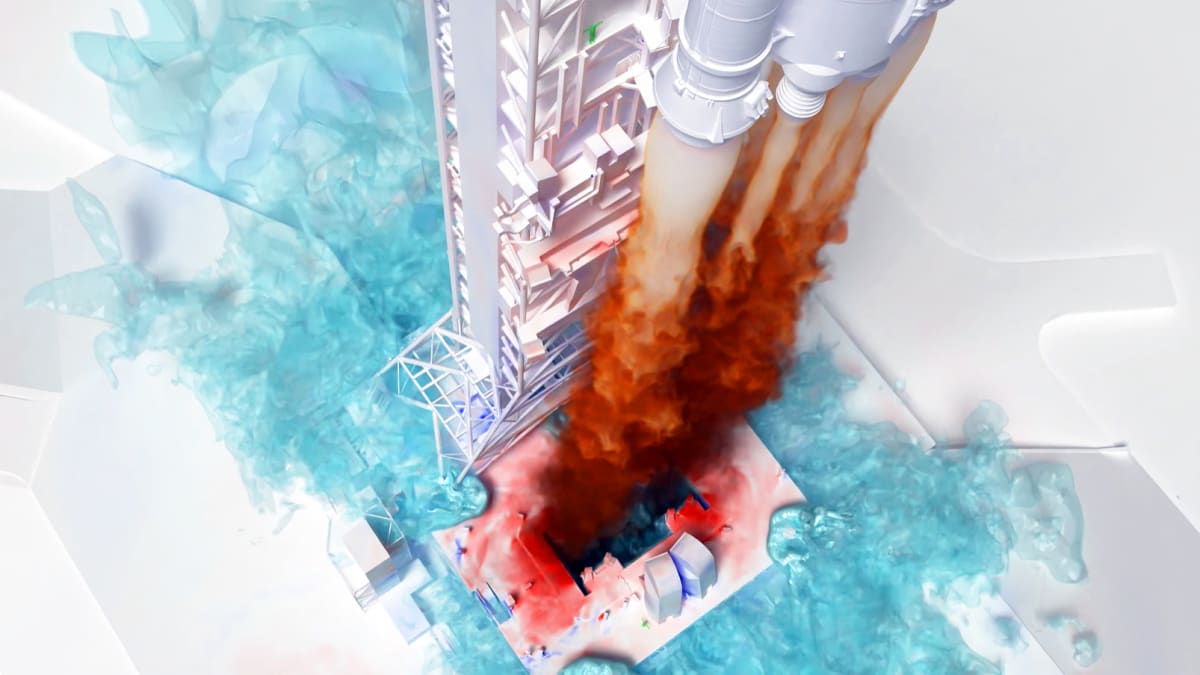
Now, NASA engineers have used groundbreaking simulations to solve this challenge for Artemis II, the first crewed mission to the Moon in over 50 years. Using data from the 2022 Artemis I launch, researchers at NASA's Ames Research Center ran complex models through software called LAVA (Launch, Ascent, and Vehicle Aerodynamics).
The simulations revealed something crucial. The massive water system that sprays across the launchpad to dampen sound waves works well, but rocket exhaust can redirect that water in unexpected ways. These redirections create pressure spikes in certain launchpad areas that could cause serious damage.
Armed with this knowledge, engineers at Kennedy Space Center redesigned parts of the mobile launch platform. The updated design can now withstand the intense pressures that will occur when Artemis II's crew launches toward the Moon.
LAVA uses computational fluid dynamics to predict how gases and liquids behave around spacecraft. The tool simulates the intricate dance between rocket plumes, air, water, and launch structures with remarkable accuracy. Engineers compared scenarios with and without the sound suppression system activated to understand exactly what happens during those critical first seconds of liftoff.
The Ripple Effect
NASA will release LAVA to the aerospace community in the coming weeks, giving American companies and researchers access to the same advanced tools that protect astronauts. This technology transfer means safer, more efficient designs for commercial rockets and aircraft across the industry.
The work reflects decades of NASA aeronautics expertise now strengthening space exploration. The same organization that pioneered wind tunnel testing and flight innovations continues pushing boundaries with cutting-edge software that turns raw data into lifesaving insights.
Four astronauts will soon circle the Moon aboard Artemis II, protected by engineering breakthroughs that started with careful analysis of how water droplets and exhaust gases interact during the most violent moments of spaceflight.
More Images

Based on reporting by NASA
This story was written by BrightWire based on verified news reports.
Spread the positivity!
Share this good news with someone who needs it

%3Amax_bytes(150000)%3Astrip_icc()%3Afocal(999x0%3A1001x2)%2Fmars-rover-field-073126-1e9056218dc842cdb53565a4df6cf847.jpg)