NASA Spacecraft Snaps Stunning Mars Photos on Asteroid Trip
A spacecraft on its way to study a metal asteroid just captured incredibly detailed images of Mars, revealing ancient craters and volcanic plains in vivid color. The unexpected flyby gave scientists a bonus treasure trove of data about the Red Planet.
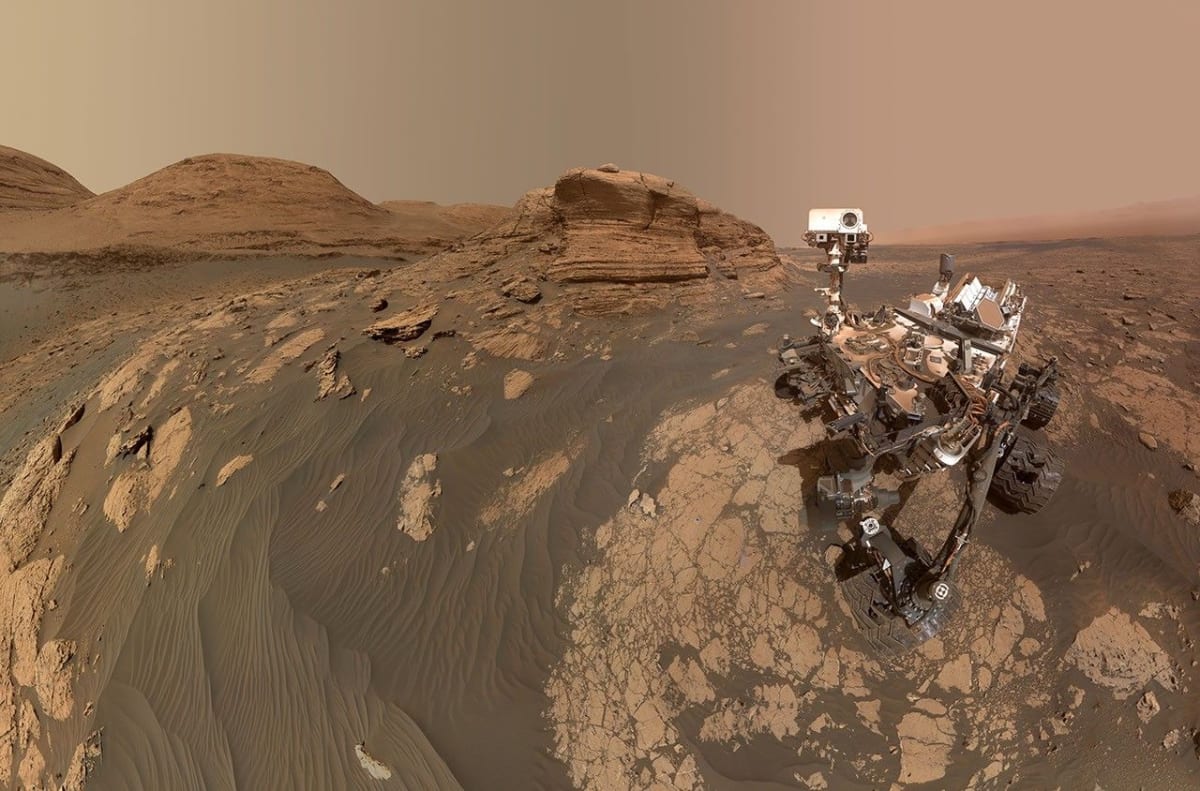
NASA's Psyche spacecraft wasn't supposed to be a Mars explorer, but it just gave us some of the most detailed images of the planet's surface we've seen in years.
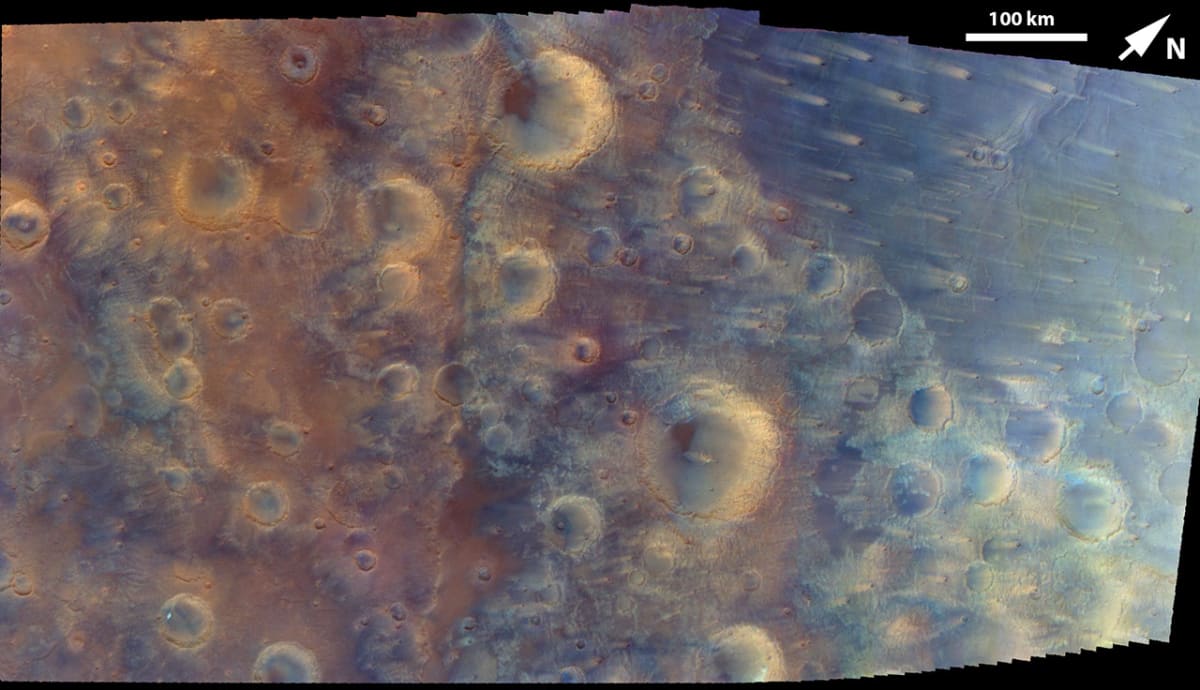
On May 15, 2026, the spacecraft swooped past Mars during its journey to study a distant metal-rich asteroid. Its camera snapped four images over six minutes, capturing craters, ridges, wind-carved streaks, and ancient volcanic plains in enhanced color that makes surface features pop.
The resulting mosaic shows a rugged stretch of Mars' southern highlands called the Iapygia region. The images reveal incredible detail, with each pixel representing an area about the size of a football field.
The star of the show is Fournier Crater, a 71-mile-wide impact scar that dominates the center of the mosaic. Scientists can also spot Oenotria Scopuli, a long cliff system running through the image that formed when a massive asteroid slammed into Mars eons ago, creating the enormous Isidis basin.
What makes these images special is the spacecraft's multispectral camera. Using near-infrared, green, and blue filters together, the instrument revealed contrasts in the Martian surface that help scientists understand what different regions are made of and how they formed.
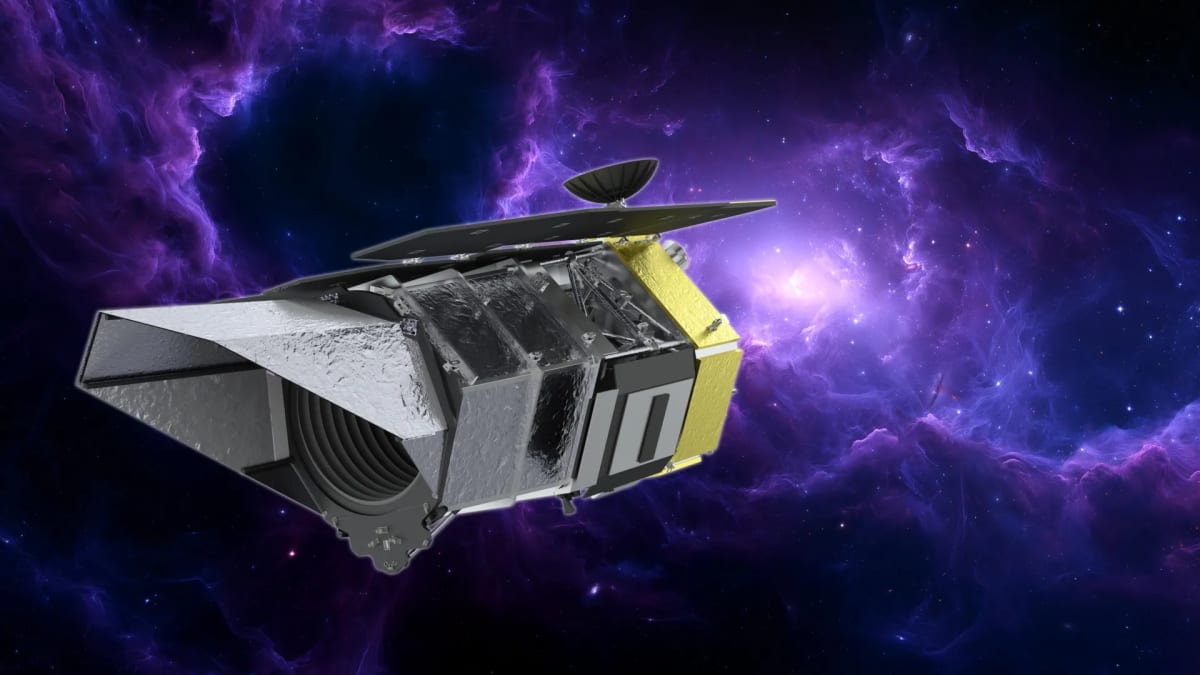
Psyche wasn't built to study Mars at all. The spacecraft is heading to its namesake, a metal asteroid orbiting between Mars and Jupiter that scientists think might be the exposed core of an ancient planet. But mission planners used Mars' gravity to slingshot Psyche toward its final destination, and the science team seized the opportunity to test their instruments.
Why This Inspires
This accidental Mars mission shows how space exploration often delivers unexpected gifts. A spacecraft designed for one purpose ends up advancing our knowledge in completely different ways, proving that curiosity and preparation create opportunities we never planned for.
The images also remind us that we're living in an era where multiple spacecraft are exploring our solar system simultaneously, each adding pieces to the puzzle of how planets form and evolve. What started as a navigation maneuver became a scientific bonus that helps us understand our neighboring world better.
Every time we look at Mars with new tools, we see something we missed before, and these images are no exception.
More Images
Based on reporting by NASA
This story was written by BrightWire based on verified news reports.
Spread the positivity!
Share this good news with someone who needs it