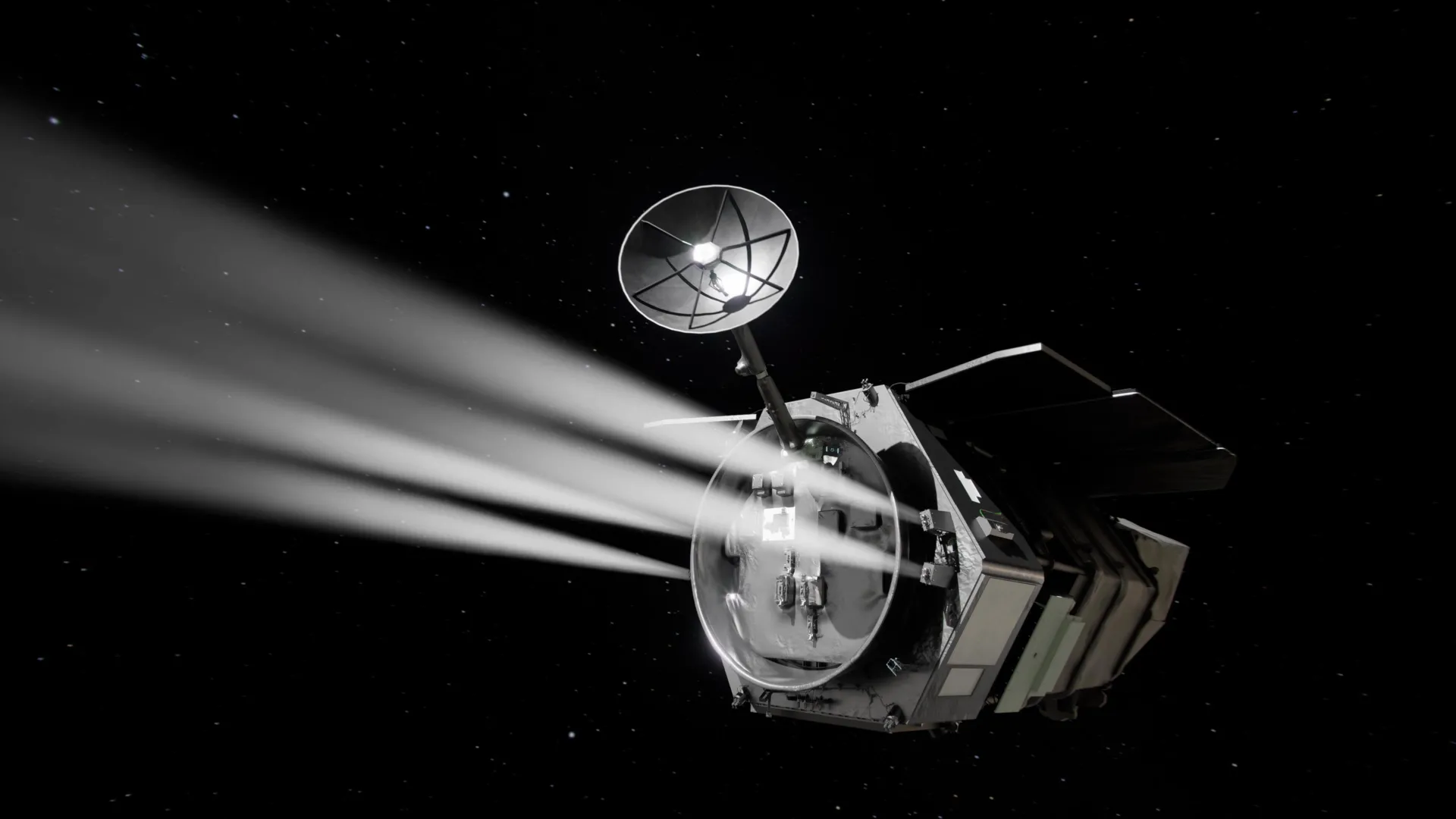
NASA Telescope Could Last 22 Years, Double Its Mission
NASA's Roman Space Telescope may operate for more than twice its planned lifespan thanks to brilliant engineering and a near-perfect launch. The telescope now has enough fuel for at least 22 years of exploring the universe instead of the original 10.
A space telescope built to last a decade could keep discovering cosmic wonders for more than 20 years.
NASA's Nancy Grace Roman Space Telescope pulled off an almost flawless course correction on August 31, using less than 10% of the fuel reserved for the maneuver. That precision, combined with extra fuel at launch and a lighter-than-expected spacecraft, means Roman could explore the universe for at least 22 years.
The telescope was designed with a fuel budget for 10 years of operations. But the first mid-course correction alone could add four extra years of science.
"As a result of exquisite planning by our orbital dynamics team, brilliant execution by the operations team, and a precise launch from SpaceX, Roman has fuel for at least 22 years of potential science operations," said Jamie Dunn, center director at NASA's Goddard Space Flight Center.
The burn was more than 99% accurate and used just 40 pounds of fuel instead of the planned 441 pounds. Those savings translate directly into extra years of studying distant galaxies, hunting for planets, and investigating dark energy.
Roman got another boost from weighing less than expected. Engineers planned for a maximum weight of 21,605 pounds, but the telescope came in at just 17,760 pounds at launch. That lighter mass meant the team could fill the fuel tanks to capacity rather than only loading what the original 10-year mission required, adding roughly four more years of operations.
The telescope's second course correction, scheduled for later this month, should need even less fuel now. Because the first maneuver was so accurate, mission controllers can wait longer before making the follow-up adjustment. Current estimates suggest the second correction and orbital insertion could save enough fuel for another four years of potential science.
Roman is heading toward L2, a stable point in space about a million miles from Earth. The telescope should arrive in early December, approximately 100 days after launch. Once there, it will need only small station-keeping burns about once every 28 days to maintain its position.
The Ripple Effect
These extra years matter because Roman is designed to answer some of astronomy's biggest questions. The telescope will search for thousands of planets beyond our solar system, study the mysterious force called dark energy that's speeding up the universe's expansion, and peer into distant galaxies to understand how they formed.
Every additional year means more discoveries, more data for scientists worldwide, and more chances to spot something completely unexpected. The fuel savings also mean NASA gets more science return on its investment, extending a multi-billion dollar observatory's life without spending an extra dollar on construction.
The mission shows what's possible when careful planning meets excellent execution. Small improvements in accuracy can compound into years of additional discovery time.
Roman's extended mission life gives the next generation of astronomers decades to work with a powerful tool for understanding our universe.
Based on reporting by Science Daily
Building Something New? Try the BrightWire Tech Stack Advisor
Compare modern frameworks, cloud hosting, and AI tools tailored to your project budget and scale.
Share This Good News Story
Send a dose of constructive journalism to someone who needs it today.
More Good News