NASA Telescope Hunts Dark Energy and Killer Asteroids
NASA's newest space telescope was built to unravel cosmic mysteries, but it might also save Earth from dangerous asteroids. The Nancy Grace Roman Space Telescope launches this August with a surprising bonus mission.
A telescope designed to explore the universe's deepest secrets could become our next line of defense against asteroids heading toward Earth.
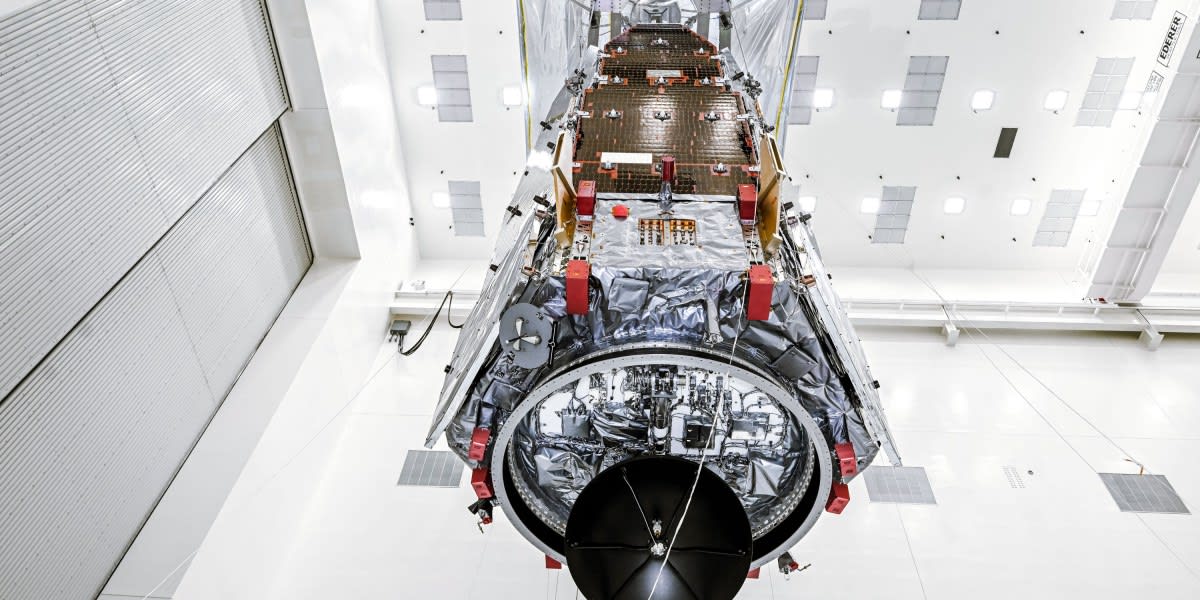
NASA's Nancy Grace Roman Space Telescope launches later this month from Kennedy Space Center in Florida. Its main job is helping scientists understand dark matter and dark energy, but researchers just discovered it has a hidden superpower: spotting dangerous space rocks that could threaten our planet.
The telescope's massive infrared camera can see an area of space 100 times larger than the Hubble Space Telescope. While scanning distant galaxies, it will look through our solar system and naturally spot asteroids along the way.
Bryan Holler, a researcher at the Space Telescope Science Institute in Baltimore, Maryland, says Roman can detect asteroids as small as 60 feet long. That's the same size as the space rock that exploded over Chelyabinsk, Russia in 2013, sending 1,500 people to the hospital with injuries from shattered glass and debris.
Right now, the telescope's software automatically filters out streaks in images, including those caused by asteroids. But astronomers can tweak the program to save those streaks instead, turning cosmic clutter into life-saving data.
The Ripple Effect
Roman won't work alone. It will team up with the James Webb Space Telescope to create a powerful asteroid-hunting partnership.
Roman's strength is its wide field of view, letting it quickly scan multiple suspicious asteroids. If it spots something concerning, other telescopes like Webb can zoom in for detailed follow-up observations.
Scientists estimate 25,000 city-killer asteroids over 460 feet long orbit near Earth. We've only found about half of them. Another 230,000 smaller asteroids around 165 feet long could still unleash atomic bomb-level destruction, and we've located less than 10 percent.
NASA already funds ground-based telescopes to search for these threats, but Earth's atmosphere limits what they can see. The upcoming Near-Earth Object Surveyor, launching in 2027, will focus entirely on finding dangerous asteroids.
What makes Roman special is that it delivers planetary defense as a bonus feature. While unlocking the universe's greatest mysteries, it will simultaneously help protect our home planet from cosmic threats.
Andy Rivkin, a planetary scientist at Johns Hopkins Applied Physics Laboratory, says Roman can observe more asteroids in infrared than Webb could manage in a reasonable timeframe. That speed matters when tracking objects that might be on a collision course with Earth.
Alise Fisher from NASA headquarters notes that Roman's vast view of the cosmos creates opportunities for all kinds of additional science beyond its primary mission.
Sometimes the tools we build to look outward at the stars turn out to be exactly what we need to protect what's right here at home.
Based on reporting by MIT Technology Review
This story was written by BrightWire based on verified news reports.
Spread the positivity!
Share this good news with someone who needs it