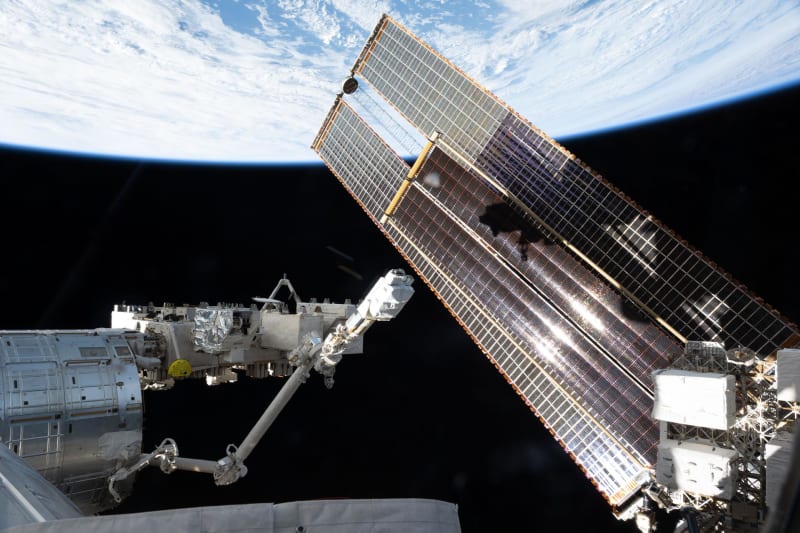
NASA Tests Cellphone-Sized Lab Device on Space Station
A microplate reader the size of a cellphone just arrived at the International Space Station, promising to give scientists real-time research data from space experiments. The breakthrough could eliminate months-long waits for samples to return to Earth.
Scientists aboard the International Space Station can now analyze biological samples in real time, thanks to a tiny lab device that fits in your hand.
The microplate reader, about the size of a cellphone, launched with NASA's SpaceX Crew-12 mission on February 14. It's the first commercial off-the-shelf lab equipment of its kind tested in orbit, and it could transform how we conduct research in space.
The game changer is speed. Right now, scientists wait months for biological samples to be stored, returned to Earth, and analyzed in ground labs. With this device, they get results as soon as testing is complete.
The technology works by shining light at biological samples to detect color changes. When a target molecule is present, the test produces a specific color. The intensity tells researchers exactly how much of that molecule exists in the sample.
NASA will first use the device to measure a protein called interleukin-6, which scientists suspect contributes to bone loss in astronauts. The samples come from an ongoing investigation exploring ways to prevent this common problem during space missions.
Operating the reader is surprisingly simple. An astronaut connects it to a laptop via USB, runs the test using standard software, and gets immediate results. Scientists on Earth can watch the experiment unfold in real time through video feeds.
The Ripple Effect
This small device opens big doors for future space exploration. During long missions to Mars or beyond, astronauts could test their own samples to monitor health without waiting for a trip home. The reader is adaptable too, meaning different test kits could support countless measurements wherever humans explore.
The demonstration is part of NASA's Commercially Enabled Rapid Space Science initiative, which partners with industry to speed up the pace of space research. By proving commercial lab equipment can work in low Earth orbit, NASA is paving the way for more advanced testing capabilities and even automated systems.
Traditional microplate readers on Earth are typically the size of a microwave. The fact that this pocket-sized version can deliver the same results in zero gravity shows how commercial innovation is making space research more accessible and affordable.
Dan Walsh, the program executive for NASA's CERISS effort, says demonstrations like this help build the infrastructure needed for a thriving research economy in low Earth orbit. Once the test kit and samples launch on an upcoming mission, NASA will compare space results with identical tests conducted on Earth.
The future of space science just got a whole lot faster.
More Images
Based on reporting by NASA
This story was written by BrightWire based on verified news reports.
Spread the positivity!
Share this good news with someone who needs it