NASA's Artemis II Launches 4 Astronauts Around the Moon
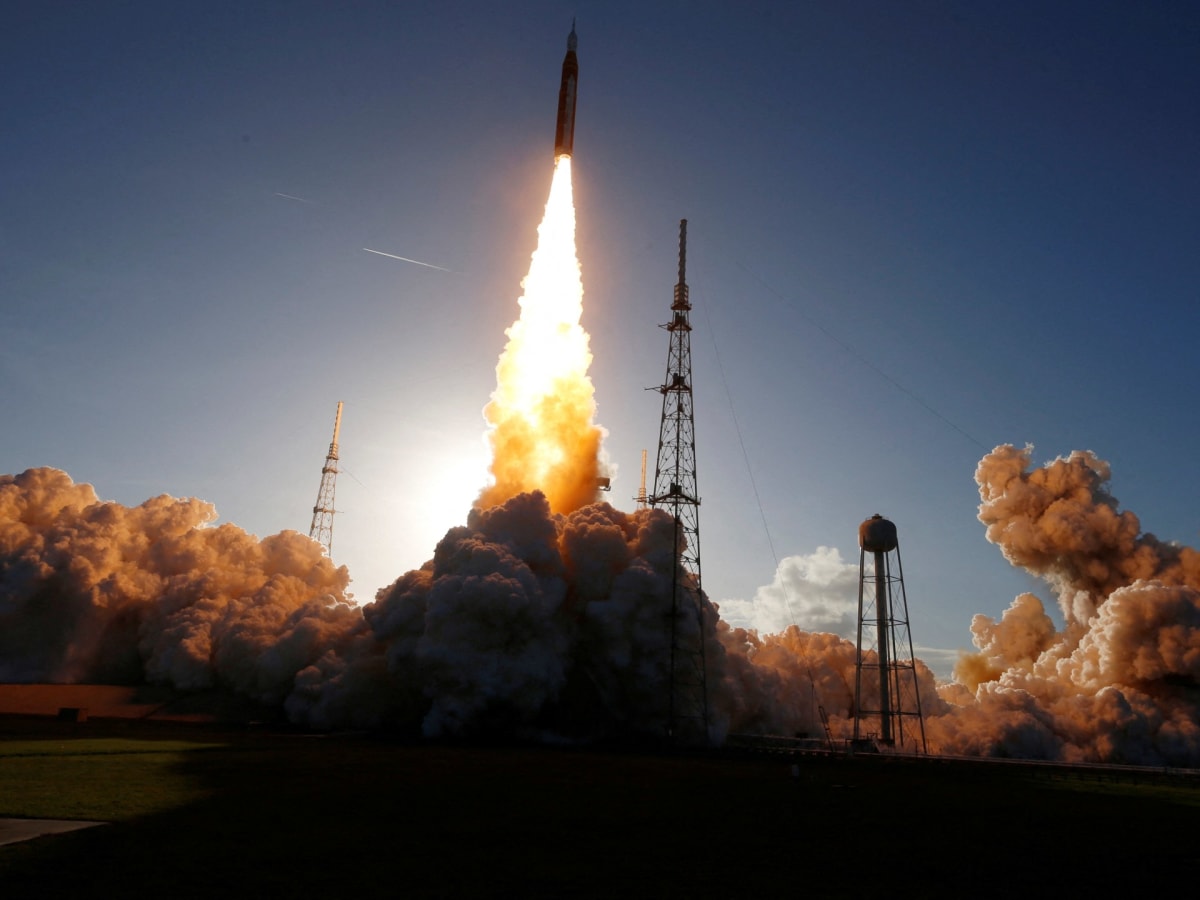
For the first time in over 50 years, humans are traveling beyond low-Earth orbit as NASA's Artemis II mission launched four astronauts on a historic journey around the moon. The successful Wednesday launch marks a giant leap toward returning humans to the lunar surface and eventually Mars.
Four astronauts are heading to the moon right now, making history as the first humans to venture beyond low-Earth orbit in more than half a century.
NASA's Artemis II mission blasted off Wednesday evening from Kennedy Space Center in Florida, sending Commander Reid Wiseman, Victor Glover, Christina Koch, and Canadian Space Agency astronaut Jeremy Hansen on a nearly 10-day journey around the moon. Tens of thousands gathered to watch the 32-story rocket rise into the sky.
Just five minutes into flight, Commander Wiseman spotted their destination from the capsule window. "We have a beautiful moonrise, we're headed right at it," he radioed back to Earth.
The launch came together flawlessly after engineers resolved several last-minute technical issues without delays. The team successfully loaded more than 700,000 gallons of fuel into the rocket, a critical step that had caused dangerous leaks during earlier tests this year.
Launch director Charlie Blackwell-Thompson sent the crew off with moving words. "On this historic mission, you take with you the heart of this Artemis team, the daring spirit of the American people and our partners across the globe, and the hopes and dreams of a new generation," she said.
The crew will spend their first days in high Earth orbit testing every system on the Orion spacecraft, from life support to communications. Once those checks pass, they'll fire the engines to break free from Earth's orbit and head toward the moon.
Their path will take them behind the moon using a free-return trajectory, a fuel-efficient route that uses gravity from both celestial bodies to naturally swing the spacecraft back home. The capsule will eventually re-enter Earth's atmosphere at 25,000 miles per hour before splashing down in the Pacific Ocean.
Why This Inspires
This mission represents more than a technical achievement. Half the world's population wasn't alive when Apollo astronauts last walked on the moon in 1972, making Artemis a fresh start for a new generation.
"There are a lot of people who don't remember Apollo. There are generations who weren't alive when Apollo launched. This is their Apollo," said NASA science mission chief Nicky Fox. The successful launch proves that ambitious goals requiring years of dedication, international cooperation, and problem-solving can still come together beautifully.
The mission paves the way for future moon landings and humanity's next giant leap: astronauts on Mars.
Based on reporting by Google News - Science
This story was written by BrightWire based on verified news reports.
Spread the positivity!
Share this good news with someone who needs it