NASA's Artemis II Scientists Share Moon Fly-by Discoveries
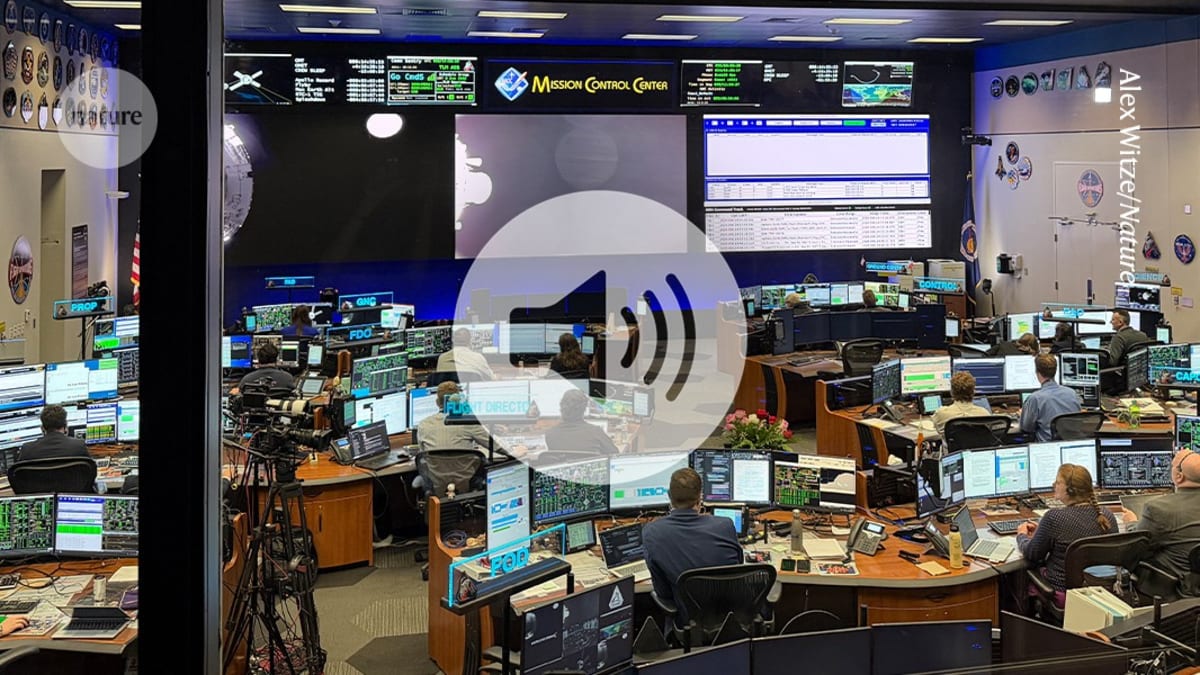
A Nature News reporter witnessed history inside NASA's Artemis II mission control as astronauts completed humanity's first crewed Moon fly-by in over 50 years. The mission captured stunning photos and marks the beginning of a new era in space exploration.
For the first time in more than half a century, humans flew around the Moon, and scientists are celebrating what they learned.
Reporter Alexandra Witze stood alongside NASA's Artemis II science team during Monday's historic lunar fly-by. The crew successfully circled the Moon and returned safely, delivering breathtaking images and valuable scientific data that will shape future missions.
The mission captured stunning photographs, including a remarkable "Earthset" image showing our blue planet rising over the lunar horizon. These photos aren't just beautiful. They represent careful planning and execution by astronauts who documented the Moon's far side, an area humans have never seen in person before.
Scientists spent the fly-by collecting observations that will help plan Artemis III, the mission that will actually land astronauts on the lunar surface. The crew gathered data on radiation levels, tested navigation systems, and studied the Moon's geography from a perspective no robot can replicate.
The mission also showcased international cooperation in space. European scientists contributed key technology and expertise, strengthening global partnerships that make ambitious exploration possible.
The Ripple Effect
This mission opens doors for an entire generation of space scientists and explorers. Young people watching the Earthset photos are already dreaming of careers in astronomy and planetary science, fields some didn't even know existed before seeing humans journey to the Moon.
The success of Artemis II proves that patient, methodical preparation pays off. NASA spent years developing and testing the technology that kept the crew safe during their journey. That careful work means future missions can build on this foundation with confidence.
The data collected during the fly-by will help scientists understand how to protect astronauts from space radiation during longer missions. It will inform habitat design, navigation systems, and exploration strategies for the Moon and eventually Mars.
Beyond the science, Artemis II reminded the world what humans can accomplish when we aim high and work together. Nations that contributed technology, expertise, and support now share in this achievement.
The mission also demonstrated that space exploration can unite people during challenging times. Millions around the world paused to watch the fly-by and celebrate a win for all humanity.
As scientists analyze the photos and data in the coming months, they're already planning how to use these discoveries. Each observation brings us closer to establishing a sustainable human presence beyond Earth.
The next chapter begins now, with Artemis III crews training for the first lunar landing in generations, standing on the shoulders of this week's historic flight.
More Images




Based on reporting by Nature News
This story was written by BrightWire based on verified news reports.
Spread the positivity!
Share this good news with someone who needs it