Voyager 1 Reaches Historic Distance, Still Talking to Earth
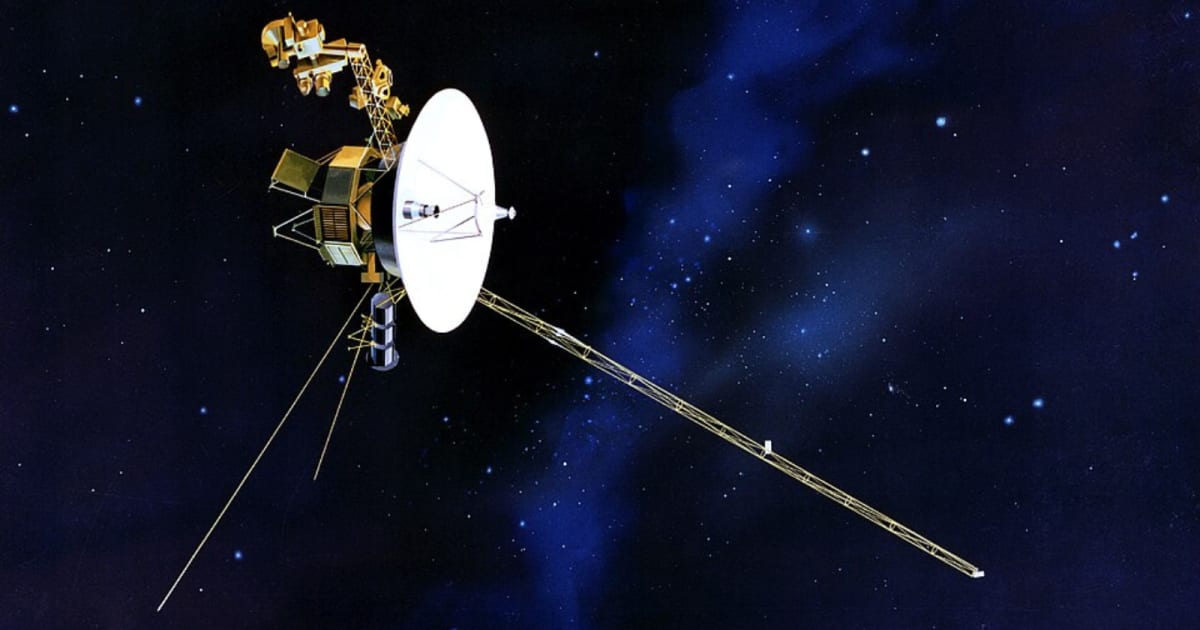
NASA's Voyager 1 spacecraft is now so far from Earth that engineers wait two full days between sending a command and hearing back. In November 2026, it will become the first human-made object to reach one light-day from home.
When NASA's team says good morning to Voyager 1 on a Monday at 8 a.m., the spacecraft says hello back on Wednesday morning.
The probe, launched in September 1977, is now roughly 16 billion miles from Earth and racing away at 38,000 miles per hour. Signals traveling at the speed of light take more than 22 hours each way to make the journey.
In November 2026, Voyager 1 will cross a milestone no human-made object has reached before. It will pass one light-day from Earth, meaning a full 24 hours for signals to travel in each direction.
That 48-hour round trip might sound frustrating, but it reflects something extraordinary. This small spacecraft has been working for nearly 48 years, sending back data from places no probe has ever explored.
The distance creates real challenges. In November 2023, Voyager 1 stopped sending coherent data. A single memory chip had failed on one of its onboard computers, and the team couldn't simply fix it from Earth.
Linda Spilker, the project scientist at NASA's Jet Propulsion Laboratory, described those tense months to NBC News. The team had to break the affected software into smaller pieces and store them in different memory locations. Three engineers checked every line of code by eye because no working ground simulators exist for hardware this old.
They sent the patch on April 18, 2024. Two days later, on April 20, they heard back. It worked.
Why This Inspires
What makes this story remarkable isn't just the distance. It's the patience, creativity, and dedication required to keep a 1970s spacecraft running in interstellar space.
Voyager 1 can handle most problems on its own now, putting itself into safe mode until Earth can respond. Project manager Suzy Dodd calls the spacecraft an "ambassador for us here on Earth." That word feels more literal now as the probe operates increasingly on its own counsel between those slow conversations with home.
Both Voyager spacecraft are running low on power, and engineers are gradually shutting down instruments to keep them alive as long as possible. Voyager 1 still has two science instruments working: its magnetometer and plasma wave subsystem. Voyager 2, following a different path, won't reach one light-day until 2035.
The data comes back at just 160 bits per second, slower than dial-up internet from the 1990s. But every bit matters because it comes from a place humanity has never been.
On the desks at JPL, the work is mostly waiting. Sending commands, checking results two days later, and knowing that each successful response represents decades of engineering excellence still performing beyond anyone's wildest expectations.
Voyager 1 keeps talking, and Earth keeps listening, across a gap that grows wider every day.
More Images

Based on reporting by Google News - Science
This story was written by BrightWire based on verified news reports.
Spread the positivity!
Share this good news with someone who needs it