James Webb Telescope Celebrates 4 Years With Galaxy Photo
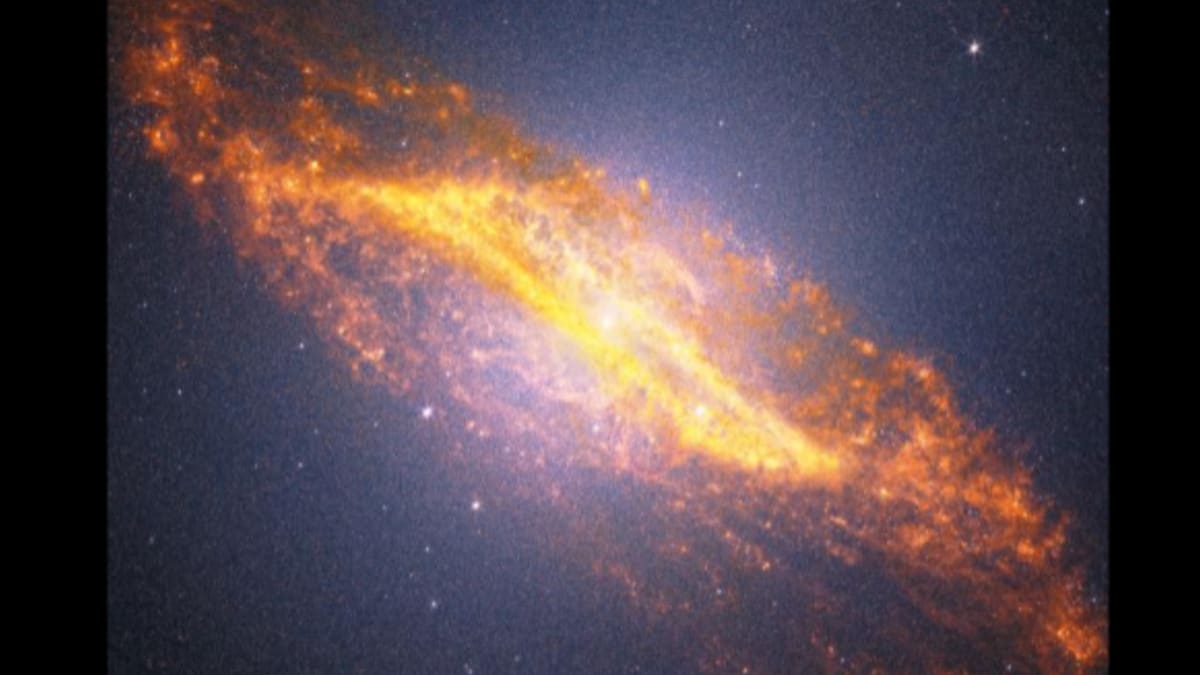
NASA's most powerful space telescope marks its fourth birthday by revealing the hidden heart of a galaxy born from an ancient cosmic collision. The stunning infrared images show what no telescope has ever seen before.
The James Webb Space Telescope just gave us the ultimate birthday present: a breathtaking look inside a galaxy that most telescopes can't even see into.
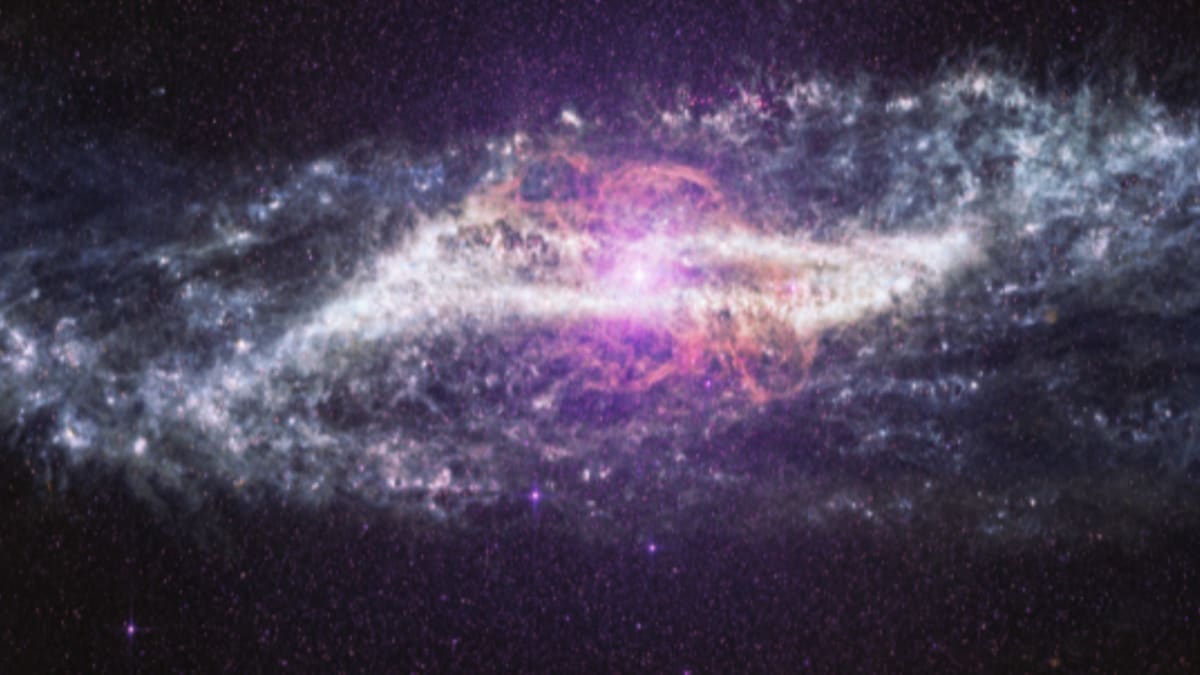
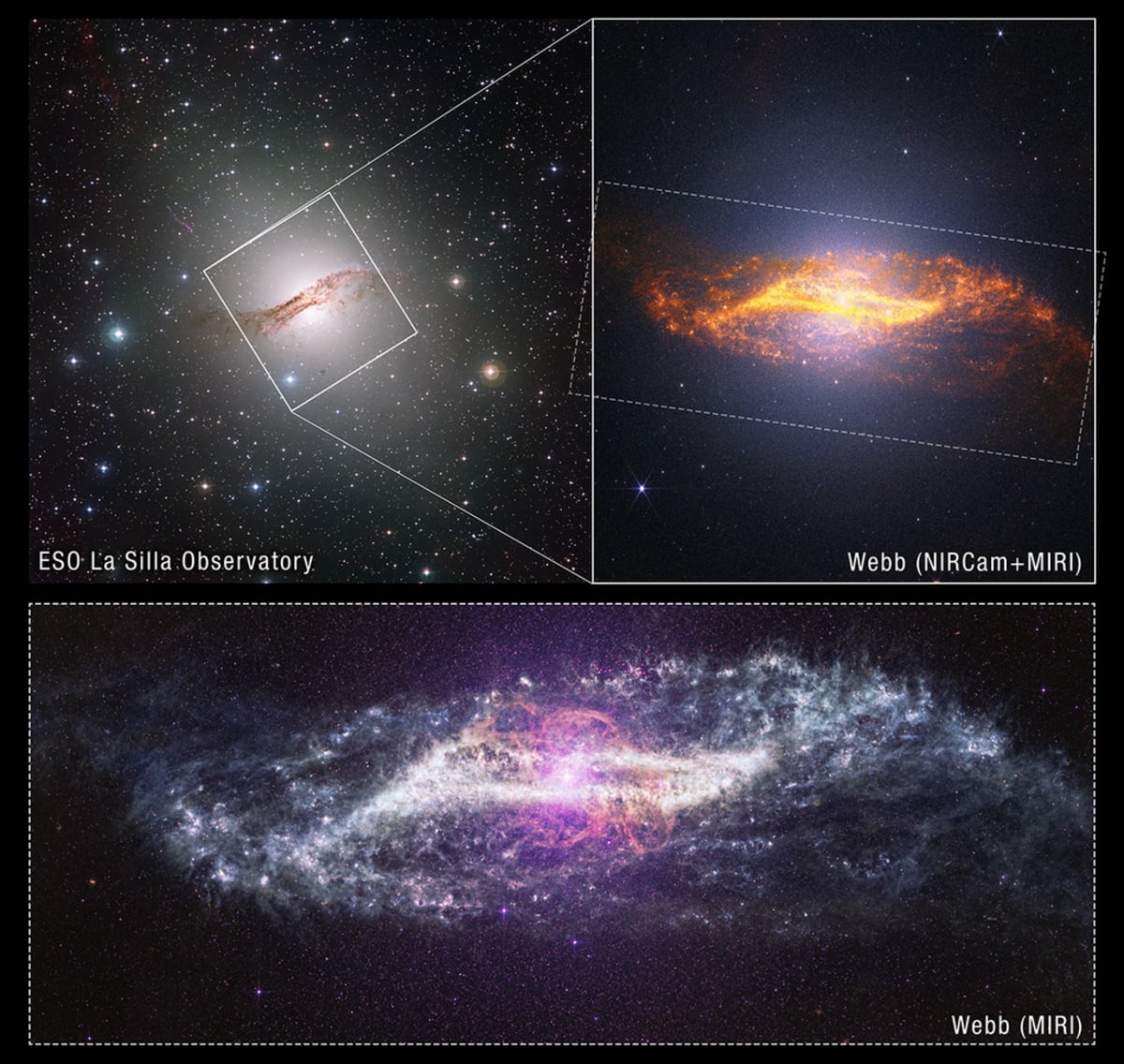
NASA released the stunning images this week to celebrate four years since the world first saw what Webb could do. The telescope turned its powerful gaze toward Centaurus A, a galaxy located 11 million light-years away with a fascinating origin story.
Centaurus A formed when two galaxies crashed into each other about 2 billion years ago. That cosmic collision created something beautiful: thick clouds of gas and dust that spark intense star formation while also feeding a supermassive black hole at the galaxy's center.
Previous telescopes struggled to see through the dense dust blocking visible light at the galaxy's heart. Webb's infrared vision changes everything, slipping through those cosmic curtains like they're barely there.
The Hubble Space Telescope could only see the galaxy's outer regions. The retired Spitzer Space Telescope could detect infrared light but lacked the power to resolve fine details and individual stars.
Webb's Near-Infrared Camera reveals millions of individual stars hidden in the galaxy's dense field. Its Mid-Infrared Instrument captured glowing stellar nurseries where new stars are being born, along with a mysterious S-shaped feature that scientists are still working to explain.
Why This Inspires
What makes this discovery so hopeful is what it reveals about how galaxies grow and change. Webb watched as the central black hole shoots fast-moving gas outward while also triggering new star formation by compressing clouds of cosmic material.
Scientists are learning that black holes play a dual role in their galaxies. They can spark intense bursts of star birth by condensing gas and dust, but they can also shut down star formation by blasting away the raw materials needed to make new stars.
"No single telescope tells the whole story," said Shawn Domagal-Goldman from NASA Headquarters. "Discoveries build over time, and new observatories expand on the foundations laid by earlier missions."
Webb represents the most powerful step forward yet in astronomy. What took decades to partially understand with previous telescopes, Webb reveals in stunning clarity, opening windows into wavelengths and details never before accessible.
The discoveries from Centaurus A aren't just about one galaxy. Scientists can apply these insights to understand how countless other galaxies evolved throughout cosmic history.
After four years of operation, Webb continues delivering on its promise to transform our understanding of the universe, one stunning image at a time.
More Images

Based on reporting by Space.com
This story was written by BrightWire based on verified news reports.
Spread the positivity!
Share this good news with someone who needs it