NASA's Artemis II Uses Moon's Gravity for Free Ride Home
Four astronauts are coasting home from their historic moon flyby using an elegant "free return" trajectory that lets gravity do almost all the work. The clever path proved so precise that NASA skipped two planned rocket burns, saving fuel and demonstrating a safer way to explore space.
Four astronauts broke the distance record for human spaceflight this week, and they're falling home without firing a single rocket.
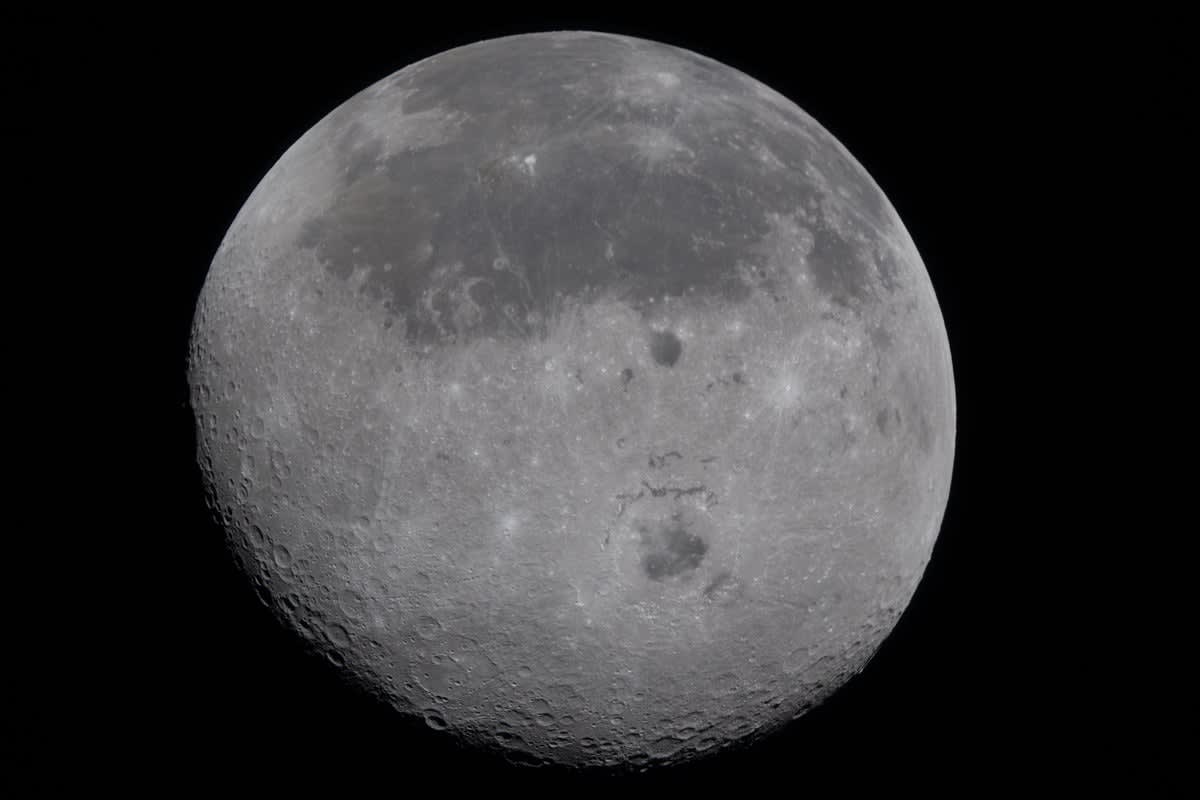
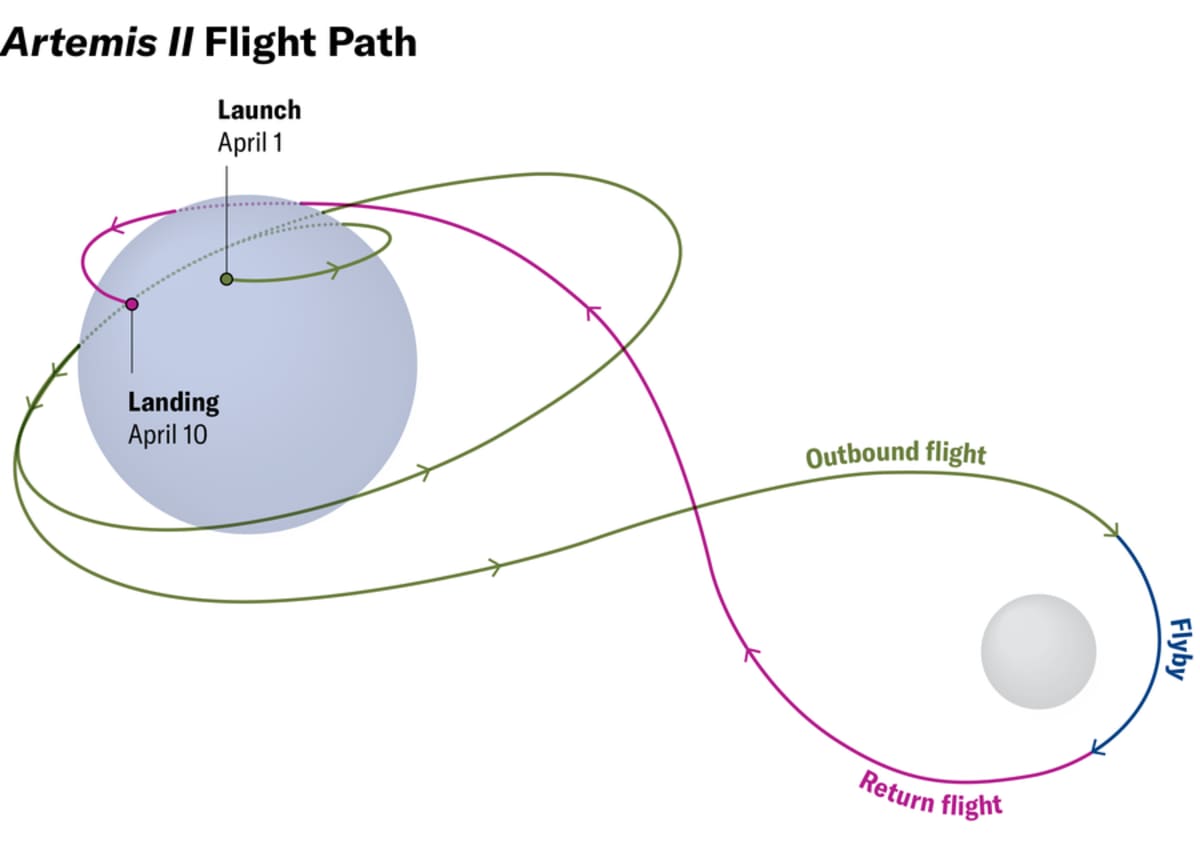
NASA's Artemis II mission reached 252,756 miles from Earth on Monday as it looped around the moon's far side. The crew is now coasting home on what engineers call a "free return" trajectory, an elegant figure eight path where gravity does nearly all the driving.
The journey marks humanity's first crewed moon flyby in over 50 years. But the real breakthrough is how smoothly the math worked out.
After launching on April 1, the Orion capsule fired its engines for just six minutes last Thursday to break free from Earth's grip. That single burn went so well that mission controllers canceled two out of three backup corrections, meaning the spacecraft is essentially gliding home on autopilot.
"Once you get to a certain height on that hill's topographic map and get on that path, you stay on for free," explains Samantha Kenyon, an aerospace engineering professor at Virginia Tech. The spacecraft is simply following the natural curves created by Earth and the moon's gravitational pulls.
Think of it like a marble rolling along invisible tracks carved by gravity. The moon's pull bent Orion's path just enough to swing it back toward Earth without needing extra fuel or rocket burns over the far side, where the crew would have been out of radio contact.
This trajectory isn't new. The Soviet Union's robotic Luna 3 mission first used it in 1959, and it famously saved the Apollo 13 astronauts in 1970 after their spacecraft malfunctioned. But Artemis II proves the path works perfectly for modern missions too.
The approach is safer because it requires fewer risky engine burns far from Earth. If something goes wrong with the rockets, the crew still makes it home.
The Ripple Effect
This precision navigation opens doors for future deep space missions. The same gravitational math powers interplanetary probes like Voyager II, which used planetary flybys to reach the outer solar system.
Artemis II's success means NASA can confidently plan crewed missions to the moon's surface and eventually to Mars. The free return proved so reliable that engineers are already incorporating it into designs for lunar space stations and Mars transit vehicles.
The crew even found time to make history personal. They proposed naming two lunar craters, one called Integrity after their capsule, and another called Carroll to honor mission commander Reid Wiseman's late wife, who died in 2020.
Despite minor computer glitches and some toilet trouble, the spacecraft has performed beautifully. Astronaut Jeremy Hansen summed up the mission's spirit as they set the distance record: "We most importantly choose this moment to challenge this generation and the next to make sure this record is not long lived."
The moon just proved it can catch us and send us safely home.
More Images
Based on reporting by Scientific American
This story was written by BrightWire based on verified news reports.
Spread the positivity!
Share this good news with someone who needs it