NASA's Curiosity Rover Completes Months-Long Mars Discovery
After months of exploration, NASA's Curiosity rover has finished mapping a mysterious "boxwork" terrain on Mars, uncovering clues about the Red Planet's watery past. The rover is now crossing into unexplored territory that could reveal even more secrets about ancient Martian life.
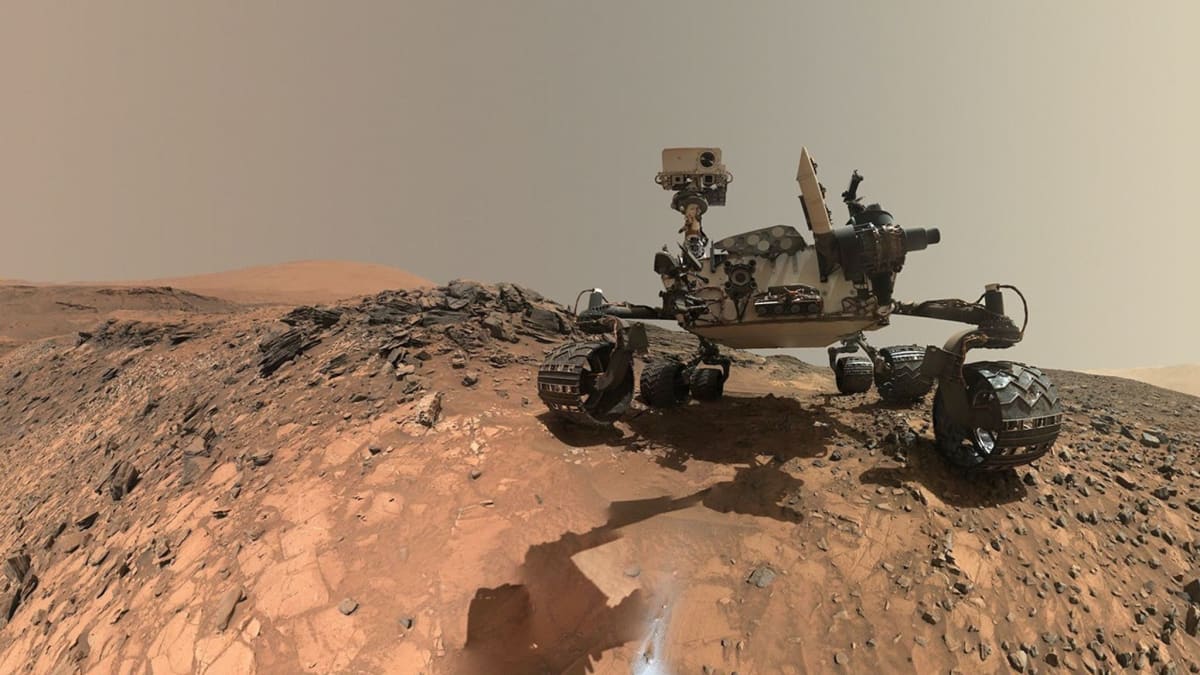
NASA's Curiosity rover just wrapped up one of its most ambitious investigations yet, spending months studying a strange honeycomb-like terrain on Mars that scientists believe formed billions of years ago when water flowed across the planet.
The boxwork terrain features intricate ridge patterns that crisscross the Martian surface like a natural puzzle. These formations on the shoulder of Mount Sharp could hold vital clues about Mars' transformation from a wet, potentially habitable world to the dry desert we see today.
Over the past week alone, Curiosity traveled 85 meters across the Martian surface, examined dozens of rock samples with its laser spectrometer, and captured stunning panoramic images of ridges and formations with names like "Paniri" butte and "El Misti." The rover's robotic arm brushed away centuries of dust to study bedrock up close, revealing fascinating sedimentary layers frozen in time.
What makes this mission particularly exciting is Curiosity's advanced autonomous capabilities. During its latest drive, the rover used AEGIS technology to analyze images on its own and select scientific targets before human teams even saw the data, a breakthrough that speeds up discovery on a planet where communication delays can take up to 20 minutes each way.
Why This Inspires
This achievement represents over 4,800 Martian days of continuous exploration since Curiosity landed in 2012. The rover has driven the equivalent of a marathon on another planet, all while teaching us about the universe beyond Earth.
The mission showcases what persistence and human ingenuity can accomplish when we work together toward a common goal. Engineers and scientists from NASA's Jet Propulsion Laboratory planned every detail of these complex operations, coordinating multiple instruments to gather maximum scientific value from each precious day.
Now Curiosity stands at the boundary between the boxwork terrain and a new sulfate-rich region it has never explored. Scientists believe this area could reveal even more about Mars' ancient lakes and rivers, bringing us closer to answering the ultimate question: did life ever exist on Mars?
The rover's wheel cameras continue monitoring wear and tear after years of rocky terrain, but Curiosity keeps rolling forward. Its journey reminds us that exploration never truly ends; each discovery opens doors to new questions and possibilities waiting just over the next ridge.
More Images



Based on reporting by NASA
This story was written by BrightWire based on verified news reports.
Spread the positivity!
Share this good news with someone who needs it