NASA's Curiosity Rover Explores Colorful Martian Rock Bands
NASA's Curiosity rover is climbing Mount Sharp on Mars, discovering distinct bands of rock that tell the story of the Red Planet's ancient past. Despite communication hiccups 140 million miles away, the mission team keeps exploring new terrain.
While most of us struggle with spotty WiFi, NASA scientists are commanding a rover across 140 million miles of space and celebrating every successful day.
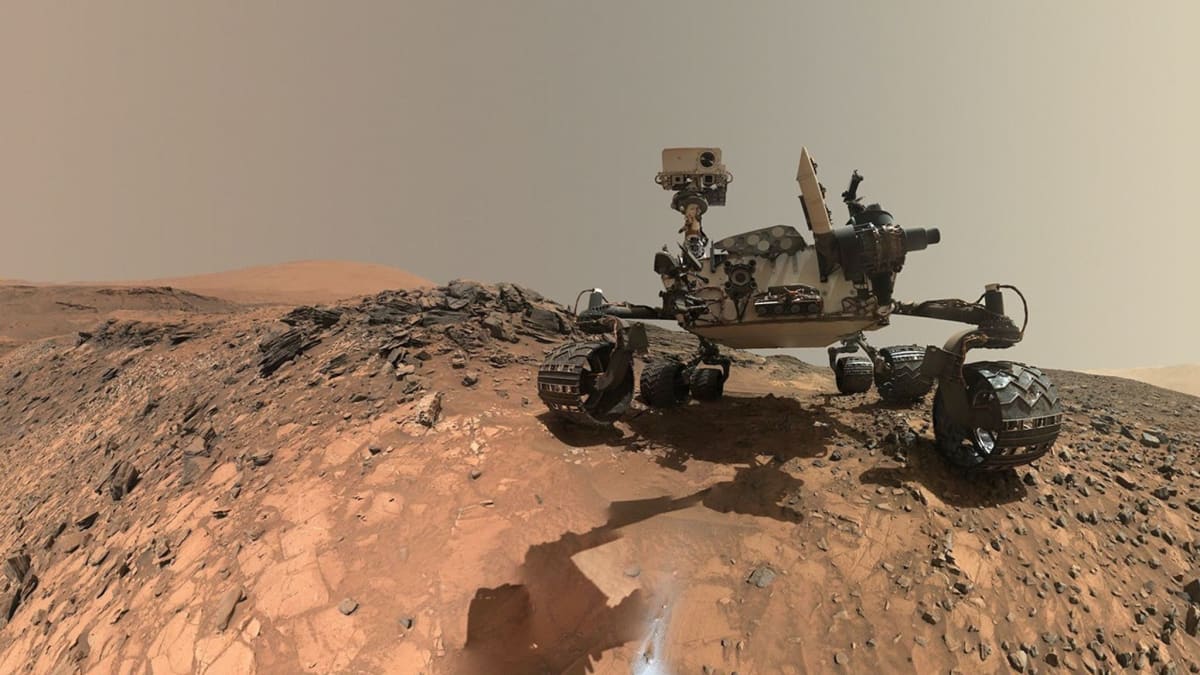
NASA's Curiosity rover just spent another week climbing Mount Sharp on Mars, analyzing different bands of rock that stack up like layers in a geological cake. Each band has its own color and texture, offering clues about what Mars looked like billions of years ago.
The rover recently moved through a rough, dark-toned band of bedrock, collecting chemistry readings and close-up images of rocks with names like "Salto La Cascada" and "Puerto de Rosas." The team uses its robotic instruments to perform laser spectroscopy and capture detailed images that help scientists understand the composition of Martian rocks.
One highlight was photographing a small butte nicknamed "Miraflores," which displays fascinating layered structures with ragged dark rocks on one side and a pile of dust stacked on top. These formations help scientists piece together how wind, water, and time shaped the Martian surface.
Even space exploration hits technical snags. On one Friday, the team didn't receive expected data from a planned drive, meaning they couldn't plan the next move. Instead of panicking, the scientists filled three days with a 360-degree photo mosaic, atmospheric measurements, and dust-devil surveys.
Why This Inspires
Curiosity has been exploring Mars for over 4,920 Martian days, far exceeding its original mission timeline. The rover continues to make discoveries while operating in one of the most extreme environments imaginable: freezing temperatures, dust storms, and complete isolation from any repair shop.
The team's flexibility when facing communication delays shows the problem-solving spirit that makes space exploration possible. When Plan A fails, scientists always have Plans B through Z ready to go.
Now Curiosity is approaching a new band of smooth, light-toned rocks that promise fresh discoveries. Each layer it climbs reveals another chapter in Mars's history, bringing us closer to understanding whether the Red Planet once supported life.
A robot the size of a car, millions of miles away, is still sending back stunning images and valuable science after more than a decade of exploration. That's a win worth celebrating.
More Images


Based on reporting by NASA
This story was written by BrightWire based on verified news reports.
Spread the positivity!
Share this good news with someone who needs it