NASA's Curiosity Rover Finds 'Sea' of Honeycomb Patterns on Mars
NASA's Curiosity rover discovered an unprecedented field of honeycomb-shaped patterns stretching across a Martian valley in June, leaving scientists amazed. The discovery adds to mounting evidence that Mars once had the right conditions to support life.
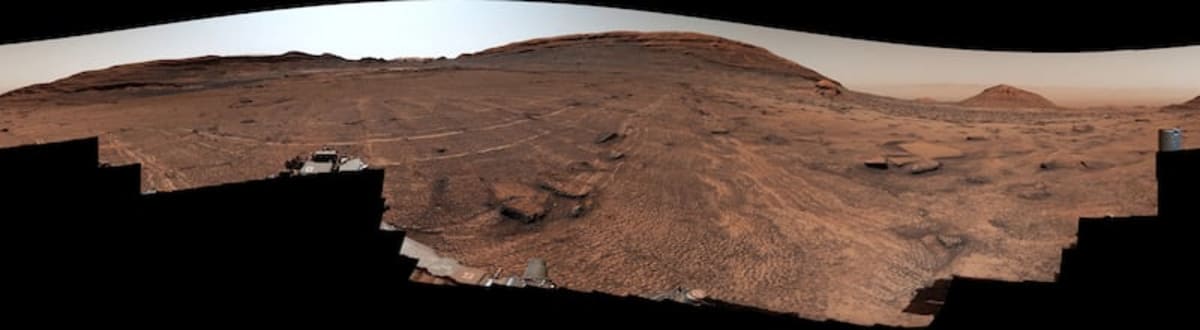
Imagine looking across an alien landscape and seeing geometric patterns stretching to the horizon. That's exactly what happened when NASA's Curiosity rover climbed through a Martian valley called Valle Grande on June 19 and 20.
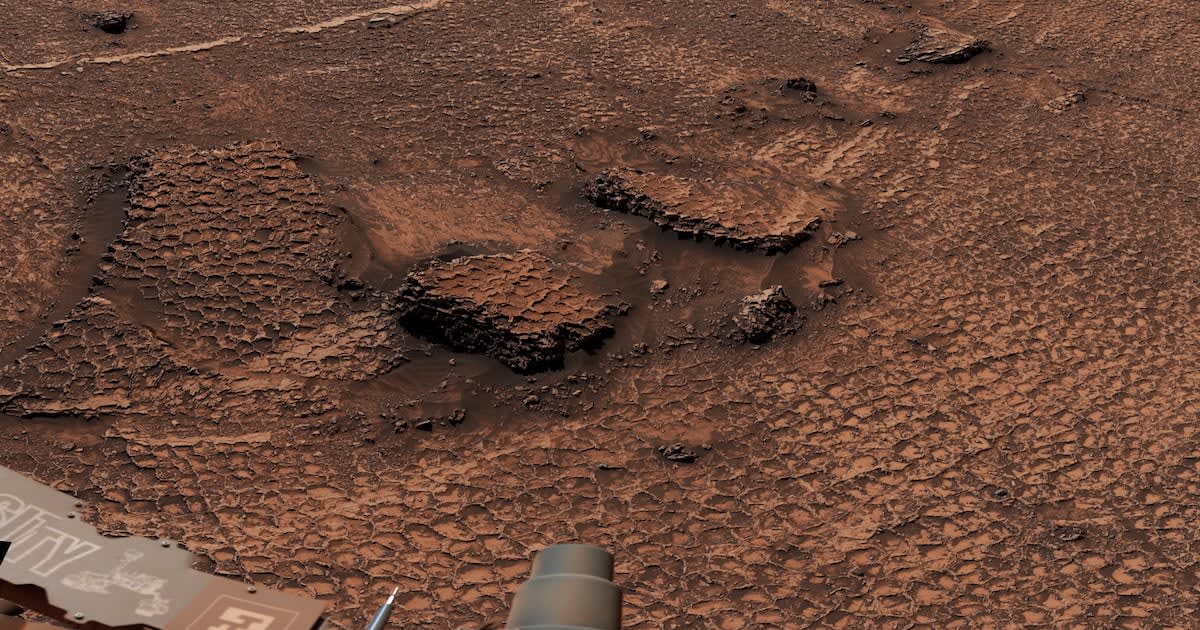
The rover spotted thousands of honeycomb-shaped polygons covering the ground like tiles on a vast bathroom floor. Each polygon measures just 1.5 to 3 inches across, but together they create what scientists are calling a "sea" of patterns.
"We've seen a lot of fascinating landscapes through Curiosity's eyes, but this sea of polygons took our breath away," said Ashwin Vasavada, the mission's project scientist. While Curiosity has spotted similar honeycomb textures before, nothing compares to the scale of what it found in Valle Grande.
Scientists believe these patterns could have formed through different processes. Temperature swings between warm and cold could have cracked the surface over time. Or water might have been pushed out of the sediment, creating the geometric shapes we see today.
Some polygons Curiosity found earlier were clearly old mud cracks. That simple explanation points to something extraordinary: liquid water once flowed on Mars.
Why This Inspires
Curiosity has been rolling across Mars since 2011, and every discovery brings us closer to answering one of humanity's biggest questions: are we alone? The rover has already proven that billions of years ago, Mars had lakes and streams with the water, chemistry, and nutrients needed for microbial life.
The robot explorer has even found carbon-based molecules that scientists think could be precursors to RNA and DNA, the building blocks of life as we know it. Whether these molecules came from living things or natural geology, no one knows yet. But their existence confirms that ancient Mars had the right recipe for life.
The honeycomb patterns are one more clue in this cosmic detective story. Scientists are now carefully analyzing the shapes and chemistry of these polygons, hoping the data will reveal how they formed and what that means for Mars' watery past.
Every photo Curiosity sends back reminds us that exploration isn't just about finding answers. It's about asking better questions and never losing our sense of wonder at what's possible.
The Bright Side
While Curiosity explores Mars today, it's really helping us understand Earth's place in the universe. Each discovery proves that planets can change dramatically over time and that the ingredients for life might be more common than we think.
The mission continues to exceed expectations 15 years after landing. That little robot, millions of miles from home, keeps showing us that patience and curiosity lead to breathtaking discoveries.
More Images


Based on reporting by Google: NASA discovery
This story was written by BrightWire based on verified news reports.
Spread the positivity!
Share this good news with someone who needs it
%2Fhttps%3A%2F%2Ftf-cmsv2-smithsonianmag-media.s3.amazonaws.com%2Ffiler_public%2F3a%2F70%2F3a7012b6-f877-41a0-a0ee-fc2251c68db7%2Fsmithsonian_feature_images_17.png)