NASA's Curiosity Rover Frees Stuck Mars Rock After 6-Day Fix
NASA engineers successfully freed a 28-pound Martian rock that clung to the Curiosity rover's drill for six days, resulting in stunning close-up images. The unexpected mishap turned into one of the mission's most memorable moments after more than a decade on Mars.
A basketball-sized rock refused to let go of NASA's Curiosity rover for nearly a week, creating an unexpected challenge that turned into a triumph 140 million miles from Earth.
The chunk of Martian bedrock, nicknamed "Atacama," stayed stuck to the rover's drill after a routine sampling operation on April 25. Instead of falling away like hundreds of previous samples, this 1.5-foot-wide slab clung stubbornly to the robotic arm on the slopes of Mount Sharp.
Engineers at NASA's Jet Propulsion Laboratory in California faced a delicate problem. Any damage to the drill assembly could jeopardize future scientific operations for a rover that's been exploring Mars since 2012.
For six days, the team carefully choreographed a recovery plan from millions of miles away. They repositioned Curiosity's arm multiple times and activated vibrations in the drill system, all while working around the 20-minute communication delay between Earth and Mars.
On May 1, Atacama finally released its grip. The rover emerged completely healthy and ready to continue its mission exploring ancient Martian terrain for signs of past water activity.
The Bright Side
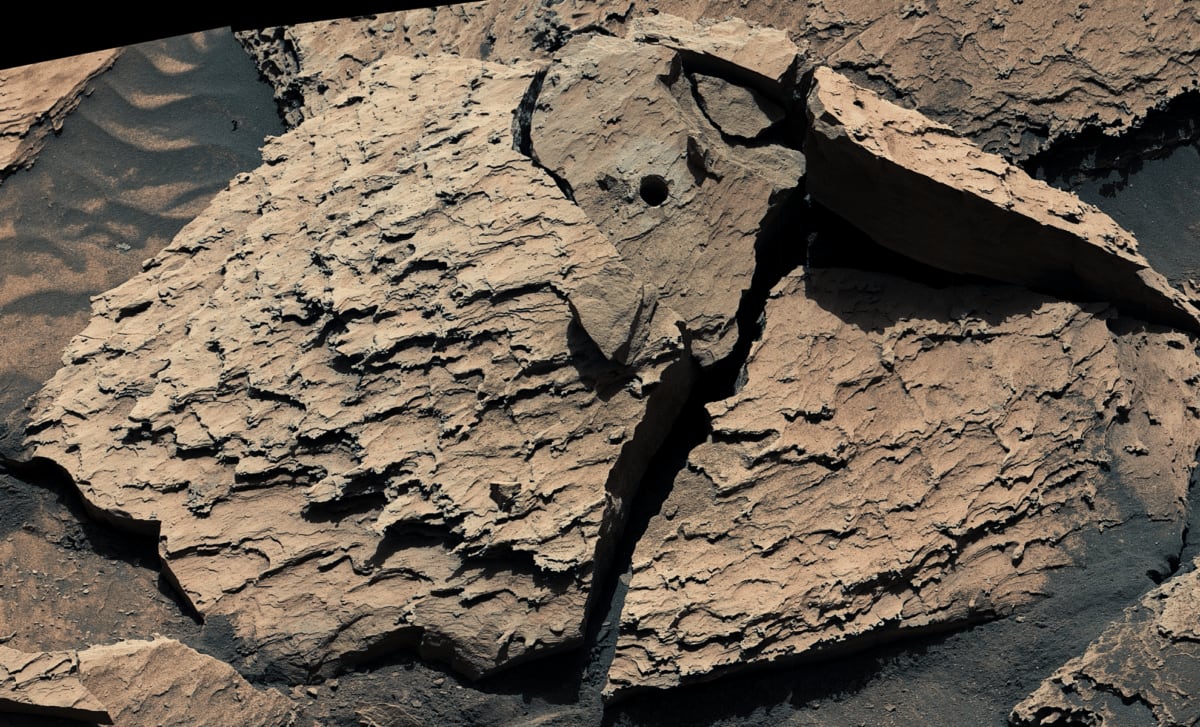
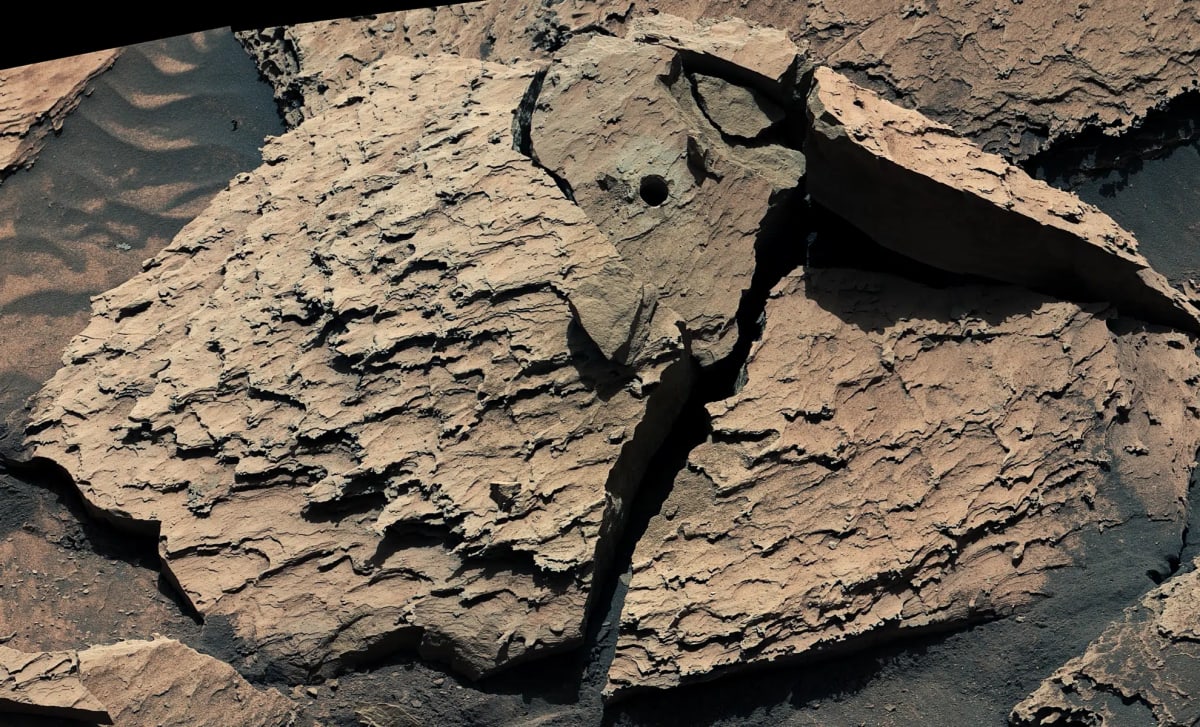
What started as a mechanical headache became an unexpected scientific gift. After the rock detached, Curiosity captured eight detailed images that NASA stitched into a stunning mosaic showing the boulder's fractured layers and textures.
The photos reveal a perfectly circular drill hole carved into the center of the slab, showcasing both the precision of 12-year-old drilling hardware and the rugged nature of Mars geology. Scientists adjusted the colors to match Earth daylight conditions, creating some of the clearest close-up views of Martian rock composition the mission has produced.
The incident highlighted something remarkable about human ingenuity. A machine built more than a decade ago continues operating in freezing temperatures, constant dust storms, and treacherous terrain, solving problems with no direct human help on site.
Each rock sample Curiosity analyzes helps scientists understand Mars' climate billions of years ago and whether the planet could have supported life. The rover's ability to drill beneath weathered surface layers remains one of its most valuable tools for unlocking these ancient secrets.
What could have been a mission-ending problem became a testament to careful engineering and patient problem-solving across the solar system.
More Images


Based on reporting by Google News - Science
This story was written by BrightWire based on verified news reports.
Spread the positivity!
Share this good news with someone who needs it