NASA's Curiosity Rover Still Thriving After 14 Years on Mars
A NASA rover designed to last two years is still exploring Mars after 14 years, recently capturing a stunning composite image that reveals ancient water patterns. The mission's incredible longevity shows how far human ingenuity can reach.
A robot explorer sent to Mars for a quick mission is celebrating over a decade of discovery, and it just sent home one of its most beautiful postcards yet.
NASA's Curiosity rover landed on the red planet nearly 14 years ago with a simple two-year mission: figure out if Mars could have ever supported tiny life forms. The scrappy robot is still going strong, climbing mountains and snapping photos that help scientists understand our neighboring world.
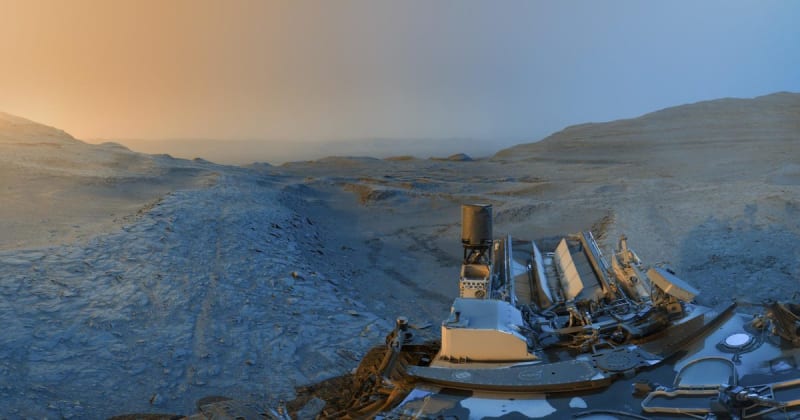
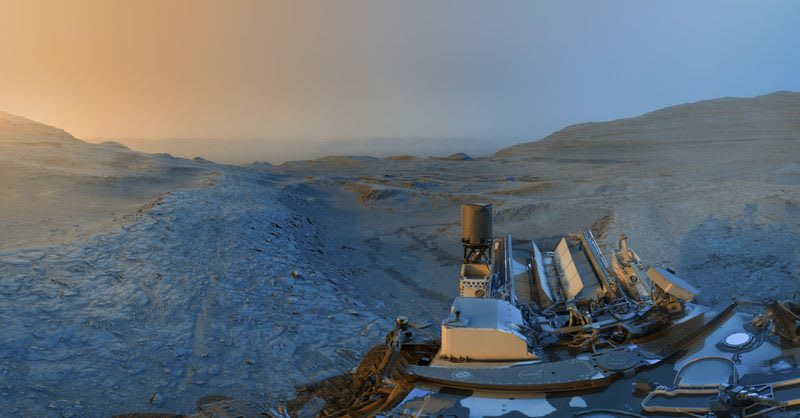
The latest image looks almost peaceful. Curiosity combined a morning shot with an early evening view from the same spot, creating a dreamy blue and yellow landscape. The technique isn't just for beauty; merging images this way reveals details in the terrain that single photos might miss.
The rover captured this view from atop a ridge covered in what scientists call boxwork formations. These criss-crossing patterns tell an ancient story about water on Mars. Billions of years ago, water seeped through cracks in Martian rocks, carrying minerals along for the ride. When the water dried up, those minerals hardened into ridges. Wind eventually sandblasted away the softer rock around them, leaving behind the stunning patterns Curiosity explores today.
The scene shows the rover perched in the foothills of Mount Sharp, a mountain three miles tall that Curiosity has been climbing since 2014. You can spot the rim of Gale Crater about 25 miles away in the distance. Look carefully and you'll even see wheel tracks leading back to Valle de la Luna, where the rover recently drilled for rock samples.
Why This Inspires
Curiosity was built to last 687 days. Instead, it's operated for over 5,000 days and counting. That's like buying a car guaranteed for two years and still driving it problem-free 14 years later, except this car is on another planet being blasted by radiation and dust storms.
The mission shows what happens when engineers build something with care and ambition. Curiosity isn't alone anymore either. NASA's even more advanced Perseverance rover joined the exploration in 2021, and together they're paving the way for humans to walk on Mars as soon as the 2030s.
Every image Curiosity sends back reminds us that a little robot, 140 million miles from home, is still working hard to answer humanity's biggest questions about whether we're alone in the universe.
More Images
Based on reporting by Google News - Science
This story was written by BrightWire based on verified news reports.
Spread the positivity!
Share this good news with someone who needs it