NASA's Deep Space Network Guides Artemis II Astronauts Home
When four astronauts launched toward the Moon on April 1, 2026, a global network of massive antennas stood ready to keep them connected to Earth. NASA's Deep Space Network is tracking humanity's return to deep space from three continents.
When four astronauts launched toward the Moon on April 1, 2026, a global network of massive antennas stood ready to keep them connected to Earth.
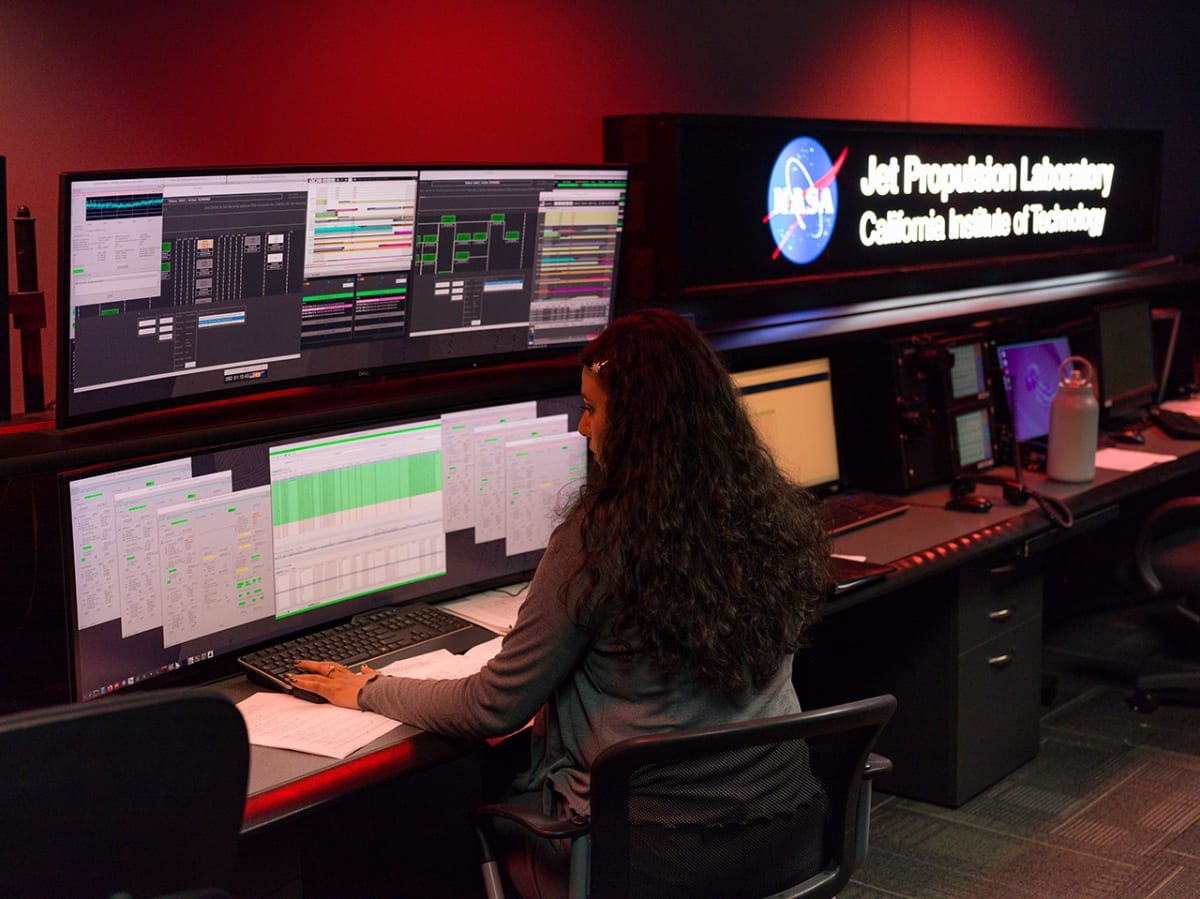
Blanca Renteria, Artemis Deep Space Network operations chief, monitors every signal from her post at NASA's Jet Propulsion Laboratory in Southern California. Just hours after Artemis II lifted off from Kennedy Space Center in Florida, her team locked onto the spacecraft carrying humans farther from Earth than anyone has traveled in over 50 years.
The Deep Space Network spans three continents with antenna complexes in Goldstone, California; Madrid, Spain; and Canberra, Australia. This strategic placement means at least one station can always see the Moon, no matter where Earth rotates in its daily spin.
These aren't ordinary antennas. The massive dishes communicate with dozens of robotic spacecraft exploring our solar system while simultaneously tracking crewed missions like Artemis II. They send commands, receive scientific data, and most importantly, keep astronauts connected to home.
Why This Inspires
The Deep Space Network represents decades of international cooperation and engineering excellence. Every conversation between mission control and astronauts, every health reading, every course correction travels through these antennas at the speed of light across nearly 240,000 miles of space.
Renteria and her team work around the clock to ensure no signal gets lost. Their vigilance means astronauts can focus on their historic mission while families back home know their loved ones are safe.
This mission marks the first time humans have ventured beyond low Earth orbit since 1972. The Deep Space Network, managed by JPL for NASA's Space Communications and Navigation program, makes it possible for humanity to explore farther while staying connected.
As Artemis II continues its journey around the Moon and back, these three stations will track every moment. The same network that guides robots to Mars and beyond now guides people toward our next giant leap.
More Images

Based on reporting by NASA
This story was written by BrightWire based on verified news reports.
Spread the positivity!
Share this good news with someone who needs it