NASA's Dragonfly Will Fly Across Saturn's Moon Titan in 2034
A car-sized nuclear-powered aircraft is heading to Saturn's moon Titan in 2028 to fly between sites, drill into alien soil, and explore rivers and seas made of methane instead of water. This isn't science fiction—it's NASA's most ambitious mission yet.
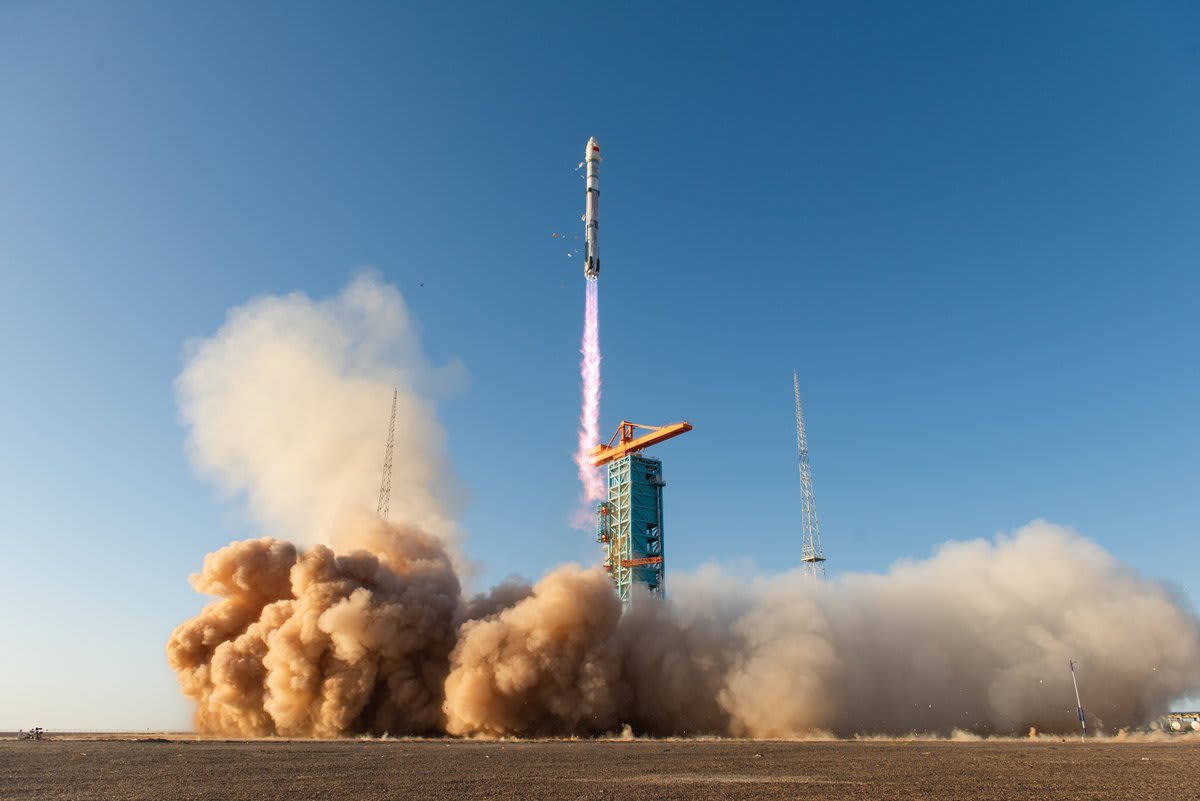
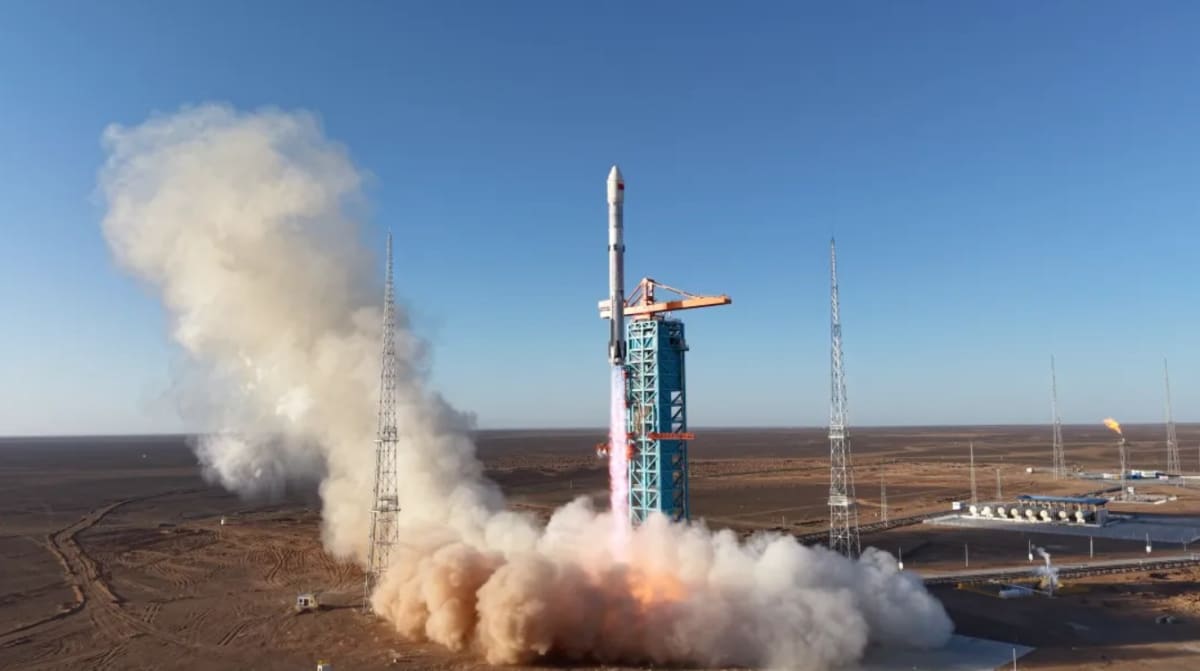
In July 2028, SpaceX will launch something never attempted before: a flying laboratory designed to soar through the skies of another world.
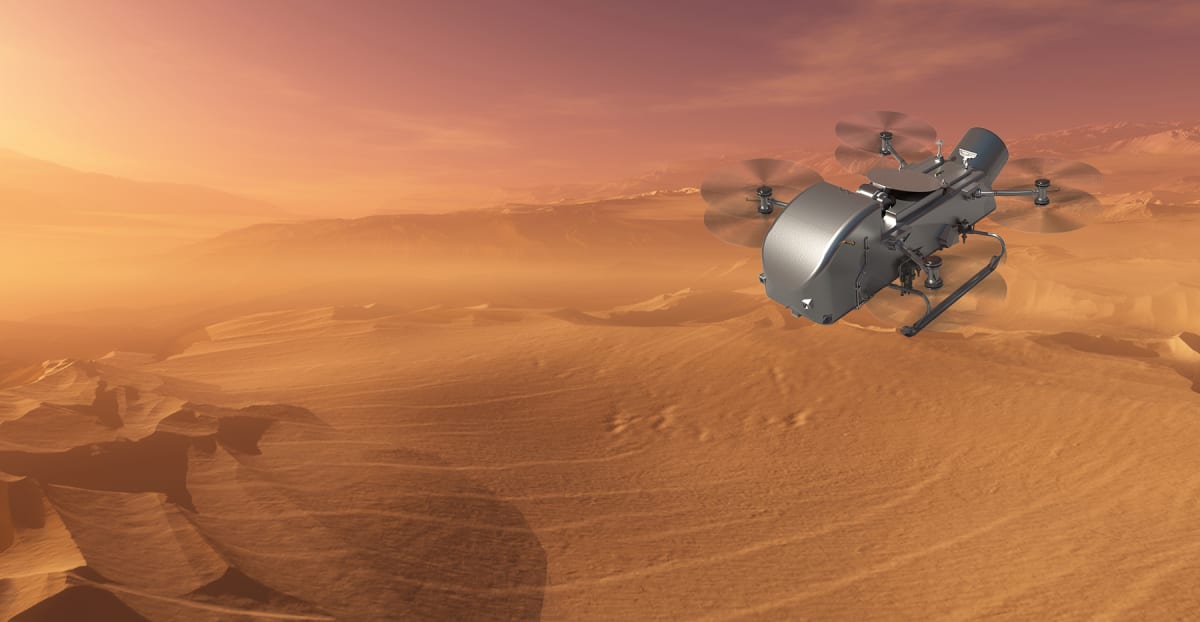
NASA's Dragonfly mission will send a rotorcraft the size of a car to Titan, Saturn's largest moon. Unlike traditional landers that stay in one spot, Dragonfly will fly from site to site, carrying its entire laboratory with it to explore dozens of locations across an alien landscape.
The six-and-a-half-year journey will end in December 2034 when Dragonfly touches down on a world that looks hauntingly familiar yet completely different. Titan has clouds, weather, seasons, rivers, and seas—but instead of water flowing through its landscape, methane and ethane rain from the sky and fill its lakes.
Water on Titan is frozen solid, part of the bedrock itself. The moon's thick atmosphere is four times denser than Earth's, while its gravity is seven times weaker—the perfect combination for a heavy aircraft to fly with ease.
After landing, Dragonfly will spend about three years exploring. It will drill into the surface, analyze samples for signs of chemistry that could lead to life, then recharge its nuclear battery and fly to the next destination. Each flight will cover distances no wheeled rover could match, opening up an entire moon for exploration instead of a single patch of ground.
The mission represents a $3.35 billion bet on answering one of humanity's biggest questions: are we alone? Titan's chemistry resembles the early Earth before life emerged, making it a natural laboratory for understanding how life might begin.
The Ripple Effect
Dragonfly showcases what becomes possible when ambition meets careful planning. The mission required solving problems that didn't exist a decade ago—how to fly autonomously on a world where radio signals take over an hour to travel each way, how to land safely through clouds scientists can't see through from Earth, how to build instruments that work in cold so extreme that methane becomes a liquid.
Engineers will monitor Dragonfly throughout its journey, checking systems and preparing for landing sequences they can't rehearse at the destination. Children who watch the 2028 launch will be teenagers when the first images arrive from Titan's surface.
The mission also demonstrates trust in technology that must make split-second decisions alone. When Dragonfly descends through Titan's atmosphere, it will separate from its parachute at 900 meters altitude and fly itself to a safe landing site—no human hand on the controls, no second chances.
This isn't just about exploring a distant moon—it's about expanding what humanity can achieve and where curiosity can take us when we refuse to accept that some places are too far or too difficult to reach.
More Images

Based on reporting by Google News - Science
This story was written by BrightWire based on verified news reports.
Spread the positivity!
Share this good news with someone who needs it