NASA's Ernest Rover Hits 6x Speed, Climbs Like a Spider
NASA's newest prototype rover can lift its wheels like legs to climb obstacles and moves six times faster than current Mars rovers. After testing in the Colorado Desert, Ernest is paving the way for rovers that can explore entire planets in record time.
📺 Watch the full story above
Imagine a rover that doesn't just roll across Mars but actually walks over boulders and climbs steep slopes like a mechanical spider.
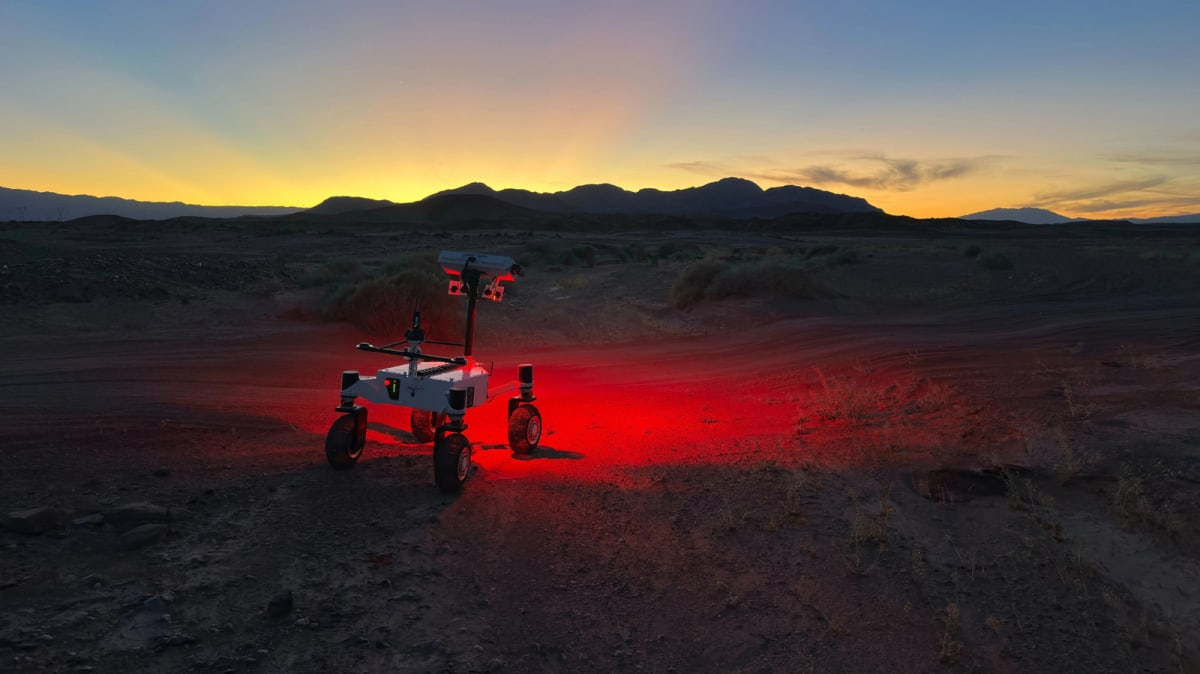
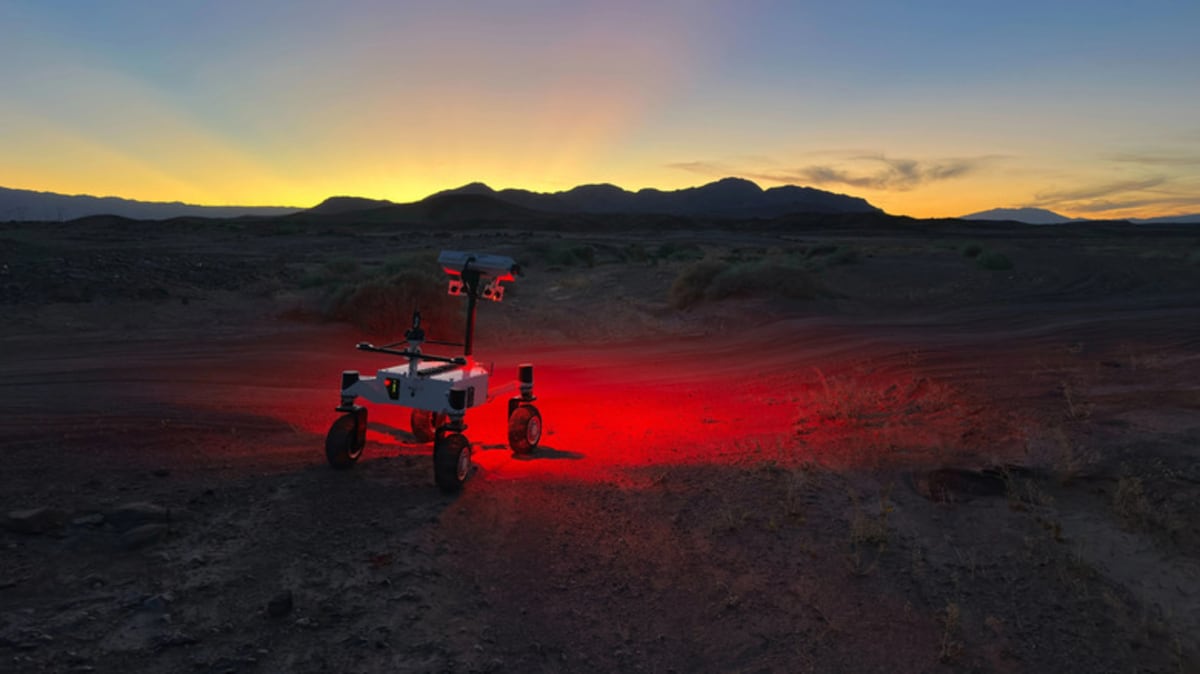
NASA just tested exactly that in California's Colorado Desert. The space agency's new Ernest prototype (short for Exploration Rover for Navigating Extreme Sloped Terrain) completed seven days of intensive trials, driving over 16 miles and hitting speeds of 0.6 mph. That might not sound fast, but it's six times quicker than Perseverance, NASA's current "standout" rover that crawls along at just under 0.1 mph.
The real magic happens when Ernest encounters obstacles. Unlike traditional rovers that must detour around rocks or risk damaging their wheels on rough terrain, Ernest can lift each of its four wheels independently to step on or over barriers. The four-foot prototype can switch between walking, squirming, and traditional driving depending on what the landscape demands.
This breakthrough comes from Ernest's active suspension system, replacing the passive rocker-bogie design that Mars rovers have used since Sojourner landed in the late 1990s. Two powered joints in front control a gimbal that gives Ernest different "gaits" for moving across challenging terrain. When the mission doesn't require fancy footwork, Ernest switches back to passive suspension to conserve energy.
The rover's four steerable wheels can also drive in any direction, and its enhanced decision-making capabilities mean it needs less constant guidance from Earth-bound controllers. During the recent desert tests, Ernest operated for over 37 hours across varied terrain, proving it can handle extended missions.
The current Ernest is just four feet long, but mission-ready versions would be twice that size. Since the program launched in 2022, NASA engineers have already built multiple iterations and tested nearly a dozen active suspension configurations.
Why This Inspires
James Keane, a planetary scientist at NASA's Jet Propulsion Laboratory, captured the potential perfectly: "You could do a science road trip across the Moon or Mars with this vehicle." Instead of spending months inching toward a single target or taking long detours around hazards, future rovers could cover exponentially more ground. That means more samples collected, more terrain explored, and breakthrough discoveries happening in years instead of decades.
The technology also solves real problems plaguing current missions. Mars rovers frequently suffer wheel damage from sharp rocks, and steep slopes filled with sand and boulders have forced mission teams to abandon promising research sites entirely. Ernest's ability to navigate these challenges opens up previously unreachable areas for exploration.
With Ernest, the next generation of space exploration isn't just faster—it's smarter, more capable, and ready to go places we've only dreamed of reaching.
More Images

Based on reporting by Engadget
This story was written by BrightWire based on verified news reports.
Spread the positivity!
Share this good news with someone who needs it