NASA's New Telescope 1000x Faster Than Hubble Launches Soon
A groundbreaking space telescope set to launch this September will scan the universe 100 times faster than Hubble, potentially answering humanity's biggest questions including whether we're alone. One month of observations will equal a century of Hubble's work.
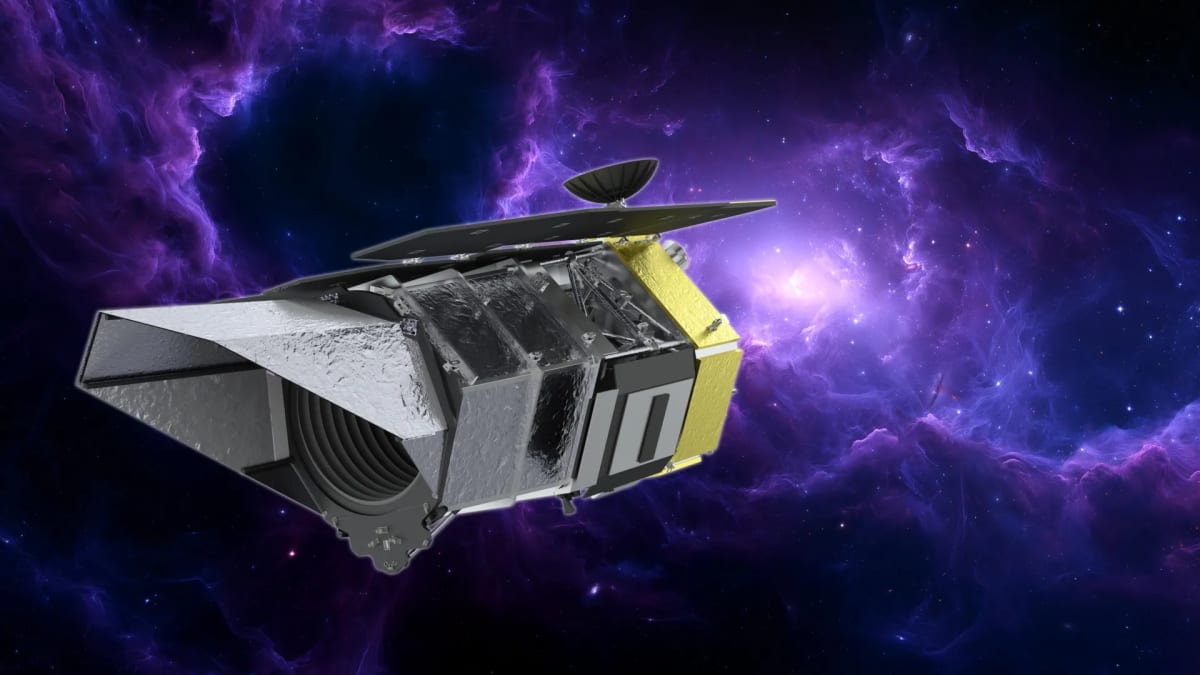
Nearly a decade of preparation is about to pay off in a spectacular way. The Nancy Grace Roman Space Telescope, launching from Kennedy Space Center this September, promises to revolutionize our understanding of the cosmos and possibly reveal whether life exists beyond Earth.
The numbers alone are staggering. Roman can survey the sky 100 times faster than the Hubble Space Telescope and produces 1,000 times the imaging rate. It's also 10 times more stable than the James Webb telescope.
"One month of Roman's observations will correspond to a century with Hubble," explains Julie McEnery, the Roman Telescope Senior Project Scientist at NASA Goddard in Maryland. That's not hype. It's pure scientific capability.
The telescope's mission tackles some of humanity's deepest questions. Scientists will use it to understand why galaxies are accelerating away from us faster and faster, a mysterious phenomenon that defies easy explanation.
"Everything is moving away from us, and the weird thing is they're moving faster and faster," says Jeremy Perkins, Roman's Science Commission Lead. Roman is designed to uncover the forces driving that cosmic acceleration.
But the really exciting part? The discoveries scientists haven't even imagined yet. Perkins is thrilled about finding things in space that current technology can't detect, like unusual explosions or entirely new phenomena.
The telescope will also search for exoplanets and signs of life beyond our solar system. "Looking at things like exoplanets, for example, in identifying where might there be life outside our solar system," says Charles Clarkson from L3Harris, a key project partner.
Why This Inspires
This multi-billion-dollar investment represents more than just advanced technology. It's humanity choosing curiosity over complacency, reaching beyond our daily concerns to ask fundamental questions about our place in the universe.
The scientists at NASA Goddard expect the most exciting discoveries will be the complete surprises. Those unexpected findings will spark new questions and inspire future missions for generations to come.
If all goes according to plan, Roman will send its first images back to Earth in December. We'll finally get to see parts of our universe that have remained hidden since the beginning of time.
More Images




Based on reporting by Google: James Webb telescope
This story was written by BrightWire based on verified news reports.
Spread the positivity!
Share this good news with someone who needs it