NASA's Nuclear Mars Mission Could Launch by 2028
After decades of planning, NASA is finally bringing nuclear-powered spaceflight to reality with robotic helicopters heading to Mars in just two years. The Skyfall mission could transform how we explore distant planets.
NASA just announced something that sounds like science fiction but could become reality before 2029: nuclear-powered helicopters flying on Mars.
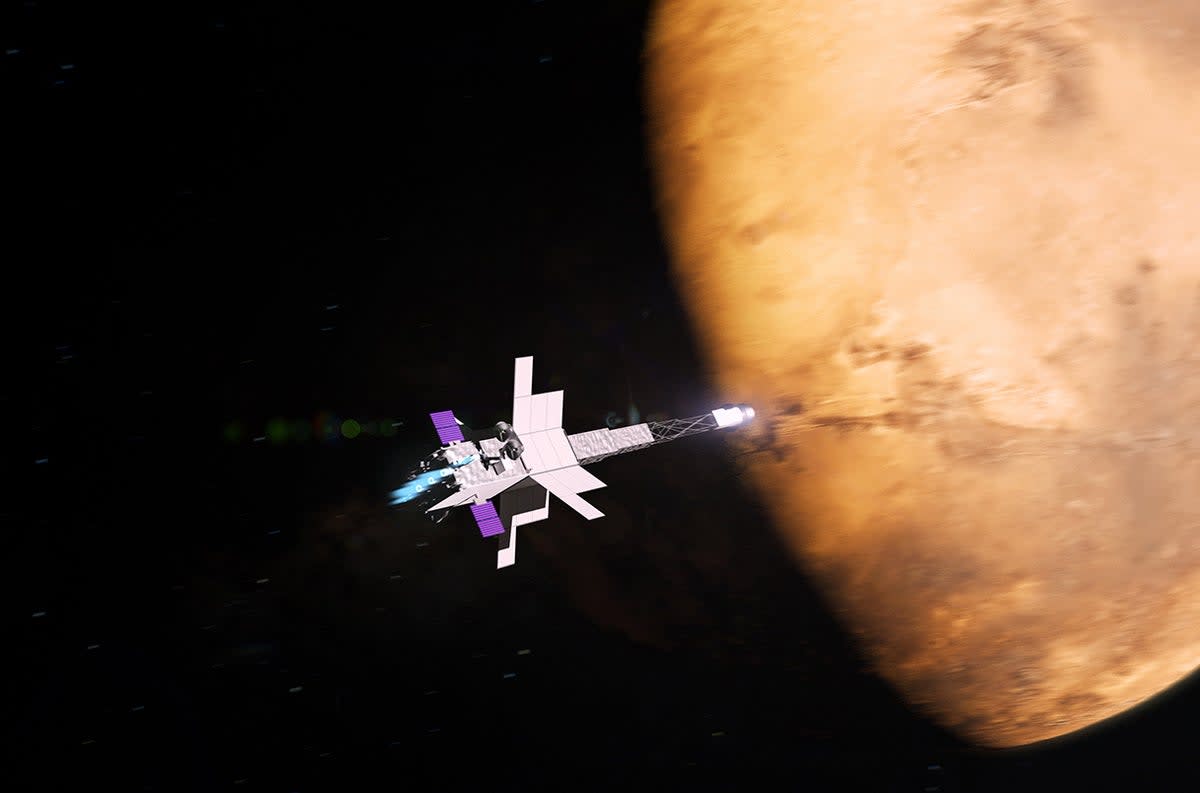
The space agency's new Skyfall mission plans to send a fleet of small robotic aircraft to the Red Planet aboard America's first nuclear-powered spacecraft. The launch date? December 2028, barely two years away.
"After decades of study and billions spent on concepts that have never left Earth, America will finally get underway on nuclear power in space," NASA administrator Jared Isaacman announced last week. The news caught even veteran space scientists by surprise.
The timing seems impossibly tight. But a former senior NASA official speaking with Scientific American thinks it might actually work, especially since the agency already has experience with Mars helicopters.
Between 2021 and 2024, NASA's tiny Ingenuity helicopter made over 70 flights on Mars, proving that robotic aircraft can handle the Red Planet's thin atmosphere. Skyfall would build on that success with multiple helicopters launched together.
The spacecraft carrying them, called Space Reactor-1 Freedom, combines existing technology in new ways. Many components are already deep into development or completely built, with NASA and the Department of Energy working together on the nuclear reactor.
The real breakthrough isn't just about Mars. Nuclear propulsion could revolutionize space exploration by getting larger payloads to distant targets much faster than traditional rockets.
"This is the kind of thing that NASA should've been doing in the late 1970s," says Paul Byrne, a planetary scientist at Washington University in St. Louis. "It gets us to a NASA that many of us grew up hoping to see."
The last time the United States launched a nuclear reactor into orbit was 1965, nearly 60 years ago. President John F. Kennedy championed nuclear rockets alongside the moon landing, calling them key to reaching "perhaps the very end of the solar system itself."
Budget cuts and public concerns shelved those dreams for decades. But modern reactor designs are safer and more efficient, making nuclear power practical for deep space missions that would take years using conventional propulsion.
Why This Inspires
This mission represents more than just new technology. It's proof that ambitious space goals don't have to stay frozen in planning forever.
The timing matters too. Climate change has made some people pessimistic about humanity's future, but achievements like this show we can still reach for the stars while solving problems at home. Nuclear space propulsion could eventually help us mine asteroids for resources or establish sustainable outposts on other worlds.
Scientists acknowledge there's still an enormous "if" hanging over the project. Funding questions remain, and the deadline is tight. But the basic building blocks exist, and NASA has successfully rushed similar missions to completion before.
Young engineers and scientists watching this unfold will see that transformative projects can happen within their careers, not just in history books. That sense of possibility matters as much as the technology itself.
If Skyfall succeeds, it opens the door to routine nuclear-powered missions that seemed impossible just months ago.
More Images



Based on reporting by Scientific American
This story was written by BrightWire based on verified news reports.
Spread the positivity!
Share this good news with someone who needs it