Webb Telescope Maps Universe's Hidden Galaxy Network
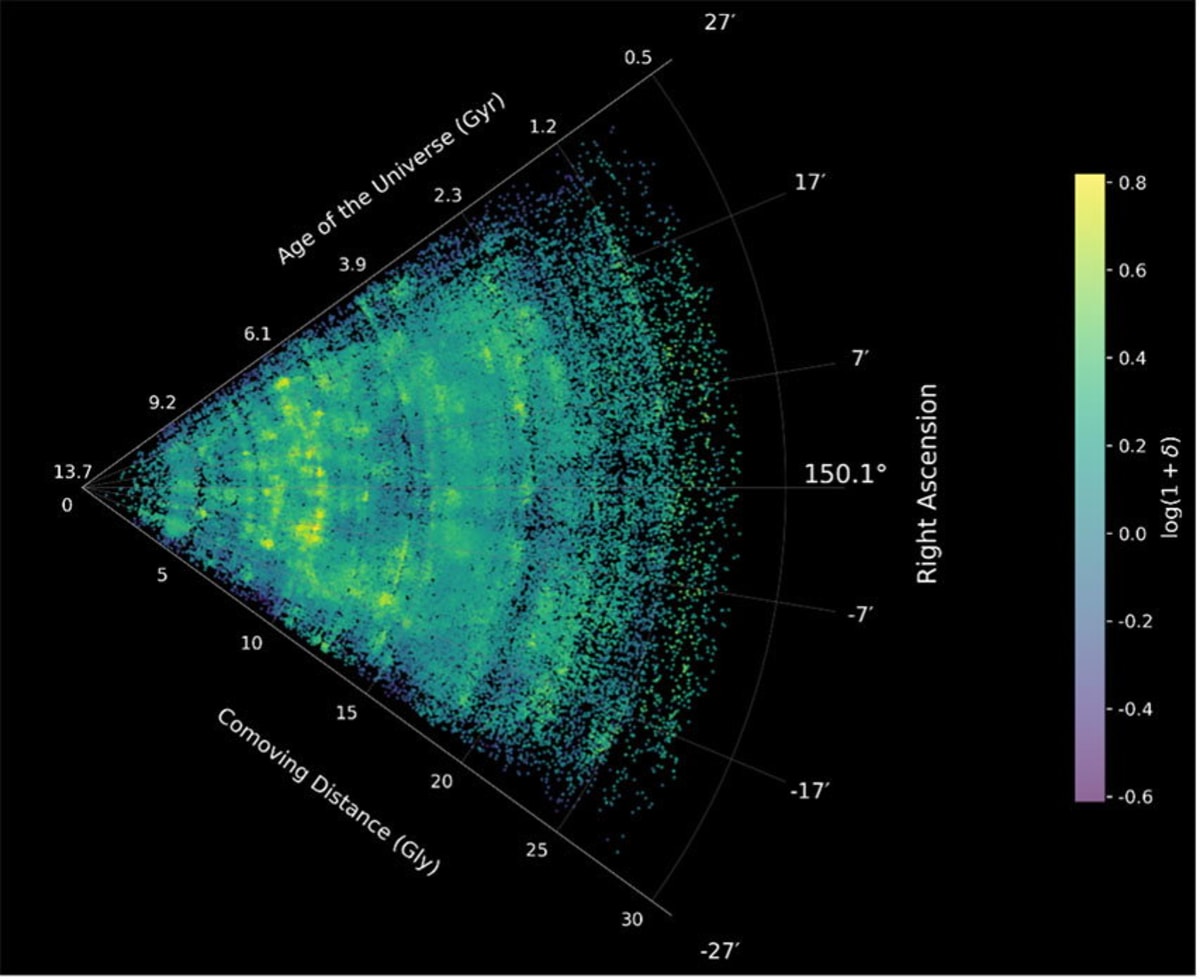
NASA's James Webb Space Telescope has created the most detailed map ever of the cosmic web, revealing how galaxies connected and evolved over 13.7 billion years. The breakthrough lets scientists see structures from when the universe was just a few hundred million years old.
Scientists just unveiled the clearest picture ever of how galaxies across the universe are connected, opening a window into the first billion years after the Big Bang.
The James Webb Space Telescope has mapped the cosmic web in stunning detail, revealing the massive network of dark matter filaments that link galaxies across empty space. Led by researchers at the University of California, Riverside, the team used data from COSMOS-Web, the largest Webb telescope study ever conducted.
The cosmic web acts like the universe's highway system, connecting galaxies through invisible threads of dark matter. These connections have shaped how galaxies grew and evolved over billions of years.
"JWST has completely changed our view of the universe," said lead author Hossein Hatamnia, a graduate student at UCR and Carnegie Observatories. The telescope can capture light from galaxies so distant that it took billions of years to reach us, essentially letting scientists watch the ancient universe in action.
The new map covers an area of sky the size of three full moons and includes 164,000 galaxies. When researchers compared it to earlier maps from the Hubble Space Telescope, they spotted countless structures that were invisible before.
What looked like single structures in older images now reveals itself as many separate formations. Details that were blurred away before now appear crystal clear, letting scientists place each galaxy into its correct moment in cosmic history.
Why This Inspires
The research reveals something remarkable about our universe's childhood. The cosmic web didn't just connect galaxies, it actively shaped their growth. The team discovered that while the web helped galaxies expand early on, it later slowed down star formation in older galaxies.
This cosmic detective work shows how the universe built itself over time, piece by piece. Every connection matters, and every galaxy has its place in the larger story.
The best part? All this data is now available to everyone. The research team has released their complete map, the catalog of all 164,000 galaxies, and even a video showing how the cosmic web changed across billions of years.
Scientists around the world can now explore the universe's blueprint and make their own discoveries about how everything fits together.
Based on reporting by Google: James Webb telescope
This story was written by BrightWire based on verified news reports.
Spread the positivity!
Share this good news with someone who needs it