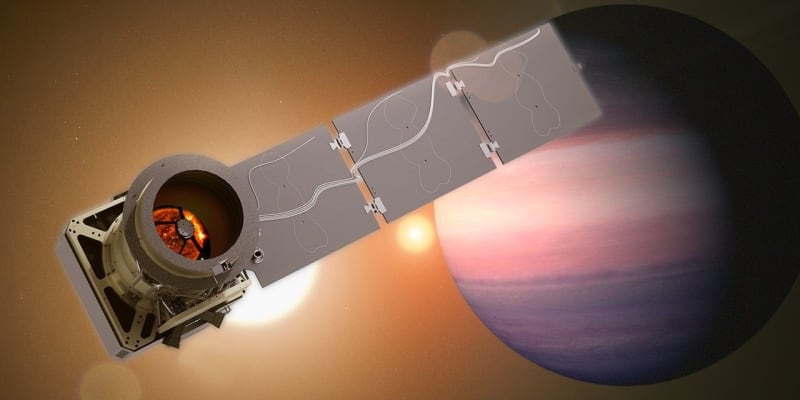
NASA's Pandora Telescope Hunts Water Worlds for $20M
A shoebox-sized satellite just launched to find something never seen before: planets with atmospheres full of water. For less than the cost of a single movie, NASA is opening a new chapter in the search for worlds that might harbor life.
📺 Watch the full story above
Scientists just launched a telescope no bigger than a mini fridge that could revolutionize our understanding of planets beyond our solar system.
On January 11th, NASA's Pandora mission lifted off from California aboard a SpaceX rocket. The scrappy little satellite cost just $20 million to build, proving that groundbreaking science doesn't require billion-dollar budgets.
Pandora's mission is both simple and profound: observe 20 alien worlds to find the first planet ever confirmed to have a water-dominated atmosphere. While scientists have detected hints of water on distant planets before, no one has ever found a world where water vapor fills the skies.
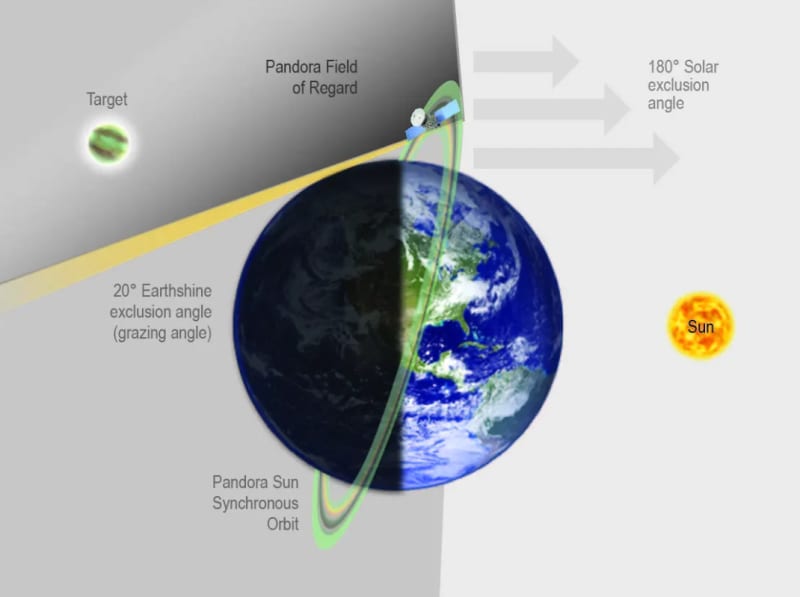
The telescope will spend a year watching these planets pass in front of their stars, measuring light at different wavelengths to decode what gases fill their atmospheres. Each planet will be observed 10 times, with 24-hour observation periods to ensure the readings are accurate.
What makes Pandora special is its ability to separate the planet's signals from its star's noise. Stars have their own weather, with spots and flares that can confuse readings. By watching in both visible and infrared light simultaneously, Pandora can tell the difference between stellar activity and actual atmospheric signatures.
The mission targets planets orbiting cooler, smaller stars than our Sun. These worlds range from Earth-sized to Jupiter-sized, and 16 of them have already caught the attention of the James Webb Space Telescope.
Why This Inspires
Pandora represents a new era where small satellites tackle big questions. Just a decade ago, studying exoplanet atmospheres required massive observatories and enormous budgets. Now, a spacecraft smaller than a washing machine is doing cutting-edge science for less than what some cities spend on a single park.
The mission also democratizes space exploration. All of Pandora's data will be freely available on NASA's Exoplanet Archive within five months of collection. Scientists anywhere in the world can use it to make discoveries.
Finding a water-rich world would answer one of humanity's oldest questions: Are there places out there like home? Water is essential for life as we know it, and discovering a planet drenched in it would narrow our search for cosmic neighbors.
Pandora's observations will also help scientists decide which planets deserve follow-up study by bigger telescopes. It's like a scout, identifying the most promising worlds for deeper investigation.
The mission proves that hope and discovery don't require endless resources, just smart thinking and determination to ask big questions.
More Images


Based on reporting by Sky & Telescope
This story was written by BrightWire based on verified news reports.
Spread the positivity! 🌟
Share this good news with someone who needs it