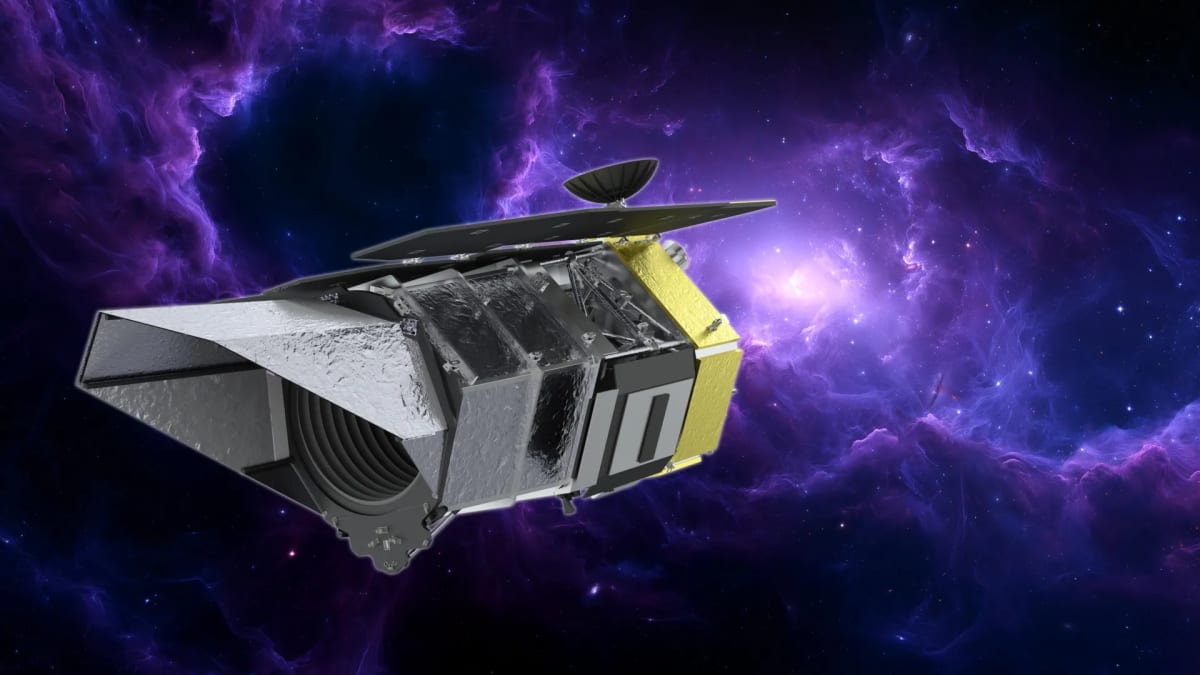
NASA's Psyche Probe Swings Past Mars at 12,000 MPH
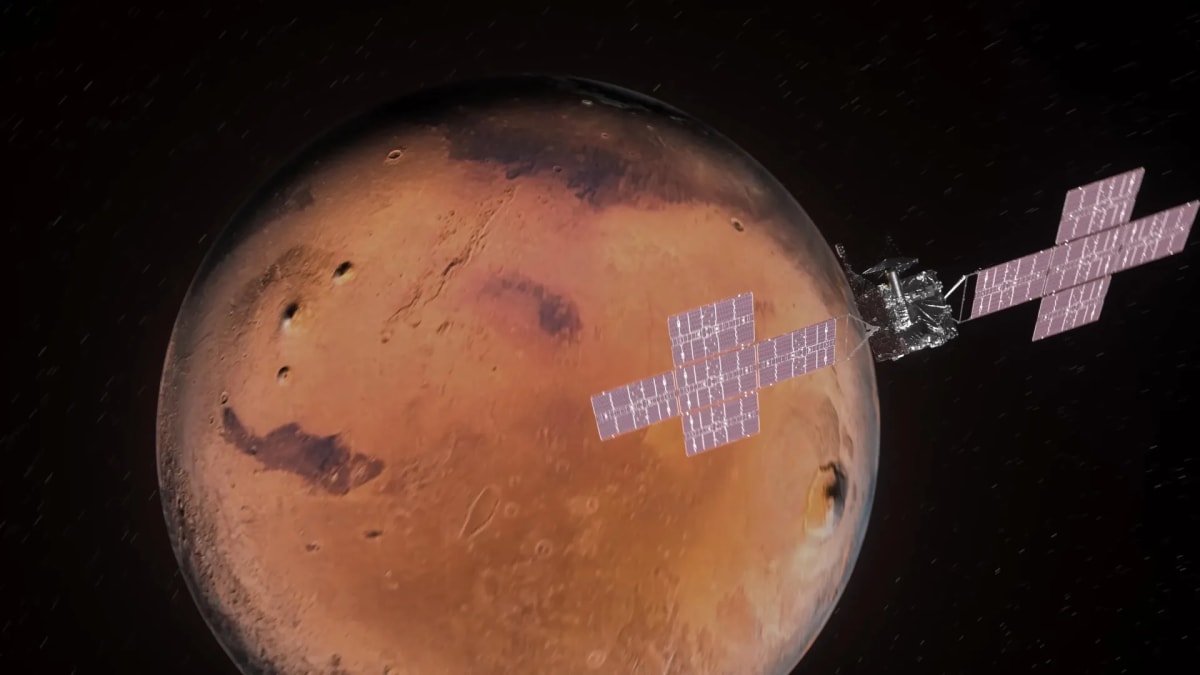
NASA's Psyche spacecraft will skim just 2,800 miles above Mars this Friday, using the planet's gravity to slingshot toward a mysterious metal asteroid. The dramatic flyby could reveal stunning crescent views of Mars and even detect hidden dust rings around the red planet.
A NASA spacecraft is about to pull off a spectacular cosmic shortcut that could unlock secrets about both Mars and a distant metal world.
This Friday, May 15, the Psyche spacecraft will race past Mars at a blistering 12,333 mph, passing just 2,800 miles above the surface. Mars' gravity will act like a giant invisible hand, pulling Psyche faster and redirecting it toward its ultimate destination: a rare metal-rich asteroid also called Psyche.
The maneuver saves precious fuel that would otherwise be needed for the long journey. Instead of burning through its xenon gas propellant, Psyche gets a free speed boost from Mars itself.
But scientists are turning this necessary pit stop into a golden opportunity. The spacecraft will snap thousands of photos of Mars to test and fine-tune its camera systems before reaching the asteroid in 2029.
The view will be unlike anything most people have seen. Because Psyche is catching up to Mars from the night side, the planet will appear as a thin, glowing crescent rather than the familiar bright disk. "We are approaching Mars at a very high phase angle, which creates opportunities for both great calibration observations as well as just plain beautiful photos," said Jim Bell, the mission's imaging lead at Arizona State University.
Scientists are also hoping to spot something rarely seen: faint dust rings around Mars. Researchers believe tiny space rocks constantly pelt the planet's two small moons, Phobos and Deimos, throwing dust particles into orbit. If the sunlight hits just right during the flyby, Psyche's cameras might capture this elusive cosmic dust.
The spacecraft's other instruments will stay busy too. Its magnetometer will measure how Mars' magnetic field interacts with solar wind, while another instrument tracks cosmic rays streaming through space.
Mission planners spent months preparing for this critical moment. Back in February, engineers fired Psyche's thrusters for 12 hours straight to ensure the spacecraft would hit its target perfectly. "We are now exactly on target for the flyby," said Sarah Bairstow, mission planning lead at NASA's Jet Propulsion Laboratory.
Why This Inspires
Launched in October 2023, Psyche represents humanity's first visit to a world made almost entirely of metal. The asteroid Psyche might be the exposed core of an ancient planet that never fully formed, offering a rare window into how rocky planets like Earth are built from the inside out.
This Mars flyby shows how NASA engineers turn challenges into opportunities. What could have been a simple gravity assist becomes a chance to practice, explore, and possibly discover something unexpected along the way.
Mission controllers will track radio signals from the spacecraft to confirm everything went according to plan, watching for telltale shifts that reveal Psyche's new speed and direction as it heads deeper into the solar system.
Based on reporting by Science Daily
This story was written by BrightWire based on verified news reports.
Spread the positivity!
Share this good news with someone who needs it