Hubble Preps for Roman Telescope's Planet-Hunting Mission
NASA's Hubble telescope is mapping millions of stars near our galaxy's center to help the new Roman Space Telescope discover thousands of hidden planets starting this fall. This cosmic teamwork will reveal entire worlds we never knew existed.
Two powerful space telescopes are joining forces to discover thousands of new planets in the most crowded neighborhood of our Milky Way galaxy.
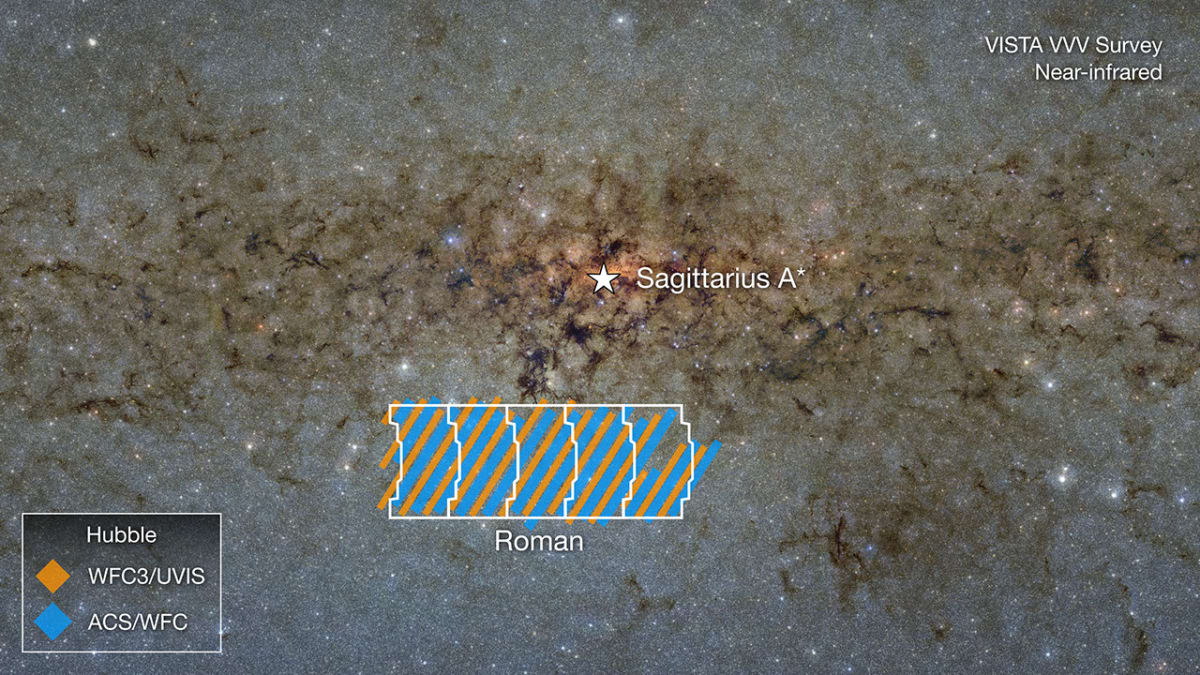
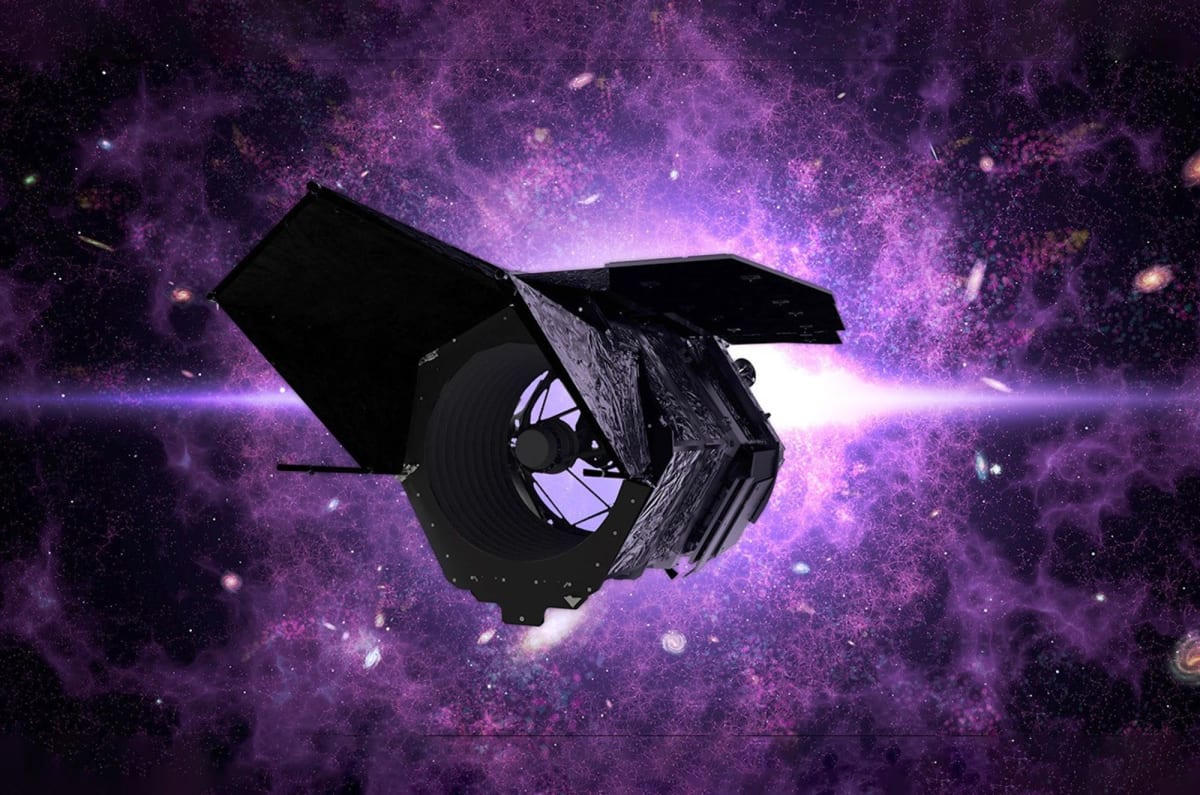
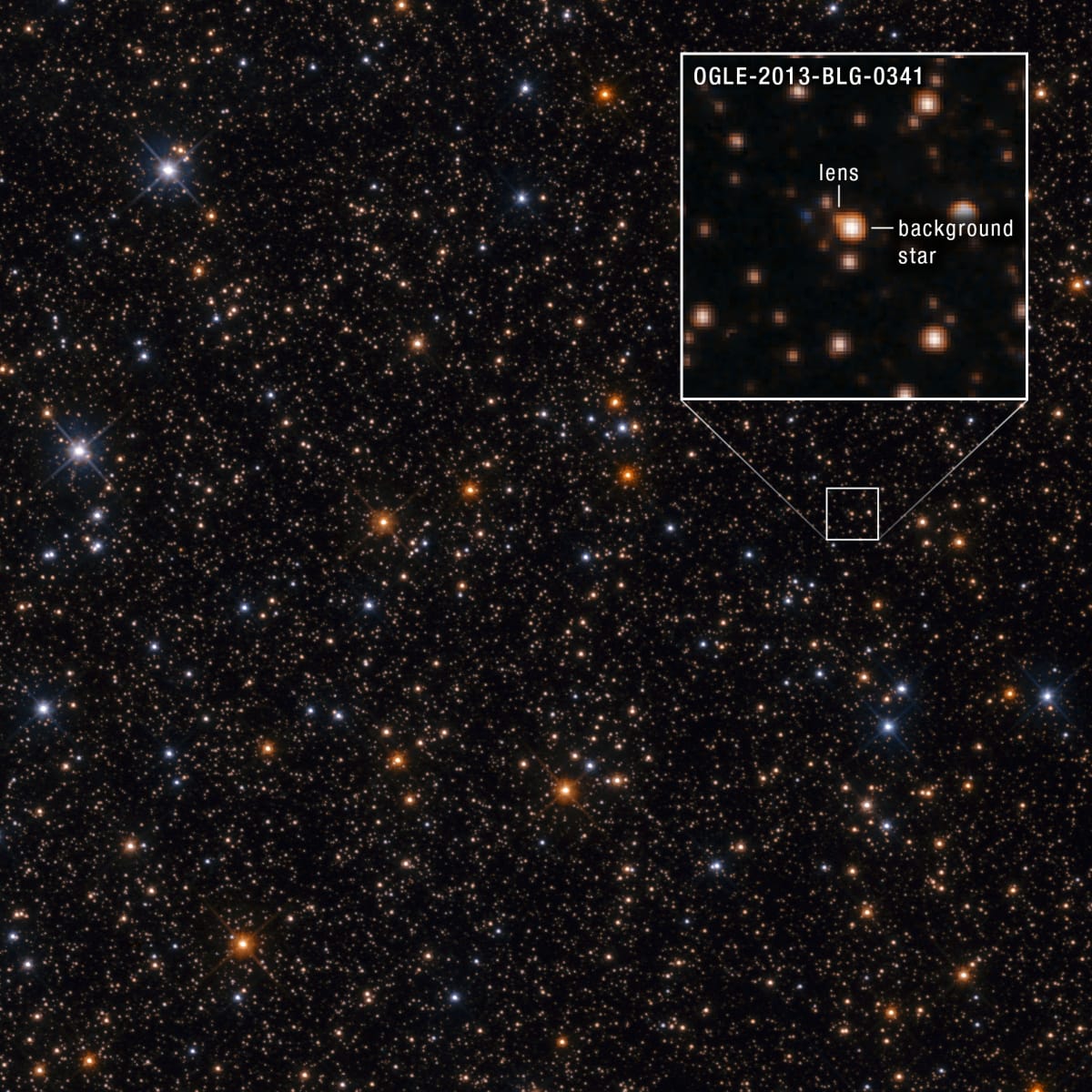
NASA's Hubble Space Telescope has been quietly photographing millions of stars near the center of our galaxy since spring 2025. These images are creating a detailed map that will help the upcoming Nancy Grace Roman Space Telescope identify planets when it launches as early as September 2026.
The Roman telescope will stare at the same region for six observing seasons, snapping photos every 12 minutes to catch something remarkable: tiny distortions in starlight that reveal hidden planets. These fleeting events, called microlensing, happen when a planet passes between us and a distant star, bending the light like a cosmic magnifying glass.
Here's why Hubble's prep work matters so much. When Roman spots these light distortions, scientists need to know which star is which. Did a red star pass in front of a blue one? Is that a planet orbiting a massive star or a small one? Hubble's earlier photos provide the answers.
"When an event happens during Roman's long stare at the field, we can go back and say, 'This was a red star, this was a blue star,'" explained Jay Anderson from the Space Telescope Science Institute. The combination transforms fuzzy estimates into precise measurements.
Roman will survey an area equivalent to 8.5 full moons every 12 minutes, covering far more sky much faster than any previous space telescope. This speed and scope will help scientists find hundreds of rogue planets, worlds that were kicked out of their home solar systems and now drift alone through space. Some could be as small as Mars.
The collaboration will also reveal isolated neutron stars and even black holes with masses similar to our Sun, objects that have remained invisible until now.
The Ripple Effect
This telescope tag team represents a new era of space exploration where missions build on each other's strengths. Hubble's sharp vision sets the stage, and Roman's wide-angle speed delivers the discoveries. Together, they'll create the most complete census ever of planets and mysterious objects hiding between us and the galaxy's crowded center.
The technique could reveal not just how many planets exist, but also help scientists understand how planetary systems form and evolve. Some systems develop peacefully like ours, while others experience violent events that send planets flying into the cosmic void.
Project lead Sean Terry from the University of Maryland notes that the Hubble survey covers more area than the famous Andromeda galaxy mosaic, which took over a decade to assemble. The scale reflects the ambition: catalog millions of stars before Roman begins its hunt.
Scientists will finally be able to say with confidence that they've found, for example, a Saturn-mass planet orbiting a star that's 0.8 times the mass of our Sun. These precise measurements will help answer fundamental questions about how common different types of planets really are.
The cosmic detective work begins this fall, with discoveries that could reshape our understanding of planetary systems throughout the galaxy.
More Images

Based on reporting by NASA
This story was written by BrightWire based on verified news reports.
Spread the positivity!
Share this good news with someone who needs it