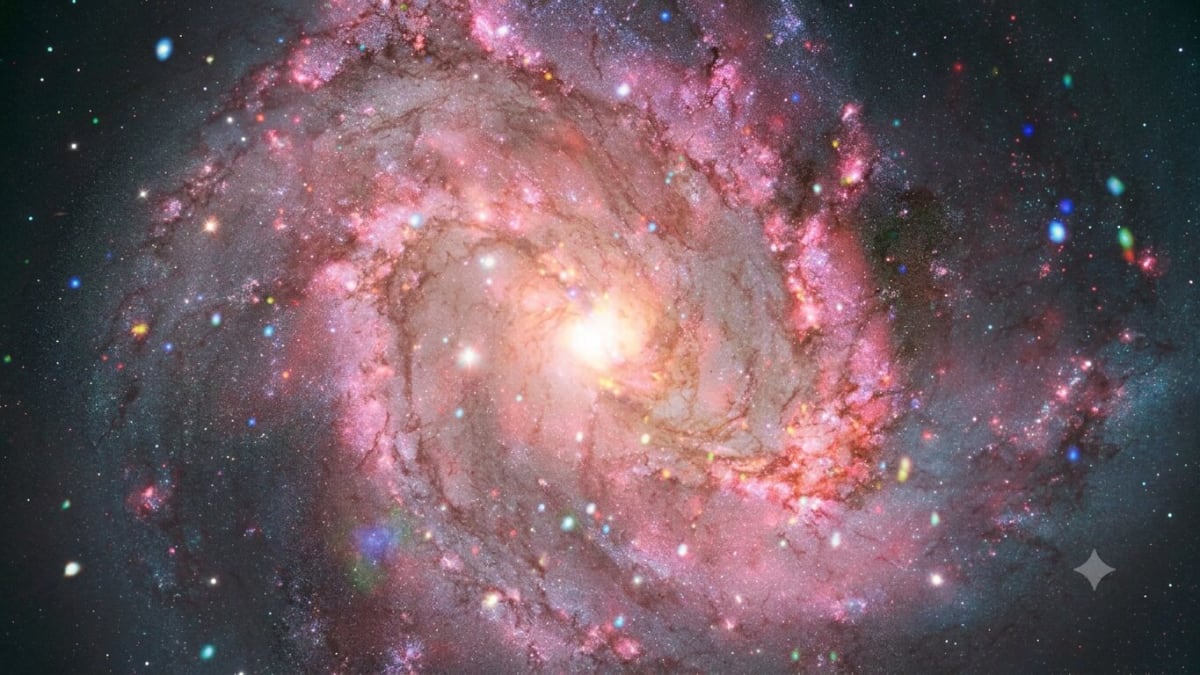
Scientists Found Universe's Birth in Mystery 1964 Hum
Two scientists chasing down annoying static in 1964 accidentally discovered proof of the Big Bang, changing our understanding of the universe forever. Their "cosmic hum" won them a Nobel Prize and launched decades of space exploration.
Two Bell Labs scientists thought pigeons were messing up their equipment. Instead, they stumbled upon the universe's baby picture.
In 1964, Arno Penzias and Robert Wilson were trying to eliminate a frustrating hum from their 20-foot horn antenna in Holmdel, New Jersey. No matter where they pointed their telescope, a low-frequency static persisted from every direction in the sky.
They cleaned pigeon droppings off the equipment. They checked for interference from nearby cities. Nothing worked because the noise wasn't coming from Earth at all.
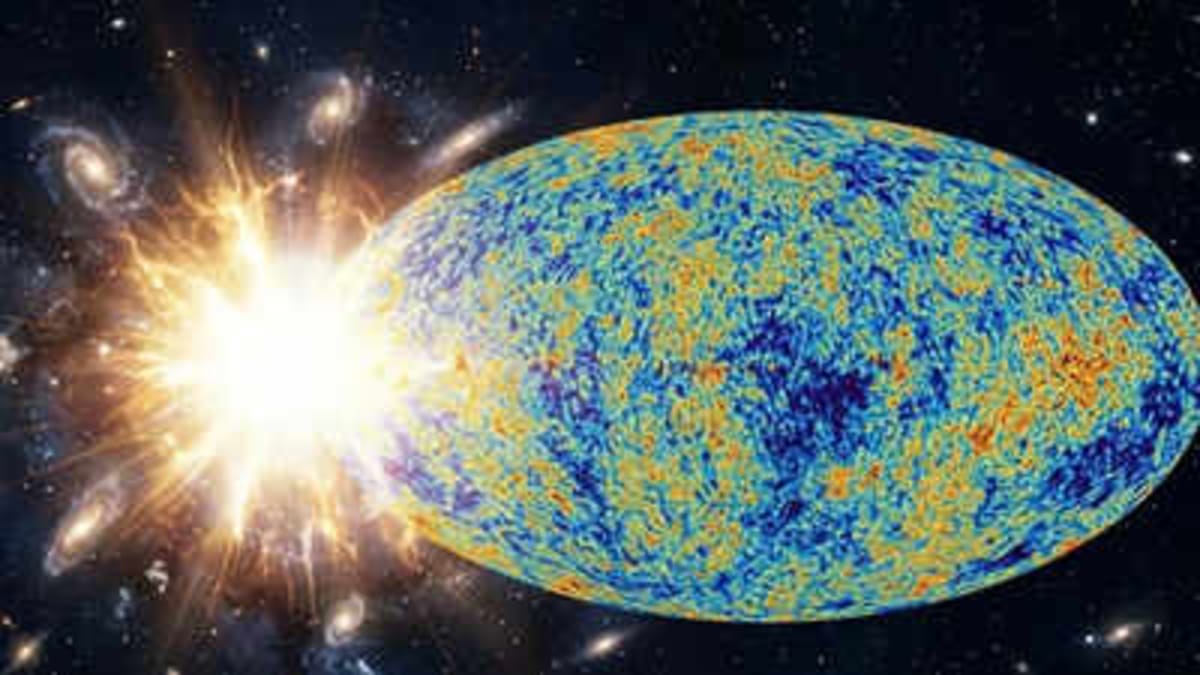
What they heard was the Cosmic Microwave Background, the leftover warmth from the Big Bang itself. This faint glow has been traveling through space for 13.8 billion years, created just 380,000 years after the universe exploded into existence.
The discovery proved something extraordinary. Until then, many scientists believed in the "Steady State" theory, which claimed the universe had always existed without a beginning. Penzias and Wilson's finding showed definitively that our universe had a specific, explosive start.
The static measured approximately 3.5 Kelvin, exactly matching what theoretical physicists at Princeton University had predicted for the "leftover heat" of a newborn universe. Robert Dicke's team at Princeton quickly understood what the Bell Labs duo had found.
The Ripple Effect
This accidental breakthrough transformed cosmology from abstract theory into hard science. Scientists could finally observe what the universe looked like in its infancy, watching it expand and cool over billions of years.
Penzias and Wilson received the Nobel Prize in Physics in 1978 for their discovery. More importantly, their work opened doors for modern space missions like COBE, WMAP, and the Planck satellite, which have since mapped the early universe in stunning detail.
These missions refined our understanding of the universe's age to precisely 13.8 billion years. They revealed patterns in the cosmic background that show how galaxies formed and how matter spread throughout space.
The discovery remains the most significant breakthrough in modern astronomy. What started as an annoying technical problem became humanity's clearest window into our cosmic origins.
Sometimes the most important discoveries come from refusing to ignore something strange.
More Images



Based on reporting by Google: scientific discovery
This story was written by BrightWire based on verified news reports.
Spread the positivity!
Share this good news with someone who needs it