NASA's Quiet Supersonic Jet Takes Second Test Flight
NASA's X-59 aircraft completed its second flight on March 20, proving that supersonic travel without deafening sonic booms is becoming real. Despite an early landing, the team collected crucial data that brings whisper-quiet supersonic flights closer to reality.
Imagine flying from New York to Los Angeles in half the time without rattling windows below. NASA just took another step toward making that dream real.
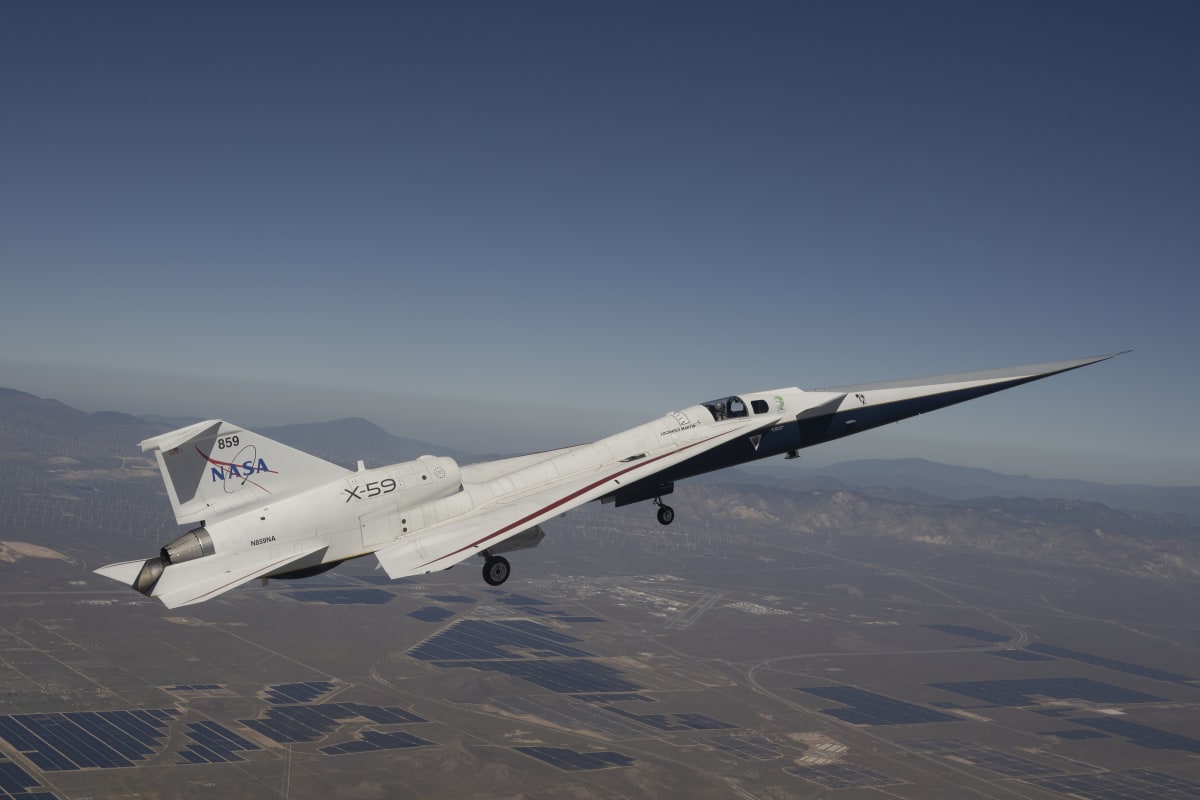
NASA's X-59 aircraft lifted off Friday morning from Edwards Air Force Base in California for its second test flight. The experimental plane is designed to break the sound barrier while producing only a quiet thump instead of the explosive sonic boom that currently makes supersonic flight over land illegal.
Pilot Jim "Clue" Less took off at 10:54 a.m. and noticed a vehicle system warning several minutes into the flight. Following standard procedures, he safely landed nine minutes later at 11:03 a.m.
"Despite the early landing, this is a good day for the team," said Cathy Bahm, project manager at NASA's Armstrong Flight Research Center. The team collected valuable data that will shape future tests.
Less compared the experience to simulator training, which is exactly what engineers want to hear. "This is just the beginning of a long flight campaign," he said.
The X-59 sits at the heart of NASA's Quesst mission, which aims to bring commercial supersonic flight back to the skies over land. Since the Concorde retired in 2003, supersonic passenger travel has been limited to flights over oceans because of noise concerns.
Why This Inspires
This isn't just about shaving hours off cross-country flights. The technology could transform how we connect with distant family, respond to emergencies, and conduct business across continents.
The aircraft will accelerate testing throughout 2026, gradually flying faster and higher until it reaches supersonic speeds. Each flight brings engineers closer to proving the plane can fly safely while keeping neighborhoods peaceful below.
The breakthrough matters because current regulations ban supersonic flight over land due to disruptive sonic booms. If the X-59 succeeds, it could reshape those rules and unlock a new era of air travel that's both lightning-fast and neighbor-friendly.
More Images

Based on reporting by NASA
This story was written by BrightWire based on verified news reports.
Spread the positivity!
Share this good news with someone who needs it