NASA's Roman Telescope Fueled Up for August 30 Launch
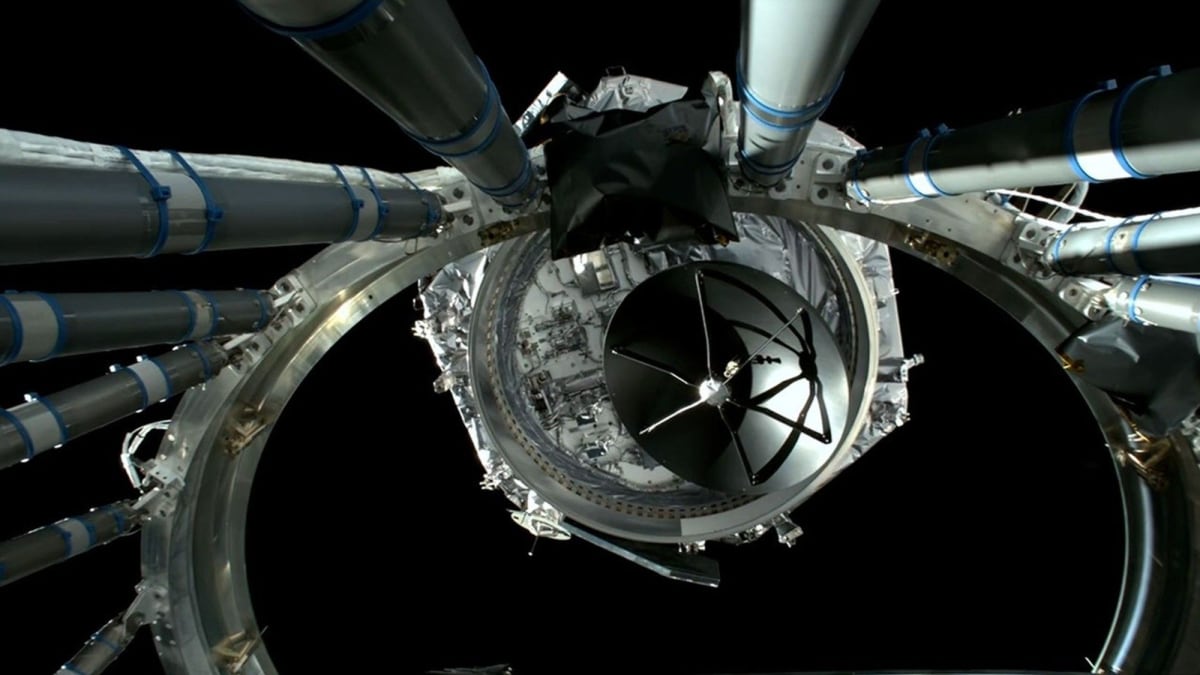
NASA just completed fueling the Nancy Grace Roman Space Telescope, marking the final major milestone before its August 30 launch to unlock mysteries of dark energy and thousands of distant planets. The telescope will work alongside James Webb to map how galaxies formed across billions of years.
NASA just cleared the Nancy Grace Roman Space Telescope for launch after completing its final fueling, bringing humanity one step closer to understanding the invisible forces shaping our universe.
The observatory received its hydrazine propellant and compressed gas at the Astrotech Space Operations Facility near Kennedy Space Center in Florida. With fueling complete, the telescope is on track for its August 30 launch aboard a SpaceX Falcon Heavy rocket.
Once in space, Roman will travel to a special parking spot called the Sun-Earth L2 Lagrange point, about 930,000 miles from our planet. From this stable position, the telescope will hunt for answers to some of science's biggest questions about dark energy, dark matter, and planets beyond our solar system.
The mission honors Nancy Grace Roman, NASA's first chief astronomer, whose groundbreaking work helped make the Hubble Space Telescope possible. Her legacy now lives on in a telescope designed to see the universe in ways we never could before.
Why This Inspires
What makes Roman special is how it works with the James Webb Space Telescope. While Webb zooms in for detailed close-ups of distant objects, Roman's field of view spans an area 100 times larger, letting it survey vast swaths of sky in single snapshots.
Think of it like having both a microscope and a wide-angle camera pointed at the cosmos. Webb shows us individual galaxies in stunning detail, while Roman will reveal how billions of galaxies evolved and connected over cosmic time.
The telescope will also search for thousands of exoplanets using techniques that complement other planet-hunting missions. By studying how galaxies formed and changed over billions of years, scientists hope to piece together the story of how our own Milky Way came to be.
This mission represents years of dedication from thousands of engineers, scientists, and visionaries who refused to give up on answering humanity's deepest questions about our place in the universe.
In just one month, we'll add another powerful eye to our cosmic toolkit, bringing us closer to understanding the invisible scaffolding that holds everything together.
More Images


Based on reporting by Google: James Webb telescope
This story was written by BrightWire based on verified news reports.
Spread the positivity!
Share this good news with someone who needs it