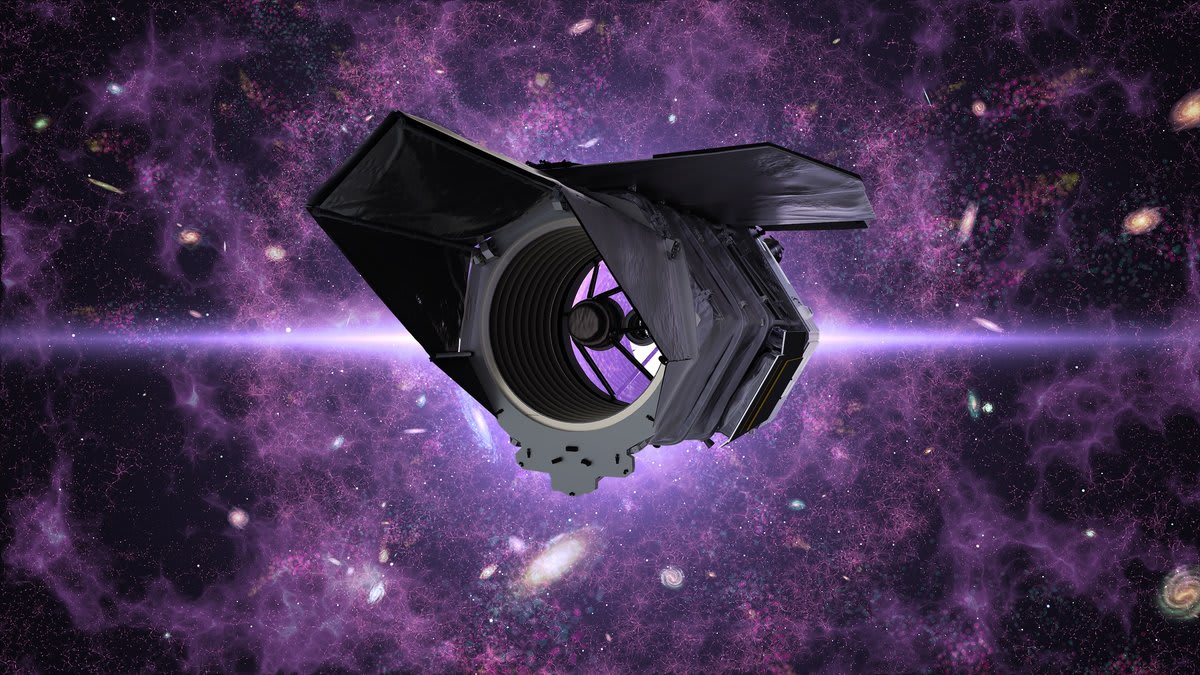
NASA's Roman Telescope Will Survey 100x More Sky Than Hubble
NASA's $4.3 billion Roman Space Telescope launches August 30 with a game-changing superpower: capturing 100 times more sky than Hubble in a single shot. Scientists just selected 118 groundbreaking research programs to unlock mysteries from newborn black holes to the universe's earliest galaxies.
Imagine a telescope so powerful it can photograph the entire cosmos in sweeping panoramas instead of tiny peepholes. That's exactly what NASA's newest space observatory will do starting this month.
The Nancy Grace Roman Space Telescope launches August 30, equipped with the same size mirror as Hubble but with a field of view 100 times wider. Scientists are already lining up with 118 approved research programs to explore everything from mysterious objects in the early universe to tens of thousands of new planets.
The telescope's capabilities sound almost too good to be true. It will produce as much data in one year as Hubble has collected in its entire 35-year career. That's 500 terabytes of cosmic discoveries flowing back to Earth annually from its position 1.5 million kilometers away, right next to the James Webb Space Telescope.
One of Roman's first missions tackles a cosmic mystery called "little red dots." These strange, compact objects appeared in the early universe but seem to vanish as time goes on. Vasily Kokorev at the University of Texas will use Roman to figure out if they truly disappear or if we've just been looking in the wrong places.
Steven Finkelstein, also at UT Austin, plans to find 500 extremely bright distant galaxies that formed just hundreds of millions of years after the Big Bang. These cosmic lighthouses will help scientists understand how the first galaxies grew so luminous so quickly.
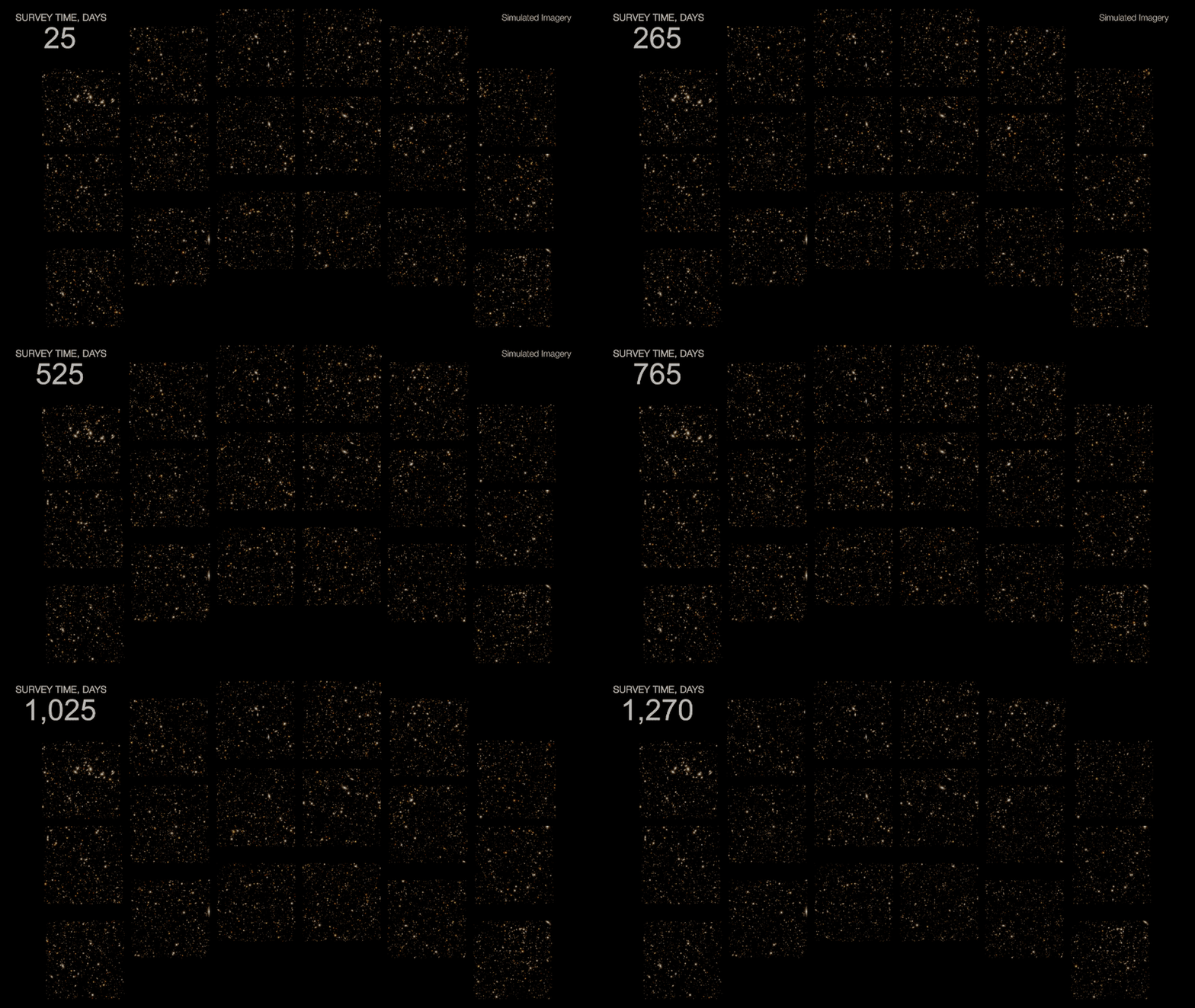
The telescope will also recreate Hubble's famous deep field images but on steroids. The Roman eXtreme Deep Field will survey an area 140 times larger, revealing millions of previously unseen galaxies stretching back to just 300 million years after the universe began.
Why This Inspires
Roman represents more than a decade of work and represents genuine technological progress in how we explore space. The telescope's mirror actually came from declassified spy satellite technology, showing how innovation in one field can spark breakthroughs in another.
The $4.3 billion investment reflects our collective commitment to answering humanity's biggest questions. While Roman will focus on understanding dark energy, dark matter, and discovering thousands of exoplanets, the 118 additional research programs show how one powerful tool can serve countless scientific goals.
Every terabyte of data Roman sends back will help scientists piece together the story of our universe, from its explosive beginning to the mysterious forces shaping its future.
The cosmos is about to come into focus like never before.
More Images


Based on reporting by Scientific American
This story was written by BrightWire based on verified news reports.
Spread the positivity!
Share this good news with someone who needs it
%2Fhttps%3A%2F%2Ftf-cmsv2-smithsonianmag-media.s3.amazonaws.com%2Ffiler_public%2F4e%2F9f%2F4e9f0fe8-aa48-438a-b88f-3a29cd71107e%2Fhttps___wwwfrontiersinorg_files_articles_1758862_xml-images_fmats-13-1758862-g001.jpeg)