Navy Seeks Volunteers for NASA Moon Mission Study
Navy researchers at Wright-Patterson Air Force Base need volunteers for a groundbreaking study that could help astronauts safely return to the Moon. The research examines motion sickness and how our bodies adapt to changing gravity, supporting NASA's Artemis program.
Navy scientists in Ohio are looking for volunteers to help solve one of space exploration's trickiest challenges: keeping astronauts healthy during trips to the Moon and back.
The Naval Medical Research Unit Dayton is partnering with the Air Force Research Laboratory, Johns Hopkins University, and NASA to study how our brains and inner ears handle motion sickness in space. The research directly supports NASA's Artemis program, which aims to land American astronauts on the Moon for the first time since 1972.
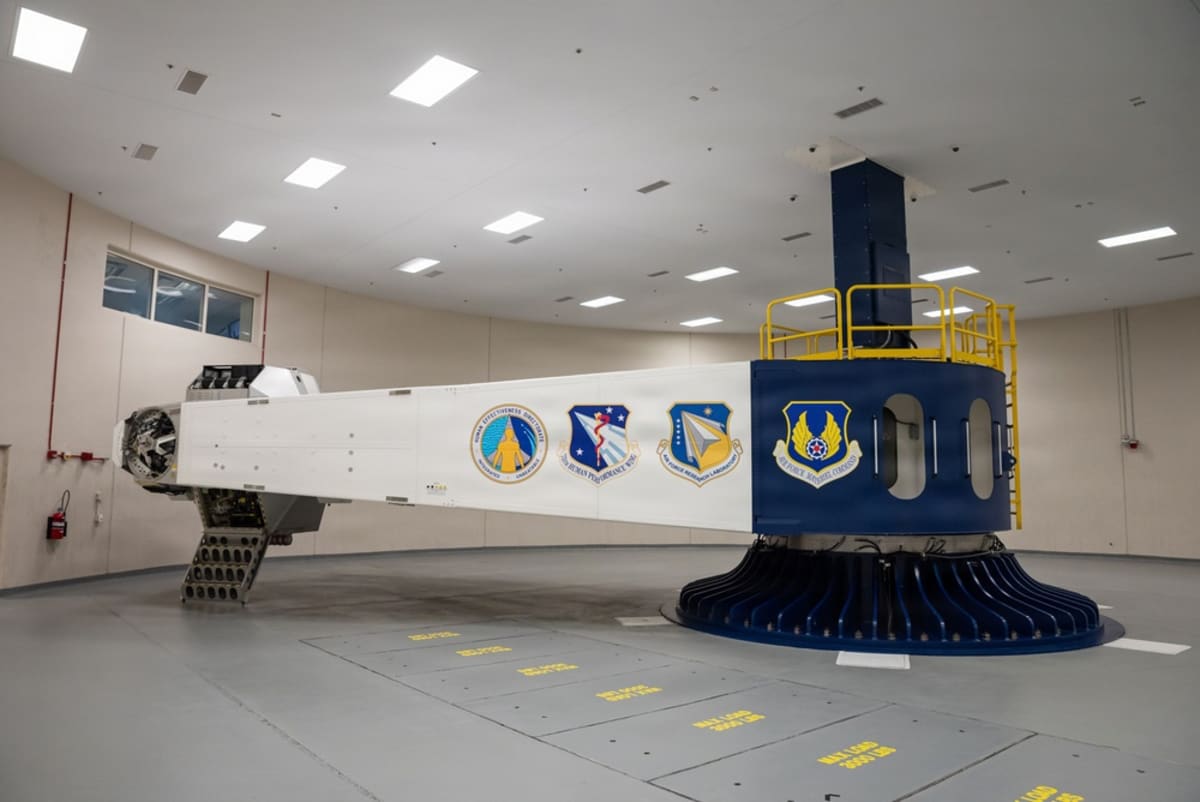
Volunteers will ride in the only human-rated centrifuge in the Department of Defense, located at Wright-Patterson Air Force Base. The centrifuge simulates the intense gravitational forces astronauts experience during launch and return to Earth.
During the study, called StableEyes With Active Neurophysiology Monitoring (SWAN), participants complete balance and coordination tasks while wearing special goggles that track their head and eye movements. Scientists collect this data to develop better ways to prevent motion sickness in space, which could improve both astronaut performance and military aviation safety.
The study requires volunteers with current aviation medical clearance and Tricare health insurance because of the physical demands. Rich Folga, the project manager, explains that candidates need "the right stuff" to handle the unique aspects of centrifuge exposure.
Why This Inspires
This collaboration builds on a proud legacy. Naval medical researchers at the same lab contributed to astronaut training during the Mercury, Gemini, and Apollo programs that first put humans on the Moon. Now they're helping write the next chapter of lunar exploration.
Dr. Richard Arnold, director of the Naval Aerospace Medical Research Laboratory, notes that Dayton has been at the center of aerospace medicine for decades. Today's research continues that tradition by bringing together Navy, Air Force, and NASA scientists to solve problems that will enable future missions to the Moon and beyond.
The research couldn't come at a better time. NASA's Artemis II mission recently launched on April 1, sending a crew farther from Earth than anyone has traveled in over 50 years. Future Artemis missions plan to establish a sustained human presence on the Moon later this decade.
Every volunteer who steps into that centrifuge is helping pave the way for humanity's next giant leap.
Based on reporting by Google: volunteers help
This story was written by BrightWire based on verified news reports.
Spread the positivity!
Share this good news with someone who needs it