Needle-Thin Brain Implant Does 3 Jobs at Once in Mice
Scientists created a hair-thin brain implant that records brain activity, delivers medicine, and stimulates different brain areas simultaneously. Successful tests in mice show the flexible device could transform how we study and treat conditions like epilepsy.
A breakthrough brain implant thinner than a needle is giving scientists new hope for treating neurological disorders like epilepsy while making research safer and more precise.
Researchers from Denmark's Technical University, the University of Copenhagen, and University College London developed the device, called the mAxialtrode. It combines three powerful tools into one flexible fiber thinner than half a millimeter.
The implant can record electrical signals from the brain, deliver medications to specific locations, and stimulate nerve cells with light all at the same time. Most current brain implants can only do one job, often requiring multiple devices inserted into delicate tissue.
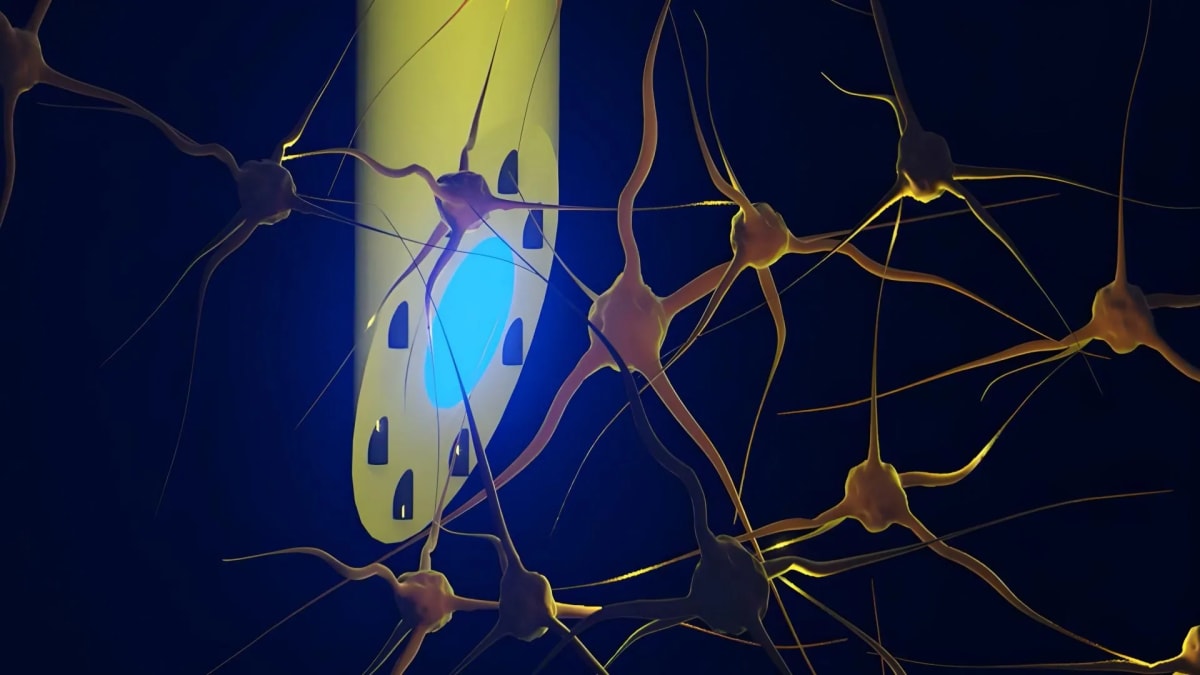
The research team tested their creation in living mice and watched it work beautifully. The device successfully stimulated nerve cells using colored light while recording brain activity from both shallow and deep regions. It even delivered different substances to separate brain areas almost three millimeters apart.
Postdoc Kunyang Sui, who developed the concept with Associate Professor Christos Markos, says the flexibility makes all the difference. Traditional brain implants use hard materials like silicon that can irritate brain tissue and trigger inflammation. The mAxialtrode uses soft, plastic-like optical fibers that move naturally with the brain instead of pressing rigidly through it.
The researchers create each fiber by heating a polymer rod and drawing it into an incredibly thin strand with precision far beyond candy making. A light-conducting core runs through the center, surrounded by eight microscopic channels that transport liquids or hold thin metal wires for measuring electrical activity.
The mice carried the lightweight device without any obvious signs of discomfort. That matters because researchers need extended observation periods to understand complex brain processes involving memory, decision-making, and seizures.
The Ripple Effect
Right now, scientists studying epilepsy face a frustrating challenge. They can watch one brain layer at a time, even though seizures involve communication across multiple layers and structures. This new tool lets them observe several brain regions simultaneously, potentially revealing patterns they've been missing.
The device could help researchers understand exactly how signals travel through different brain areas during critical moments. That knowledge might lead to more targeted treatments that deliver medication precisely where and when it's needed, combined with electrical or light stimulation to selected areas.
Sui cautions that clinical use remains years away, requiring extensive testing and regulatory approvals. But the successful animal trials represent a meaningful step toward less invasive brain research and eventually better treatments for millions living with neurological conditions.
The findings appeared in the journal Advanced Science, opening the door for other research teams to build on this multifunction approach to brain science.
Based on reporting by Science Daily
This story was written by BrightWire based on verified news reports.
Spread the positivity!
Share this good news with someone who needs it