Nepal's Only-in-the-World Bird Finally Getting Noticed
Scientists are calling for global attention to study the spiny babbler, a mysterious bird found nowhere on Earth except Nepal. After 187 years of obscurity, new sightings across all seven provinces are revealing just how little we know about this unique species.
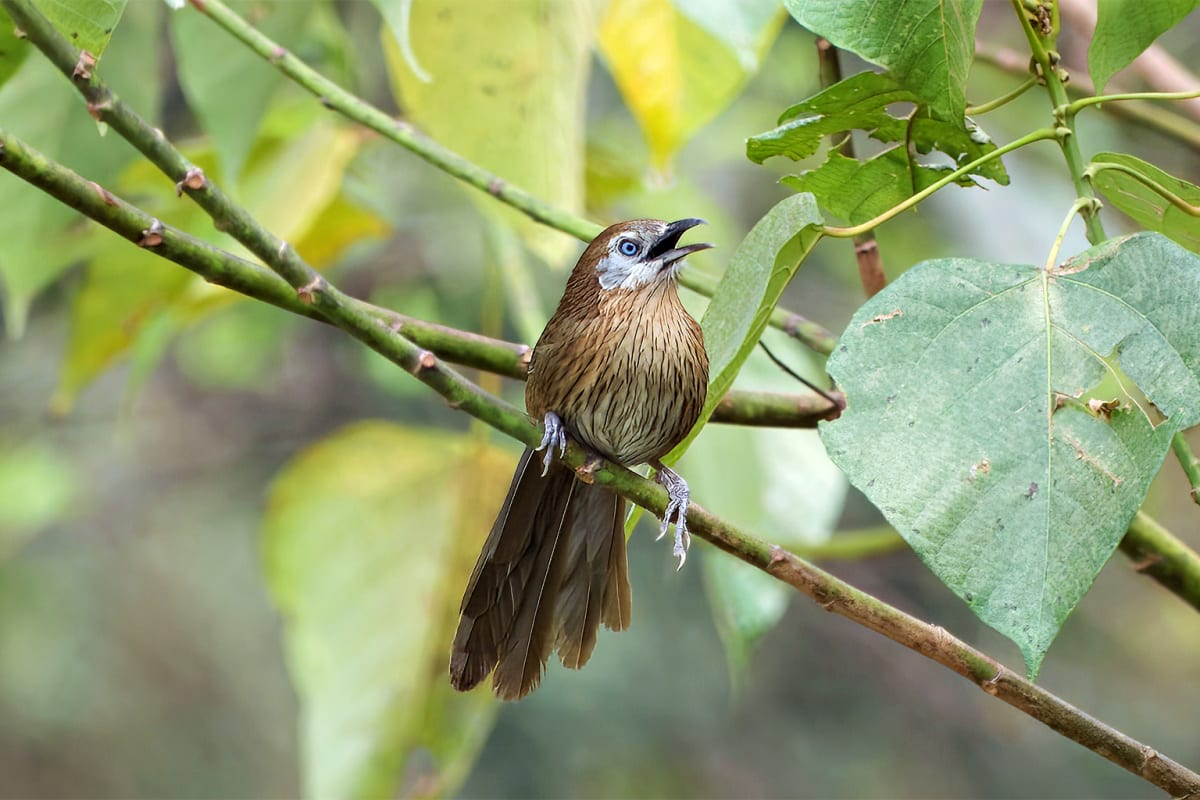
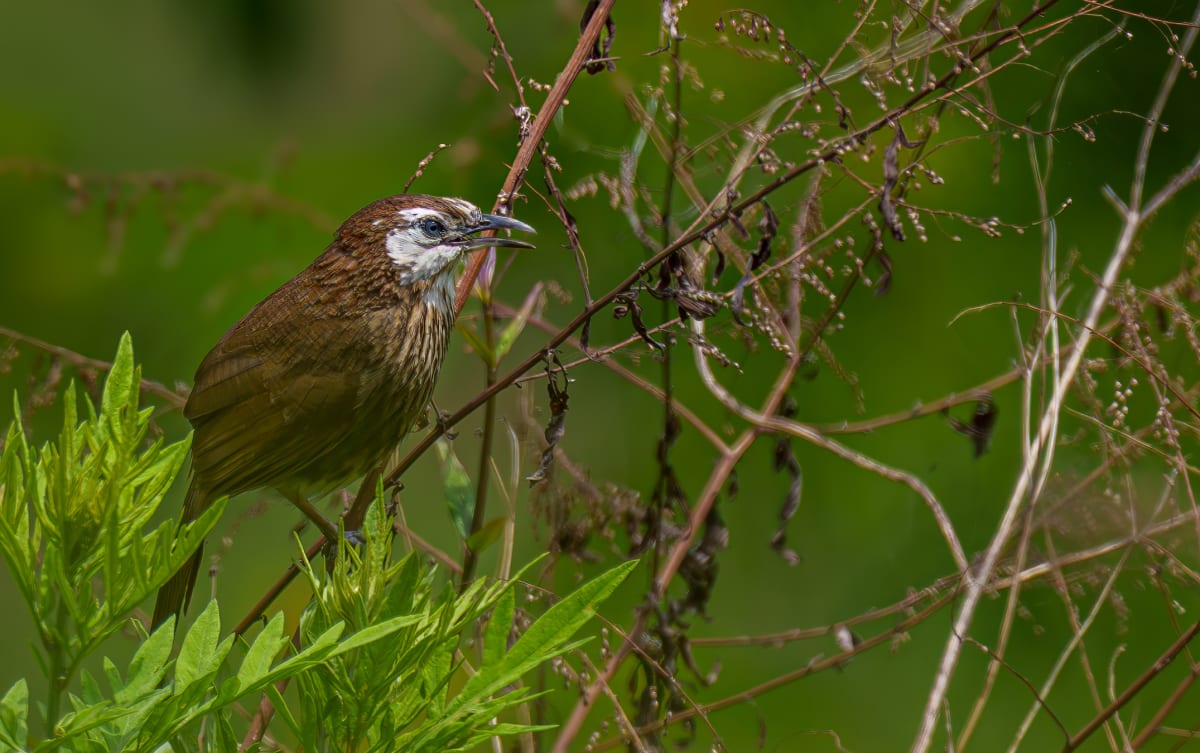
For nearly two centuries, a medium-sized bird with distinctive black streaks has called Nepal home, and only Nepal. Now scientists are racing to understand the spiny babbler before its shrubland habitat disappears.
British naturalist Brian Houghton Hodgson first described the species in 1836 while living in Kathmandu. His discovery went largely unnoticed for over a century until the 1940s, when fresh sightings confirmed the bird's existence.
Fast forward to today, and birdwatchers have recorded more than 1,200 sightings on eBird, mostly around Kathmandu and Pokhara at elevations between 3,000 and 7,000 feet. In June, ornithologists Hathan Chaudhary and Suraj Baral spotted the bird in Madhesh province for the first time, marking sightings in all seven of Nepal's provinces.
Despite being Nepal's only endemic bird species, the spiny babbler remains a mystery. Scientists don't know its exact population, breeding patterns, or why it exists nowhere else on Earth.
"We still don't know a lot about the bird and have no scientific data to back its population, movements, exact breeding season, or the effects of increasing human settlements," said Kamal Raj Gosai, who heads environmental science at Kathmandu's Tri-Chandra Multiple Campus.
Researcher Raksha Thakuri found an estimated 129 individuals in Lwang Ghalel village near the Annapurna mountains, where the birds prefer steep slopes near water and away from roads. Her 2024 study revealed that spiny babblers thrive in scrubland and shrubland areas, habitats increasingly threatened by urban expansion.
The Ripple Effect
Attention to this shy bird could spark broader conservation wins for Nepal's overlooked ecosystems. A 2020 study found that Kathmandu's shrublands virtually disappeared between 1990 and 2010, affecting countless species beyond the spiny babbler.
Gosai notes a troubling perception that scrublands are wastelands, leading communities to convert them to farms or forests. "Other birds have a wider habitat range, but spiny babblers tend to have a shorter flight range and usually move from one patch to another nearby patch of scrublands," he explained.
Thakuri discovered that when she revisited research sites after two years, the birds had vanished from spots where she'd previously found them. New roads and landslides had altered the shrublands they depend on.
The growing army of birdwatchers documenting sightings gives researchers hope that increased visibility will translate into conservation action. Veteran bird expert Carol Inskipp, who first spotted the species in Pokhara in 1977, has watched interest grow steadily over the decades.
Scientists are now calling for Nepal and the international community to prioritize research on this one-of-a-kind bird. Understanding why it lives only in Nepal could unlock insights into evolution, habitat specialization, and conservation strategies for other endemic species worldwide.
As awareness spreads, this once-forgotten bird is finally getting the scientific attention it deserves.
More Images


Based on reporting by Mongabay
This story was written by BrightWire based on verified news reports.
Spread the positivity!
Share this good news with someone who needs it