Netherlands Begins Work on 70km Green Energy Pipeline
Dutch engineers have started building a groundbreaking pipeline network that will carry clean hydrogen to factories and captured carbon to safe storage beneath the North Sea. The 70km system marks a major step toward making industrial production cleaner across the region.
The Netherlands just took a concrete step toward cleaning up heavy industry with the start of construction surveys for a revolutionary dual pipeline system.
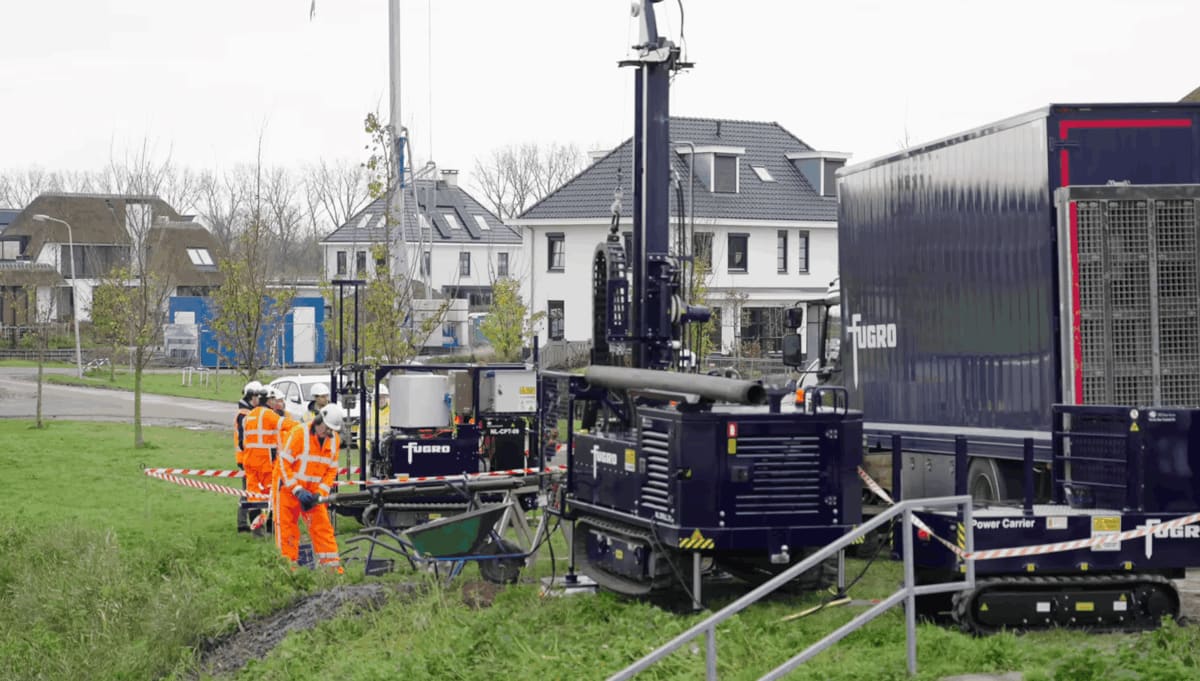
Survey teams from Fugro and Sweco have begun soil investigations along a 70km route connecting Rotterdam, Moerdijk, and Boxtel. The Delta Rhine Corridor West will do something no other network has done at this scale: simultaneously transport clean hydrogen to industrial users while carrying captured carbon dioxide away for permanent storage.
The project solves two problems at once. Hydrogen produced or imported through Rotterdam's port will flow to factories that need clean energy. At the same time, CO2 captured from those industrial sites will travel back through parallel pipes to be stored safely under the North Sea.
Right now, crews are drilling test holes and mapping the riverbed of the Hollands Diep to understand what lies beneath the surface. These detailed surveys ensure the pipelines can be built safely and will last for decades.
The network operator Gasunie designed the system to eventually connect eastward, creating a hydrogen superhighway reaching into Northwest Germany. That expansion will help multiple countries transition their heavy industries away from fossil fuels.
The Ripple Effect
This infrastructure is already changing how companies plan their future. Major energy producers are designing hydrogen plants and import terminals specifically to connect to this network. While the project faces delays (now expected online in 2033 instead of 2028), businesses are still betting on this clean energy future.
The dual pipeline approach is particularly smart. By handling both hydrogen delivery and carbon removal in one corridor, the Netherlands is building the backbone that will let factories keep producing steel, chemicals, and other essentials without the massive carbon footprint.
Other countries are watching closely. Germany has commissioned its own 110km hydrogen pipeline, and similar projects are sprouting across Europe. What starts in the Netherlands could become the model for industrial decarbonization worldwide.
Breaking ground on this survey work transforms years of planning into physical reality, bringing clean industrial energy one step closer.
Based on reporting by Google News - Netherlands Technology
This story was written by BrightWire based on verified news reports.
Spread the positivity!
Share this good news with someone who needs it