Nevada Solar Farm Accidentally Revives Rare Desert Plant
A massive solar project in Nevada's Mojave Desert didn't destroy the landscape—it brought a rare plant back to life. By preserving the desert soil instead of scraping it clean, developers created conditions for a dormant species to flourish.
When developers built one of America's largest solar farms in the Nevada desert, they expected to generate clean energy. What they didn't expect was to accidentally create a sanctuary for a rare desert plant.
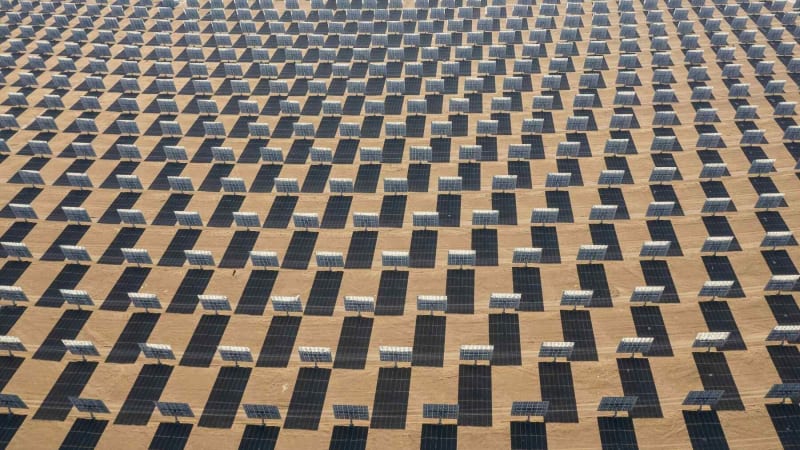
The Gemini Solar Project took a different approach than most large-scale solar installations. Instead of bulldozing the land flat and removing the topsoil, developers left the natural desert floor mostly intact, preserving the seeds buried underground for decades.
Years later, researchers returned to check on the site. What they found surprised everyone: a rare plant called the three-corner milk vetch was thriving beneath the solar panels in numbers nobody anticipated.
Before construction began, only 12 of these plants had ever been documented in that area. By the second year after the solar farm opened, researchers counted 93 individual plants sprouting from the preserved soil.
The discovery challenges a common assumption about renewable energy projects. For years, the narrative felt unavoidable: build big solar farms, lose fragile desert habitat. Clean energy or conservation—pick one.
But Gemini tells a different story. The dormant seeds that had been waiting underground for the right conditions finally got their chance when construction disturbed the soil without destroying it completely.
The solar panels even created microclimates that may have helped the plants survive. Shade from the panels provides relief from the intense desert sun, and reduced evaporation helps retain precious moisture in the soil.
The Ripple Effect
This discovery is reshaping how developers think about building renewable energy projects in sensitive ecosystems. The lesson isn't that solar farms automatically boost biodiversity—it's that thoughtful design choices can make room for both clean energy and conservation.
Other solar projects are now studying the Gemini approach. Preserving native soil and seed banks costs less than traditional grading methods, and the ecological benefits appear to come as an unexpected bonus.
The Mojave Desert is home to hundreds of plant species adapted to survive in extreme conditions, many of them rare or threatened. If solar development can coexist with these fragile ecosystems instead of replacing them, it opens new possibilities for where and how we build renewable energy infrastructure.
Researchers are continuing to monitor the site to see if the plant population remains stable or continues growing. Early results suggest the three-corner milk vetch isn't just surviving—it's expanding into an accidental refuge created by clean energy infrastructure.
The future of renewable energy might look greener than anyone imagined—literally.
Based on reporting by Google News - Solar Power Record
This story was written by BrightWire based on verified news reports.
Spread the positivity!
Share this good news with someone who needs it