New Battery Recycling Captures CO₂, Works at Room Temperature
Scientists in China have invented a revolutionary way to recycle lithium batteries that solves three environmental problems at once. The breakthrough recovers 95% of lithium, captures carbon dioxide, and transforms leftover metals into clean energy catalysts.
Imagine if the dead battery from your phone could fight climate change while being recycled. That's exactly what Chinese scientists have accomplished with a breakthrough that turns battery waste into an environmental win on three fronts.
Researchers from the Chinese Academy of Sciences and Beijing Institute of Technology developed a recycling process that works at room temperature, requiring no massive furnaces or toxic chemical baths. They published their findings in Nature Communications in January 2026.
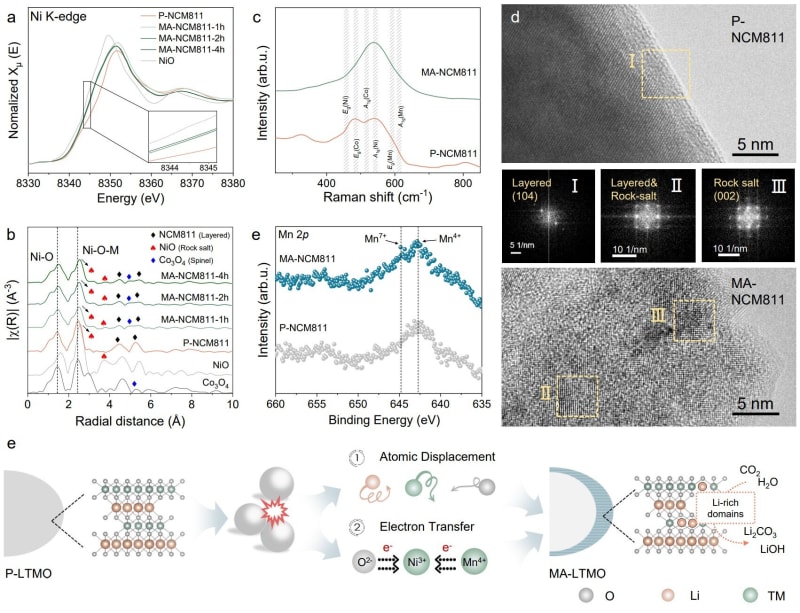
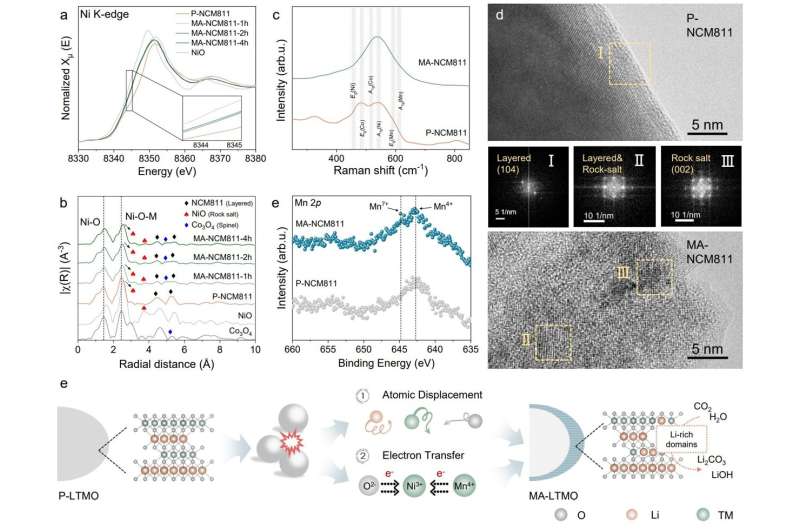
The innovation starts with a high-energy ball mill that grinds old battery parts, rearranging atoms at the molecular level to separate lithium from other metals like nickel and cobalt. Then the team adds a pressurized mixture of carbon dioxide and water, which extracts more than 95% of the lithium in high-purity liquid form ready for reuse.
Here's where it gets brilliant. The carbon dioxide used in the process gets trapped inside the recycling system instead of escaping into the atmosphere. Meanwhile, the leftover metal scraps aren't discarded as waste.
The grinding process transforms their molecular structure into something valuable: high-performance catalysts that can produce green hydrogen fuel. One recycling process delivers three environmental victories.
The timing couldn't be more critical. Lithium batteries power everything from smartphones to electric vehicles, and the global volume of spent batteries is projected to hit 381 million metric tons by 2050. Current recycling methods either waste enormous energy with high-heat furnaces or create toxic liquid waste from harsh acid treatments.
The Ripple Effect
This three-in-one solution addresses the battery waste crisis while actively fighting climate change. Traditional recycling loses most lithium in the process and releases greenhouse gases. This method captures both.
The technology successfully recovered nearly all lithium from multiple battery types in laboratory tests. Because it operates at normal temperature and pressure, the researchers believe it can scale up for industrial manufacturing without requiring specialized facilities.
The team described their innovation as "an energy-efficient closed-loop route from waste electrodes to sustainable energy conversion systems." Translation: dead batteries go in, reusable materials and clean energy tools come out, nothing gets wasted.
As electric vehicles become more common and renewable energy storage expands, solving the battery recycling puzzle becomes essential. This breakthrough proves we can handle our waste responsibly while capturing the greenhouse gases heating our planet.
More Images
Based on reporting by Phys.org - Technology
This story was written by BrightWire based on verified news reports.
Spread the positivity!
Share this good news with someone who needs it