New Battery Tech Could Transform Grid Energy Storage
Scientists are solving the biggest hurdles holding back a safer, longer-lasting alternative to lithium-ion batteries for powering entire cities. Their breakthrough could make renewable energy more reliable for millions.
A promising battery technology that could store solar and wind power for entire communities is finally getting the attention it deserves.
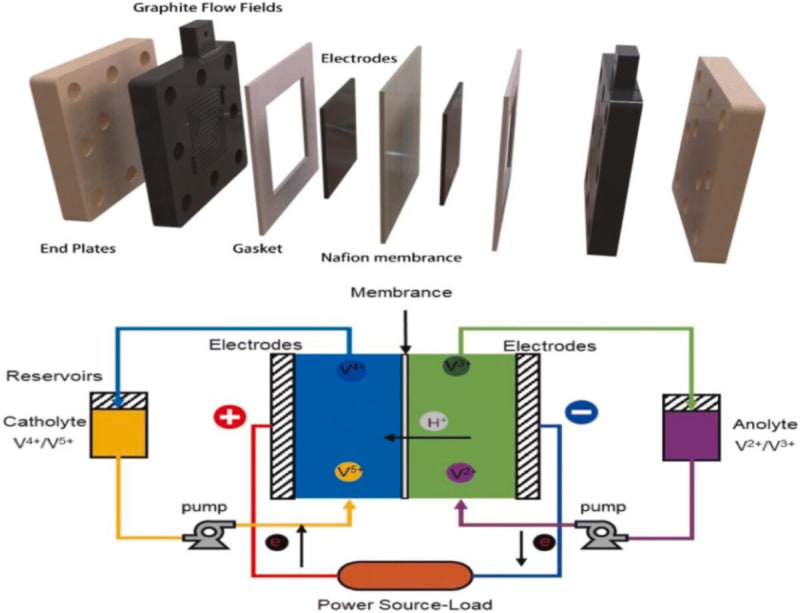
Redox flow batteries (RFBs) have long been overlooked by investors who see them as too expensive and risky compared to common lithium-ion batteries. But researchers at Western Norway University of Applied Sciences just published a comprehensive study showing these batteries could be the key to reliable grid-scale energy storage.
"The future holds bright in the domain of redox flow batteries," says Professor Yansong Zhao, who led the research team. Unlike lithium-ion batteries that can catch fire or degrade quickly, RFBs offer something better: safety, reliability, and the ability to charge and discharge more than 10,000 times without losing effectiveness.
The secret lies in their design. RFBs store energy in liquid solutions rather than solid materials, making them much safer and easier to scale up. When a city needs more power storage, operators simply add more liquid instead of building entirely new battery banks.
The challenge has been cost. The special materials and membranes inside these batteries currently account for more than half their total price tag, making that initial investment steep.
But Zhao's team identified practical solutions. They're exploring abundant materials like titanium to replace expensive components. They're also testing new liquid combinations that could dramatically boost energy density while keeping costs down.
The research brings together years of scattered studies on electrolytes, membranes, and electrodes into one clear roadmap. This integrated approach gives battery manufacturers and grid operators the specific guidance they need to make RFBs commercially viable.
The Ripple Effect
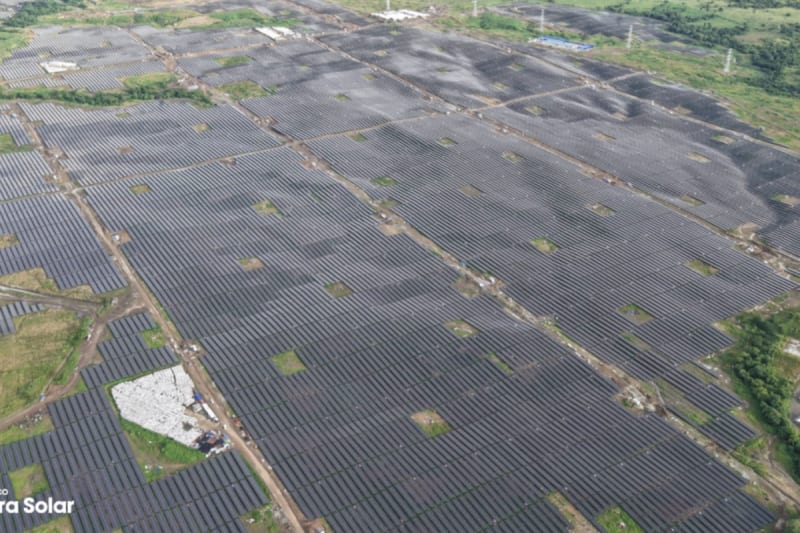
The timing couldn't be better. As solar and wind farms multiply across the country, utilities desperately need ways to store that clean energy for cloudy days and calm nights. RFBs can hold massive amounts of power for hours or even days, smoothing out the natural ups and downs of renewable generation.
Unlike batteries designed for phones or electric cars, RFBs excel at staying in one place and doing one job really well: keeping the lights on when the sun sets and the wind stops blowing. That specialized focus makes them perfect partners for renewable energy systems trying to replace fossil fuel power plants.
The research shows that educating investors about these advantages can eliminate much of the perceived risk. When utilities understand they're getting a battery system that lasts decades instead of years, that upfront cost starts looking like a bargain.
Multiple research teams are now working on perfecting the material combinations that will make these batteries cheaper and more powerful, bringing grid-scale clean energy storage closer to reality for communities everywhere.
More Images
Based on reporting by PV Magazine
This story was written by BrightWire based on verified news reports.
Spread the positivity!
Share this good news with someone who needs it