New Blood Test Detects 88% of Early Pancreatic Cancers
Scientists developed a four-biomarker blood test that catches pancreatic cancer earlier than ever before, potentially saving thousands of lives. The breakthrough could help doctors identify the deadly disease when it's still treatable.
Scientists at the University of Pennsylvania just made a major leap forward in detecting one of medicine's deadliest cancers before it's too late.
Pancreatic cancer kills quickly because it hides silently until it spreads beyond hope. When caught early, 44% of patients survive five years, but once it spreads, that number plummets to just 3%. The cruel reality is that most people don't have symptoms until surgery can no longer help.
"Pancreatic cancer usually doesn't present with symptoms until it's too late for surgery, when the cancer has already metastasized to other parts of the body," said Dr. Kenneth Zaret, who led the research team. Their mission was simple but urgent: find a way to catch this cancer early.
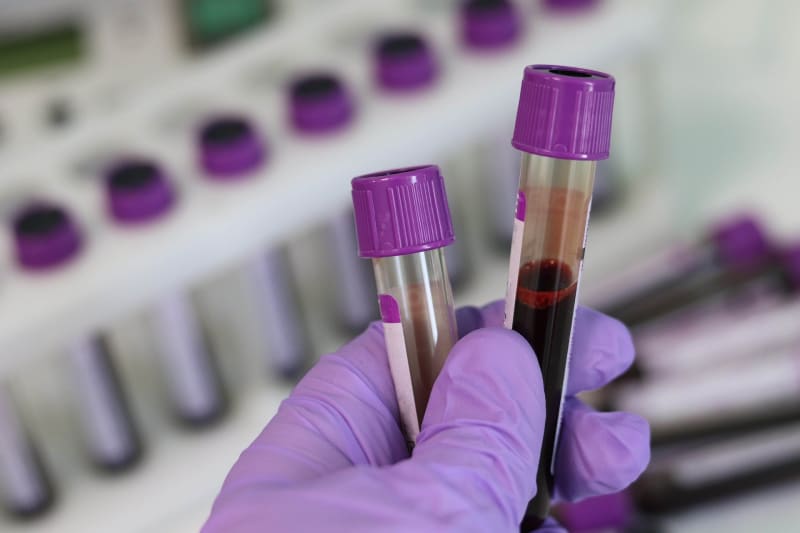
The team analyzed blood samples from 672 people, including pancreatic cancer patients, healthy individuals, and people with benign pancreatic conditions. They discovered two new proteins, ANPEP and PIGR, that show up in higher levels when early-stage pancreatic cancer is present.
Combined with two existing markers, CA19-9 and THBS2, these four biomarkers created a powerful detection panel. The results were remarkable: the test correctly identified 87.5% of early-stage cancers and 91.9% of all-stage cancers. The old single-marker test caught only 76.2% of early cases.
The test proved nearly perfect at distinguishing cancer patients from healthy people, scoring 0.97 out of a possible 1.0 on accuracy measures. Even more impressive, it could tell the difference between actual cancer and benign pancreatic problems that often create false alarms.
Why This Inspires
This breakthrough addresses one of cancer medicine's most frustrating challenges. For years, doctors have watched patients arrive too late for treatment, knowing that earlier detection could change everything.
The four-biomarker panel solves problems that have plagued pancreatic cancer screening for decades. Some people genetically produce low levels of CA19-9, even with cancer, while benign conditions can falsely elevate it in others. The new combination overcomes these blind spots, catching cases that would have slipped through.
If confirmed in larger studies, this blood test could become a routine screening tool for high-risk individuals. People with family history, certain genetic mutations, or new-onset diabetes could get regular blood draws that spot cancer while it's still removable through surgery.
The research team envisions a future where a simple blood test helps doctors decide who needs follow-up imaging, catching more cancers at stages where treatment actually works.
With pancreatic cancer being one of the deadliest diagnoses in medicine, a test that catches nearly 9 out of 10 early cases represents genuine hope for thousands of families who face this disease each year.
More Images


Based on reporting by Medical Xpress
This story was written by BrightWire based on verified news reports.
Spread the positivity!
Share this good news with someone who needs it