
New Brain Surgery Shows Promise for Alzheimer's Patients
A groundbreaking surgical technique connecting lymph vessels in the neck to veins is showing remarkable improvements in Alzheimer's patients. Now entering controlled trials worldwide, the procedure offers new hope for millions living with dementia.
An 80-year-old man who could barely recognize his son is now walking briskly down hospital halls, reciting military anthems from memory.
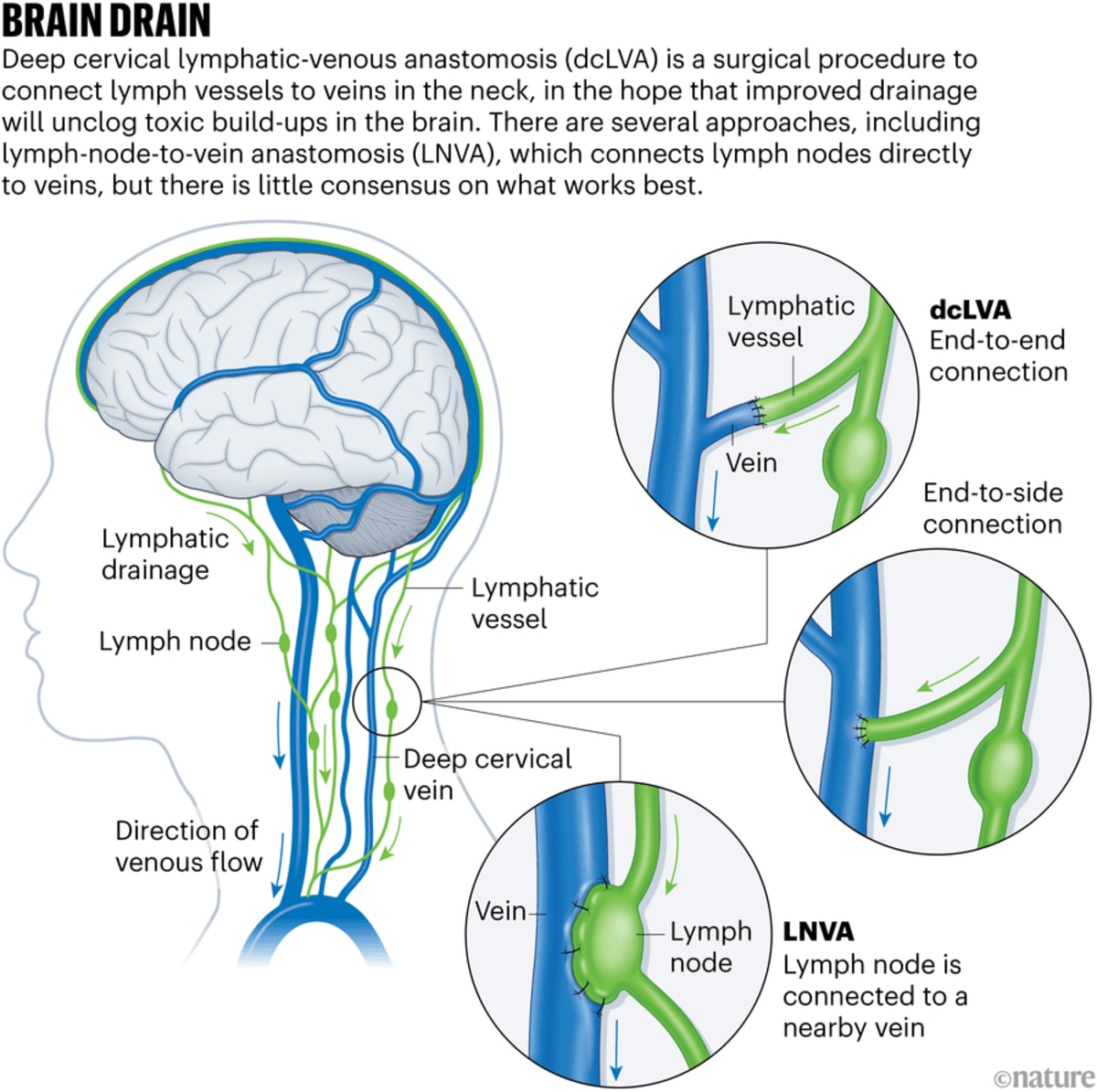
His dramatic transformation came after becoming the first person to undergo a new surgical procedure called deep cervical lymphatic-venous anastomosis in September 2020. The surgery, developed by Chinese microsurgeon Qingping Xie, connects tiny lymph vessels in the neck to nearby veins, creating a pathway for waste proteins and fluid to drain more easily from the brain.
The theory behind the surgery builds on exciting discoveries from the past decade. In 2015, researchers identified lymphatic vessels in the protective membranes around the brain, overturning the belief that our brains lacked this drainage system. Follow-up studies showed that when these vessels don't work properly in mice, toxic proteins build up and thinking abilities decline faster.
When surgeon Wei Chen from Cleveland Clinic showed video of the first patient's recovery at medical conferences, audiences were stunned. "A lot of jaws dropped," Chen recalls. "It basically started a frenzy of this surgery being performed left and right."
Hundreds of Chinese hospitals began offering the experimental procedure, with thousands of patients paying upward of $30,000 for treatment. The rapid spread prompted Chinese regulators to step in last year, restricting the surgery to formal clinical research settings to ensure proper safety monitoring.
Why This Inspires
The scientific foundation for this approach is solid. Our brains have a sophisticated waste removal system that clears out harmful proteins during sleep. When this drainage system malfunctions, toxic substances accumulate, potentially contributing to Alzheimer's disease.
While researchers remain cautiously optimistic, many emphasize the need for rigorous testing. "The concept is scientifically valid and biologically plausible," says lymphatics researcher Young-Kwon Hong from Beth Israel Deaconess Medical Center. Controlled trials are now launching around the world to determine whether these early dramatic improvements can be replicated safely.
The speed of recovery in some patients puzzles scientists, since Alzheimer's typically causes permanent brain damage. Some experts wonder if the surgery might help patients whose symptoms stem from poor drainage rather than true Alzheimer's disease, which would still represent a major breakthrough for diagnosis and treatment.
The technique carries risks including infection, bleeding, and nerve damage, making careful study essential. But for families watching loved ones slip away to dementia, the possibility of restoration feels almost miraculous.
After decades of failed Alzheimer's treatments, this drainage-focused approach represents a fundamentally new direction, one that addresses how the brain cleans itself rather than just targeting protein buildup.
More Images



Based on reporting by Scientific American
This story was written by BrightWire based on verified news reports.
Spread the positivity!
Share this good news with someone who needs it