New Dataset Tracks Food Trade Impact on Global Biodiversity
Scientists created a powerful new tool that reveals how our food choices affect wildlife around the world. The dataset tracks nearly three decades of biodiversity loss hidden in international grain and soy trade.
Scientists just gave us a clearer picture of how our food reaches our plates and what it costs the natural world.
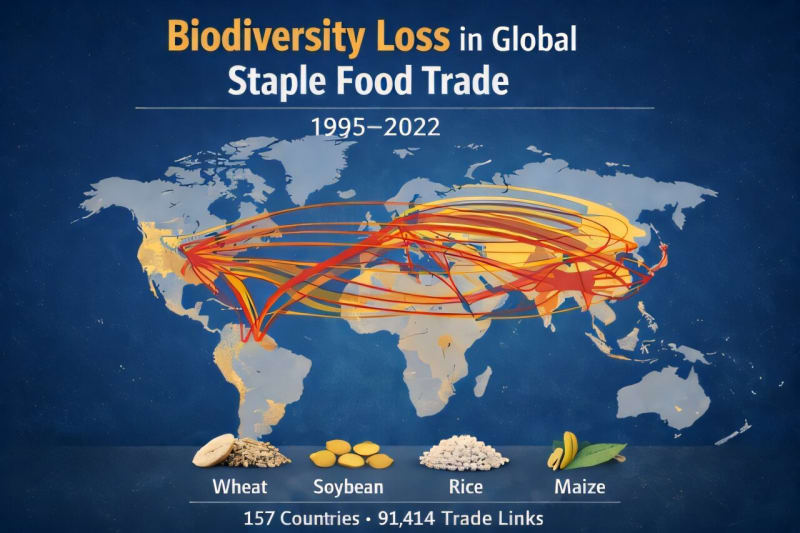
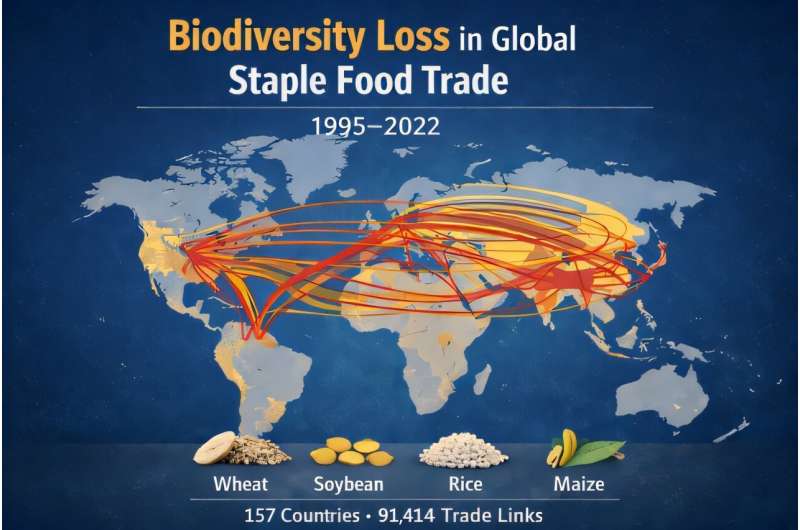
Researchers Dr. Zhuofan Huang and Dr. Zhenglei He have released a groundbreaking dataset that tracks biodiversity loss embedded in global food trade from 1995 to 2022. The open-access tool focuses on four staple crops that feed billions: wheat, soybean, rice, and maize.
The dataset connects the dots between 157 countries and more than 91,000 trade relationships. It translates complex food trade flows into something measurable: the impact on plant and animal species worldwide.
Think of it as a biodiversity footprint for your morning toast or tofu stir-fry. When countries import grain, they're not just receiving food but also transferring environmental pressures from farms thousands of miles away.
The data reveals some eye-opening patterns. Soybean trade has caused biodiversity loss to jump more than sixfold since 1995, now surpassing wheat as the biggest concern. Major agricultural players like the United States, Brazil, China, Australia, and Argentina sit at the center of these global patterns.
The Bright Side
Here's where this gets hopeful: knowledge creates opportunity for change. By making this dataset freely available, the researchers handed policymakers, companies, and conservation groups a practical tool for action.
Food companies can now identify which supply chains pose the highest risks to biodiversity. Countries can assess their environmental responsibility more accurately. Trade agreements can be designed with nature in mind, not as an afterthought.
The dataset supports efforts toward UN Sustainable Development Goal 15, which focuses on protecting life on land. When we understand the hidden environmental costs of food trade, we can make better choices about how we grow, buy, and transport what we eat.
The timing matters too. As climate change and habitat loss accelerate, tools like this help us move from general concern to specific solutions. We can't fix what we can't measure.
The research appears in One Ecosystem, where anyone can access and use the data. That openness means students, activists, and innovators worldwide can build on this work and find new ways to feed humanity while protecting the incredible diversity of life we share the planet with.
Nearly three decades of data now points the way toward smarter, kinder food systems that nourish both people and nature.
More Images
Based on reporting by Phys.org
This story was written by BrightWire based on verified news reports.
Spread the positivity!
Share this good news with someone who needs it